2026 Toyota 4Runner: Trims, i-FORCE MAX, Towing, MPG, Price, and Buyer Guide
For shoppers comparing the broader Toyota 2026 lineup, this guide is a focused supporting article for the 2026 Toyota Models USA pillar. Instead of covering every Toyota model, it stays centered on the 4Runner and the decisions that matter most to rugged SUV buyers.
Quick Answer
The 2026 Toyota 4Runner is a rugged midsize SUV for buyers who want more trail-ready capability, body-on-frame toughness, and adventure usefulness than a typical compact crossover. The standard i-FORCE turbo engine may fit buyers who want a simpler gas powertrain and a lower starting point, while the available i-FORCE MAX hybrid powertrain may fit shoppers who want stronger torque and capability-focused performance. 4WD is important for off-road use, snowbelt driving, gravel roads, trailheads, and rough-weather confidence. RWD may make sense for some buyers who mainly drive on pavement where available. Shoppers should compare SR5, TRD Sport, TRD Off-Road, Limited, Platinum, Trailhunter, and TRD Pro features carefully. Also compare insurance, financing, maintenance, towing needs, tires, accessories, and long-term ownership. Before buying, verify current pricing, availability, destination charge, incentives, dealer fees, accessories, drivetrain details, and trim equipment with Toyota or local dealers.
2026 Toyota 4Runner: What US Buyers Should Know
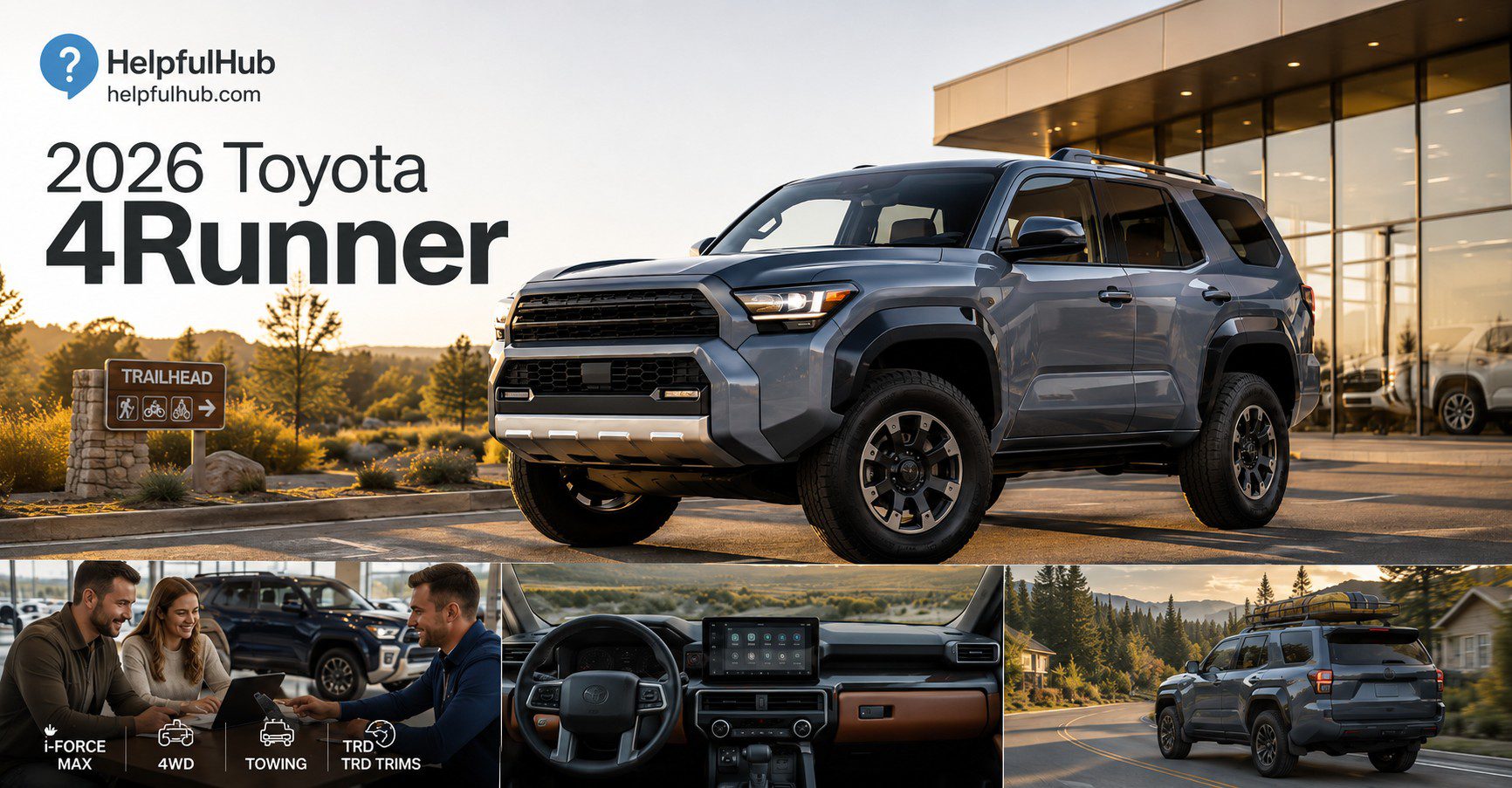
The 2026 Toyota 4Runner is a midsize SUV aimed at drivers who want capability, durability, and outdoor usefulness. It is not the lightest or most city-focused Toyota SUV, and that is part of its appeal. Many buyers look at it because they want something that can handle daily driving during the week and dirt roads, camping routes, snow, and towing duties on weekends.
Toyota lists the 2026 4Runner with i-FORCE turbo power and available i-FORCE MAX hybrid power. The i-FORCE engine is listed at 278 horsepower and 317 lb-ft of torque, while the i-FORCE MAX hybrid system is listed at up to 326 horsepower and 465 lb-ft of torque. Toyota also lists available 2WD, part-time 4WD, or full-time 4WD depending on trim and configuration.
That matters because the 4Runner is not just a styling exercise. It uses rugged body-on-frame construction, offers off-road-focused trims, and gives buyers a clear choice between practical everyday trims and serious adventure versions. However, the right 4Runner depends on how you drive, where you live, what you tow, and how much off-road equipment you actually need.
2026 Toyota 4Runner Key Buyer Details at a Glance
| Buyer Detail | What It Means | Shopping Note |
|---|---|---|
| Vehicle type | Rugged midsize SUV with body-on-frame character | Best for buyers who value capability over maximum city efficiency |
| Powertrains | i-FORCE turbo gas engine or available i-FORCE MAX hybrid | Confirm availability by trim before choosing |
| Drivetrain | Available 2WD, part-time 4WD, or full-time 4WD depending on trim | 4WD is important for trails, snow, and rough weather |
| Seating | Up to 7 where equipped | Check third-row availability and cargo space in person |
| Technology | Available 14-inch touchscreen and modern Toyota multimedia features | Screen size and features vary by trim |
| Best fit | Outdoor families, off-road shoppers, Toyota fans, and road-trip drivers | Not every buyer needs the most aggressive TRD model |
Why the 4Runner Matters in Toyota’s USA Lineup
The 4Runner has a different role than Toyota’s more efficiency-focused SUVs. The RAV4 is easier to park and often better for daily fuel economy. The Highlander is more family-oriented. The Land Cruiser brings premium rugged positioning. The Tacoma gives you a truck bed. The 4Runner sits in the middle as the adventure SUV for buyers who want enclosed cargo space, trail character, and Toyota’s rugged SUV identity.
In the US market, many shoppers want one vehicle that can commute, handle school runs, drive to national parks, carry camping gear, and manage rough-weather weekends. The 4Runner speaks to that buyer. It also appeals to people who like traditional SUV proportions and want something more rugged than a typical crossover.
That does not mean it is the automatic choice for everyone. If your priority is fuel savings and easy city parking, a compact hybrid SUV may make more sense. If you need a pickup bed for tools, bikes, or jobsite gear, Tacoma may be better. The value of the 4Runner is its balance of enclosed SUV practicality and serious adventure personality.
Quick Comparison: i-FORCE, i-FORCE MAX, RWD, and 4WD
The biggest early decision is not the color or wheel design. It is whether you need the standard i-FORCE powertrain or the available i-FORCE MAX hybrid system, and whether RWD or 4WD makes more sense. These choices affect price, capability, MPG, insurance, maintenance expectations, resale appeal, and real-world usefulness.
The i-FORCE turbo engine may be enough for buyers who want a rugged Toyota SUV without paying for the strongest hybrid setup. The i-FORCE MAX system adds more torque, which may feel useful for heavier loads, steep grades, and capability-focused trims. However, it is not a plug-in hybrid, and buyers should not treat it like an EV.
i-FORCE vs i-FORCE MAX Buyer Comparison
| Category | i-FORCE Turbo | i-FORCE MAX Hybrid |
|---|---|---|
| Listed output | 278 hp and 317 lb-ft of torque | Up to 326 hp and 465 lb-ft of torque |
| Buyer fit | Practical 4Runner shoppers who want a simpler setup | Buyers who want stronger torque and capability-focused performance |
| Hybrid type | Gas turbo engine | Hybrid assist system, not a plug-in hybrid or full EV |
| Best use case | Daily driving, road trips, light adventure, budget control | More demanding terrain, heavier gear, premium or off-road trims |
| Shopping caution | Confirm towing, MPG, and drivetrain by trim | Confirm price, availability, battery-related coverage, and trim equipment |
i-FORCE vs i-FORCE MAX: Which Powertrain Makes Sense?
The standard i-FORCE engine is likely to make sense for buyers who want the 4Runner look, construction, and everyday usefulness without stepping into the higher-cost hybrid trims. It can fit drivers who use the SUV for commuting, weekend camping, family driving, and occasional rough roads. It may also appeal to shoppers trying to keep the purchase price and monthly payment under control.
The i-FORCE MAX hybrid powertrain is more about torque and capability than pure fuel-sipping behavior. It may be attractive if you often carry passengers, gear, and accessories, or if you live near mountains, snow, steep driveways, gravel roads, or trail access points. The stronger torque figure can also matter if you tow within the vehicle’s properly equipped limits.
However, do not confuse i-FORCE MAX with a plug-in hybrid or battery-electric SUV. It does not need to be charged like an EV, and it does not serve the same role as Toyota’s electric models. For a broader look at hybrid and EV ownership differences, HelpfulHub’s electric mobility guide can help you understand how electrified vehicles fit different driving needs.
A smart buyer should test drive both powertrains if possible. Pay attention to low-speed throttle response, highway passing, noise, brake feel, and how the SUV feels with passengers. Also ask the dealer which trims are actually available in your region, because inventory can vary by state and dealer allocation.
Trim Overview: SR5, TRD Sport, TRD Off-Road, Limited, Platinum, Trailhunter, and TRD Pro
The 2026 4Runner lineup gives buyers a wide range of personalities. SR5 is the practical starting point. TRD Sport leans toward street style and on-road handling. TRD Off-Road adds more trail-focused equipment. Limited and Platinum focus more on comfort and premium features. Trailhunter and TRD Pro are for buyers who want factory-built adventure hardware.
Toyota’s current 2026 4Runner page lists trims including SR5, TRD Sport, TRD Sport Premium, TRD Off-Road, TRD Off-Road i-FORCE MAX, TRD Off-Road Premium, TRD Off-Road Premium i-FORCE MAX, Limited, Limited i-FORCE MAX, Platinum, Trailhunter, and TRD Pro. Pricing, MPG, features, and inventory can change, so use Toyota’s Build tool and local dealer quotes before making a final decision.
2026 4Runner Trim Buyer Guide
| Trim | Best Buyer Fit | Key Shopping Thought |
|---|---|---|
| SR5 | Value-minded buyers who want 4Runner capability without chasing every premium feature | Check if third-row seating, 4WD, and convenience features match your needs |
| TRD Sport | Drivers who like a sportier road-focused look and daily use more than heavy trail work | Do not buy it only for appearance if you actually need off-road hardware |
| TRD Off-Road | Trail-curious buyers who want more off-road equipment without going fully premium | Compare gas and i-FORCE MAX availability where offered |
| TRD Off-Road Premium | Buyers who want off-road usefulness with more cabin comfort and tech | Often a strong middle-ground trim to compare carefully |
| Limited | Families and commuters who want comfort, available third-row seating, and a more upscale feel | Confirm drivetrain and seating configuration before buying |
| Platinum | Premium SUV shoppers who want comfort, technology, and i-FORCE MAX strength | Compare payment and insurance cost against Limited and Land Cruiser |
| Trailhunter | Overlanding-style buyers who want factory adventure equipment | Make sure you will use the added hardware enough to justify the cost |
| TRD Pro | Serious off-road fans who want maximum factory TRD attitude and trail hardware | Great for the right buyer, but it may be more aggressive than daily drivers need |
TRD Off-Road vs Trailhunter vs TRD Pro
Many shoppers will cross-shop TRD Off-Road, Trailhunter, and TRD Pro because all three sound adventure-ready. The difference is how far each trim goes. TRD Off-Road is often the more practical entry into true off-road equipment. Trailhunter is aimed at overlanding-style use. TRD Pro is the high-energy performance off-road choice.
If your adventures are mostly forest roads, beach parking, mountain trailheads, and snow-season driving, TRD Off-Road may be enough. If you like long camping weekends, accessories, and overland-style setups, Trailhunter deserves a closer look. If you want the most aggressive factory TRD setup and plan to use it, TRD Pro may be the emotional and practical match.
TRD Off-Road vs Trailhunter vs TRD Pro Buyer Fit Table
| Trim | Buyer Personality | Practical Advantage | Possible Trade-Off |
|---|---|---|---|
| TRD Off-Road | Weekend explorer | More trail-focused than road trims while staying relatively practical | May not include every premium or overlanding feature |
| Trailhunter | Camping and overlanding buyer | Factory adventure hardware and rugged visual presence | Higher cost and equipment you may not need daily |
| TRD Pro | Serious off-road enthusiast | Top TRD identity with aggressive trail-focused features | Ride, tire noise, price, and insurance should be checked carefully |
RWD vs 4WD: Which 4Runner Setup Makes Sense?
RWD may fit shoppers who mostly drive on dry pavement, live in warmer climates, and want to keep cost lower where that configuration is available. For example, a buyer in a mild-weather suburb who rarely leaves paved roads may not need 4WD. The decision should still include resale value and future travel plans.
4WD makes more sense for buyers who deal with snow, steep gravel, mud, campsites, boat ramps, rough roads, or off-road trails. It can also add confidence in snowbelt states and rural areas where roads are not always clean or flat. However, 4WD does not replace safe driving, proper tires, or good judgment.
RWD vs 4WD Decision Table
| Driving Situation | RWD May Work If | 4WD Is Better If |
|---|---|---|
| Daily commute | You drive mostly dry city or suburban roads | You face snow, steep roads, or rough weather |
| Camping weekends | Your campsites are paved or well-maintained | You use gravel roads, dirt access roads, or trailheads |
| Resale planning | Your local market accepts 2WD SUVs | Your area strongly prefers 4WD rugged SUVs |
| Budget | You want lower purchase cost where available | You are willing to pay more for capability and confidence |
| Off-road use | You only want the look, not trail capability | You plan to use the 4Runner as a real adventure vehicle |
Towing, Cargo, and Weekend Gear Considerations
The 4Runner attracts towing shoppers because it feels more truck-like than many crossovers. Still, towing is not just one number. Buyers need to confirm trim, drivetrain, equipment, hitch setup, tongue weight, payload, passengers, cargo, trailer brakes, and local laws before towing.
If you plan to tow a small camper, utility trailer, personal watercraft, or weekend gear trailer, ask the dealer to show the exact towing information for your selected trim. Do not assume every trim, tire package, and accessory setup performs the same way. Real-world towing performance can vary with elevation, heat, wind, cargo load, and driving speed.
Cargo also matters. A 4Runner can be useful for coolers, camping bins, recovery boards, backpacks, sports gear, strollers, pet crates, and road-trip luggage. However, if you choose third-row seating where available, compare the cargo space with the seats up and folded. Bring your actual gear to the test drive if cargo fit is important.
Daily Driving and City Usability
The 4Runner may be rugged, but many owners will still use it for grocery runs, school drop-offs, highway commuting, and parking garages. That is why a test drive matters. Check steering feel, visibility, seat comfort, parking camera views, brake feel, ride comfort, and how easy it is to enter and exit.
Compared with compact crossovers, the 4Runner may feel larger and more truck-like. That can be a benefit on highways and rough roads, but it may be less convenient in tight urban parking. If you live in a dense city, test the exact trim you plan to buy in a realistic setting before deciding.
TRD Pro and Trailhunter trims may look exciting, but their tires and hardware can change the daily experience. Listen for tire noise, feel the ride over rough pavement, and check whether the lift height works for your family. A trim that looks perfect online may not be the easiest daily driver.
Family SUV Practicality and Road Trips
For families, the 4Runner can be appealing because it offers an adventure-ready image with useful cargo space and available seating flexibility. It can work for families who enjoy parks, road trips, ski weekends, beach access, hiking, and camping. It also gives many buyers the emotional feeling of a vehicle that is ready for more than errands.
However, family buyers should check the details. Look at car-seat access, second-row comfort, third-row availability where offered, cargo space behind each seating configuration, rear vents, USB access, cupholders, door openings, and how easily kids or older passengers can climb inside. These small details matter more after six months than a cool trim badge.
Road-trip buyers should also compare wind noise, highway ride, fuel range, seat support, luggage room, and driver assistance features. If your road trips are mostly highway and your family wants three-row comfort more than rugged trail ability, the Toyota Highlander electrification outlook may be worth reading as a family SUV comparison.
Off-Road Use and Adventure Safety Considerations
The 4Runner is designed with adventure in mind, but safe off-road use depends on the driver. Factory hardware can help, but it does not remove the need for planning, proper tires, legal trail access, weather awareness, and recovery preparation. Never drive beyond your skill level or put passengers at risk for a photo or social media clip.
Before trail driving, learn the basics of tire pressure, ground clearance, approach angles, traction control modes, 4WD operation, and how to spot obstacles. Stay on legal trails and respect private land. Also carry water, a charged phone, offline maps, basic recovery gear, and weather-appropriate clothing.
If you are new to off-roading, a TRD Off-Road trim may be more than enough while you learn. Trailhunter and TRD Pro can make sense for experienced buyers, but they do not automatically make difficult terrain safe. The best off-road setup is the one matched to your routes, skill, tires, and judgment.
MPG and Real-World Fuel Economy Considerations
Toyota lists the 2026 4Runner at up to an estimated 23 combined MPG depending on configuration, with trim-specific city and highway estimates shown on the Toyota shopping page. However, real-world MPG can vary widely. Tire choice, 4WD use, roof racks, lift height, driving speed, traffic, towing, temperature, terrain, and cargo all matter.
The i-FORCE MAX hybrid system may help some buyers, but it should not be treated like a plug-in hybrid or electric SUV. It is a performance and torque-focused hybrid setup for this rugged platform. If your top priority is lower fuel use in city driving, compare the 2026 Toyota RAV4 Hybrid and Plug-in Hybrid before committing to the 4Runner.
Also think about fuel cost over several years. A slightly higher monthly payment is not the only cost. Fuel, tires, insurance, accessories, maintenance, and depreciation all add up. Estimate your real commute, weekend travel, and annual mileage before choosing a trim.
Safety and Driver Assistance Features
Toyota lists Toyota Safety Sense 3.0 among the 2026 4Runner’s safety and convenience technology. Driver assistance can help reduce stress, especially on highways and long trips. Still, buyers should review exact features by trim, because equipment can vary.
Safety shopping should include more than the badge. Ask about active safety features, camera systems, parking assistance, blind-spot features, towing technology, headlight performance, tire type, and visibility. Also check insurance quotes because safety features, repair costs, sensors, cameras, and trim prices can influence premiums.
Families should also inspect rear-seat comfort, child-seat installation, seatbelt access, step-in height, and cargo tie-downs. An SUV can have strong driver assistance technology and still be the wrong fit if daily family use feels awkward.
Technology, Touchscreen, and Everyday Convenience
Toyota lists an available 14-inch Toyota Audio Multimedia touchscreen on several 2026 4Runner trims, while some trims use a smaller screen. Screen size, camera views, seat materials, liftgate features, charging ports, and audio upgrades can vary by trim. That is why you should sit in the exact version you plan to buy.
The power rear window remains a signature 4Runner feature. It is useful for quick cargo access, airflow, and the classic 4Runner feeling many fans love. Available hands-free power liftgate features can also help families loading groceries, luggage, sports gear, or camping bins.
Technology should support your life, not distract from it. During the test drive, pair your phone, test navigation, check camera clarity, use the climate controls, and see how easy the system feels while parked. If the interface feels confusing at the dealership, it may bother you more during daily use.
4Runner vs RAV4 Hybrid
The 4Runner and RAV4 Hybrid serve different buyers. The 4Runner is the rugged SUV choice for people who want body-on-frame character, off-road trims, stronger adventure identity, and towing-focused practicality where properly equipped. The RAV4 Hybrid is the smarter fit for many commuters who want better city usability, easier parking, and stronger efficiency focus.
If you drive mostly in city traffic, have a tight garage, and rarely need serious trail hardware, the Toyota RAV4 Hybrid guide may save you money over time. If you spend weekends on gravel roads, tow gear, visit trailheads, or want a more rugged SUV feel, the 4Runner may be worth the extra cost and fuel trade-off.
4Runner vs bZ Woodland
The 4Runner is not a full EV, and the i-FORCE MAX version is not a plug-in hybrid. That distinction matters. The 4Runner is for buyers who want a gas or hybrid-assisted rugged SUV with traditional adventure capability. A model like the 2026 Toyota bZ Woodland is a better comparison for shoppers who want a rugged electric SUV alternative.
Choosing between them depends on your charging access, travel routes, towing expectations, off-road needs, and local electricity and fuel costs. If you have reliable home charging and mostly drive predictable routes, an EV may be attractive. If you take long remote trips, tow, or travel where charging is limited, the 4Runner may feel easier to plan around.
Insurance can also differ between hybrid and EV models. Before deciding, compare quotes and read a practical hybrid and EV insurance guide so you understand how vehicle type, repair costs, battery systems, and local rules may affect premiums.
4Runner vs Tacoma i-FORCE MAX
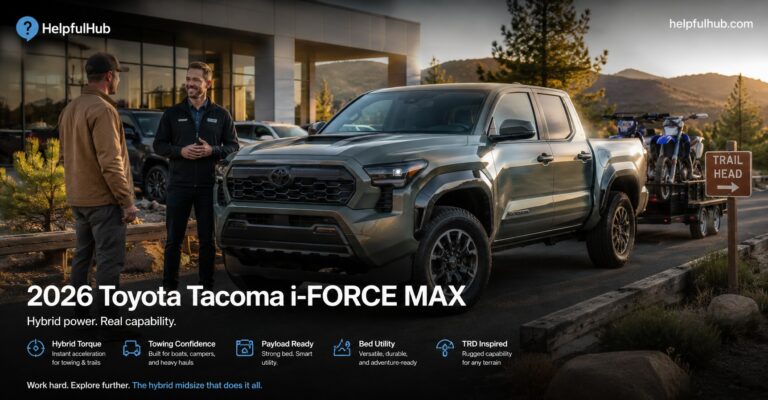
The 4Runner and Tacoma i-FORCE MAX share a rugged Toyota spirit, but they solve different problems. The 4Runner gives you an enclosed SUV body, secure cargo area, family-friendly cabin, and adventure utility. The Tacoma gives you a truck bed, which can be better for dirty gear, tools, bikes, landscaping supplies, or jobsite use.
If you need a pickup bed often, read the 2026 Toyota Tacoma i-FORCE MAX guide before choosing an SUV. If your cargo is luggage, pets, kids’ gear, camping bins, or valuables that should stay covered, the 4Runner is usually easier to live with.
The decision also depends on parking, ride feel, family needs, and how often you carry messy cargo. A Tacoma may look more practical until you realize you need covered storage every day. A 4Runner may look better until you realize you regularly haul items that do not belong inside an SUV.
4Runner vs Highlander and Land Cruiser
The Highlander is a better comparison for families who prioritize three-row comfort, smoother road manners, and daily family convenience over off-road identity. The 4Runner is more rugged and adventure-focused. If your SUV rarely leaves pavement, do not ignore Highlander just because the 4Runner looks tougher.
The Land Cruiser is another important comparison because it also carries rugged Toyota heritage. It may appeal to buyers who want a more premium adventure SUV feel. However, pricing, availability, size, equipment, and personal taste can push shoppers in different directions.
Also consider lower-cost commuter alternatives. If your real driving is mostly highway commuting and errands, a 2026 Toyota Camry Hybrid or 2026 Toyota Corolla and Corolla Hybrid may be much more efficient and affordable. The 4Runner makes the most sense when you will actually use its SUV strengths.
4Runner vs RAV4 Hybrid vs bZ Woodland vs Tacoma Buyer Fit Table
| Model | Best For | Think Twice If |
|---|---|---|
| 2026 Toyota 4Runner | Rugged SUV buyers, trail weekends, towing needs, enclosed adventure cargo | You mostly want low fuel cost and easy city parking |
| RAV4 Hybrid | Commuters, small families, efficiency-focused SUV shoppers | You need more rugged trail hardware or body-on-frame character |
| bZ Woodland | EV shoppers who want a rugged electric alternative | You lack charging access or often travel remote routes |
| Tacoma i-FORCE MAX | Truck buyers who need a bed for work, gear, or hobbies | You need covered cargo space and SUV family practicality |
Ownership Cost, Insurance, and Maintenance
A 4Runner buying decision should include more than MSRP. Rugged SUVs can bring higher tire costs, higher fuel spending, more expensive accessories, and insurance differences compared with smaller crossovers or sedans. Trims with bigger tires, advanced sensors, premium interiors, and specialized shocks may cost more to repair or insure.
Maintenance expectations also depend on how you use the SUV. A 4Runner used mostly for commuting may have different needs than one used for dusty trails, towing, roof racks, deep snow, or rocky roads. Off-road use can increase wear on tires, brakes, suspension, underbody parts, and fluids.
Before buying, compare total cost with a new vs used vehicle cost guide. Also get insurance quotes for the exact trim and drivetrain. A quote for an SR5 may not match a TRD Pro, Trailhunter, or Platinum.
Rugged SUV Ownership Cost Checklist
| Cost Area | Why It Matters | What To Check |
|---|---|---|
| Fuel | Real-world MPG can change with tires, speed, load, and terrain | Estimate annual miles and fuel prices in your area |
| Insurance | Trim price, sensors, repair costs, and location can affect premiums | Quote the exact VIN or trim before buying |
| Tires | All-terrain tires can cost more and may wear differently | Ask replacement price for the trim’s tire size |
| Maintenance | Trail use, towing, and rough weather may increase service needs | Review severe-use maintenance guidance with the dealer |
| Accessories | Roof racks, steps, lighting, and cargo gear can raise total cost | Price accessories before financing them |
| Depreciation | Resale can vary by trim, market, mileage, and condition | Compare trade-in history and local used listings |
Financing, Leasing, and Trade-In Tips
Many 4Runner buyers finance because rugged SUV trims can move into premium price territory. Before visiting a dealership, estimate your down payment, monthly payment, interest rate, loan term, trade-in value, taxes, registration, destination charge, and dealer fees. A lower monthly payment can hide a longer loan and more total interest.
Use the HelpfulHub car payment calculator to estimate your monthly 4Runner payment before you negotiate. Then compare that number with your insurance quote and estimated fuel cost. This gives you a more honest view of affordability.
Leasing may work for drivers who want a new vehicle every few years and stay within mileage limits. However, off-road use, accessories, tire wear, dents, and scratches can create lease-end concerns. Financing may be better if you plan to keep the 4Runner long term, modify it, tow with it, or use it heavily for adventure travel.
New 2026 4Runner vs Used 4Runner
A new 2026 4Runner gives you the latest design, current technology, available i-FORCE MAX power, updated safety features, and the ability to choose your preferred trim if inventory allows. It may also come with new-car financing offers, warranty coverage, and the confidence of being the first owner.
A used 4Runner may make sense if you want lower purchase cost, a proven ownership history, or a previous-generation feel. However, used prices can be strong for popular Toyota SUVs. Buyers should compare mileage, accident history, maintenance records, tire condition, rust, modifications, and certified pre-owned coverage.
For a deeper buying comparison, read HelpfulHub’s buying new vs used car guide. The right choice depends on budget, financing rate, warranty needs, technology expectations, and how long you plan to keep the SUV.
New 2026 4Runner vs Used 4Runner Considerations
| Question | New 2026 4Runner | Used 4Runner |
|---|---|---|
| Technology | Latest Toyota multimedia and available features | Depends on model year and trim |
| Powertrain | Current i-FORCE and available i-FORCE MAX options | Older powertrain choices vary by year |
| Warranty | New vehicle coverage applies based on Toyota terms | Depends on age, mileage, and certified status |
| Price | Higher purchase price, but current offers may help | Potentially lower price, but popular models can stay expensive |
| Condition | No prior owner history | Needs inspection for rust, modifications, accidents, and service records |
| Best buyer | Wants latest features and plans long ownership | Wants value and is comfortable inspecting used SUVs carefully |
Common 4Runner Buyer Mistakes to Avoid
The first mistake is buying the most aggressive trim because it looks the best online. TRD Pro and Trailhunter are exciting, but not every buyer needs that level of hardware. A more balanced trim may save money and feel better in daily driving.
The second mistake is ignoring tires. Tires change ride comfort, road noise, fuel economy, wet traction, snow performance, and replacement cost. A tire package that looks rugged may not be ideal for your commute.
The third mistake is skipping insurance quotes until after the deal. Insurance can vary by state, ZIP code, driver history, trim, financing, and coverage level. Quote the exact trim before you commit.
The fourth mistake is assuming 4WD makes every situation safe. It helps traction, but it does not improve braking distance on ice or replace careful driving. Good tires, speed control, and judgment still matter.
The fifth mistake is not comparing new and used options. A new 2026 model may be worth it for technology and powertrain updates, but a clean used or certified pre-owned 4Runner can still be a smart buy for some shoppers.
Practical Expert Insight
The best way to evaluate the 2026 Toyota 4Runner is to start with your real use, not the trim badge. If you drive 90 percent pavement and take a few camping trips each year, a balanced trim with the right drivetrain may be smarter than a top off-road model. If you live near snow, gravel, mountains, or legal trails, 4WD deserves serious consideration.
Compare i-FORCE and i-FORCE MAX with a realistic test drive. Do not only look at horsepower. Notice how the SUV moves from a stop, how it climbs a hill, how it merges, and how confident it feels with passengers. If you tow, ask for the exact towing guidance for your trim and equipment.
For TRD Off-Road vs Trailhunter vs TRD Pro, ask yourself how often you will use the hardware. Trailhunter can make sense for overlanding-style trips, while TRD Pro fits buyers who want maximum factory TRD capability. TRD Off-Road may be the practical sweet spot for many shoppers.
Finally, build your budget around the full ownership picture. Include insurance, fuel, tire replacement, accessories, registration, financing cost, and maintenance. A 4Runner can be a long-term adventure SUV, but the best one is the version you can enjoy without stretching your budget too far.
FAQ
What is new in the 2026 Toyota 4Runner?
The 2026 Toyota 4Runner continues the sixth-generation direction with rugged styling, modern Toyota technology, i-FORCE turbo power, available i-FORCE MAX hybrid power, and a broad trim lineup. Toyota lists trims such as SR5, TRD Sport, TRD Off-Road, Limited, Platinum, Trailhunter, and TRD Pro configurations. It also lists available 2WD, part-time 4WD, or full-time 4WD depending on trim. Buyers should verify exact 2026 equipment, pricing, incentives, and inventory with Toyota or local dealers before purchasing because trim details and availability can vary by region.
Is the 2026 Toyota 4Runner hybrid?
The 2026 4Runner is available with an i-FORCE MAX hybrid powertrain, but it is not a full EV or a plug-in hybrid. Toyota also lists a standard i-FORCE turbo gas engine. The i-FORCE MAX system is best understood as a hybrid-assisted powertrain designed to add strong torque and capability-focused performance. It does not need plug-in charging like an EV. Buyers interested in the hybrid version should check which trims offer it, how it affects price, drivetrain, cargo use, MPG estimates, and long-term ownership cost.
What is the difference between i-FORCE and i-FORCE MAX?
The i-FORCE engine is Toyota’s turbo gas powertrain for the 4Runner, listed at 278 horsepower and 317 lb-ft of torque. The i-FORCE MAX hybrid system is listed at up to 326 horsepower and 465 lb-ft of torque. In simple terms, i-FORCE may fit buyers who want a more straightforward gas setup, while i-FORCE MAX may fit buyers who want stronger torque for capability-focused driving. The best choice depends on trim availability, price, driving style, towing needs, and how much you value the hybrid system’s added performance.
Which 2026 Toyota 4Runner trim should buyers consider?
The best trim depends on how you will use the SUV. SR5 can fit value-minded buyers. TRD Sport may appeal to shoppers who want a more road-focused look. TRD Off-Road is worth considering for trail-curious buyers. Limited and Platinum make more sense for comfort and premium features. Trailhunter fits overlanding-style shoppers, while TRD Pro is aimed at more serious off-road fans. Instead of choosing by appearance, compare your commute, passengers, cargo, weather, towing, trail use, insurance, and monthly payment.
Is 4WD worth it on the 2026 Toyota 4Runner?
4WD is worth strong consideration if you drive in snow, mud, gravel, steep roads, rural areas, trailheads, or rough-weather conditions. It can also help resale appeal in markets where rugged SUVs are expected to have 4WD. However, RWD may be enough for some buyers who mainly drive on dry pavement and want to control cost where available. 4WD does not replace safe driving or proper tires. Test drive the configuration you plan to buy and compare real pricing before deciding.
Is the 2026 Toyota 4Runner good for families?
The 4Runner can work well for adventure-minded families, especially those who need cargo space, road-trip usefulness, and rough-road confidence. However, family buyers should check the details in person. Look at second-row space, available third-row seating, car-seat access, cargo space, step-in height, rear climate comfort, storage areas, and visibility. A Highlander or another family-focused SUV may be easier for some households. The 4Runner is best for families that value rugged utility and outdoor flexibility, not just maximum passenger comfort.
Is the 2026 Toyota 4Runner good for off-road driving?
The 2026 4Runner is positioned as a rugged off-road-capable SUV, especially in TRD Off-Road, Trailhunter, and TRD Pro forms. Toyota lists features such as 4WD availability, Multi-Terrain Select on certain trims, off-road-focused tires on certain versions, and specialized suspension equipment depending on trim. Still, off-road ability depends on driver skill, tires, terrain, weather, cargo load, and safe preparation. New off-road drivers should learn slowly, stay on legal trails, avoid risky obstacles, and choose the trim that fits their real routes.
Should buyers choose 4Runner or RAV4 Hybrid?
Choose the 4Runner if you want a rugged midsize SUV with body-on-frame character, off-road trims, stronger adventure identity, and towing-focused usefulness where properly equipped. Choose the RAV4 Hybrid if you mostly commute, drive in the city, want easier parking, and care more about fuel efficiency than trail capability. The RAV4 Hybrid is the more practical choice for many everyday drivers. The 4Runner is the better fit for shoppers who will actually use its rugged construction, cargo usefulness, 4WD options, and outdoor personality.
Should buyers choose 4Runner or Tacoma i-FORCE MAX?
Choose the 4Runner if you want an enclosed SUV cabin, secure cargo space, family usefulness, and adventure capability without needing a pickup bed. Choose the Tacoma i-FORCE MAX if you regularly haul dirty gear, tools, bikes, building supplies, or work equipment that belongs in an open bed. Both can fit outdoor lifestyles, but they solve different problems. The 4Runner is usually easier for passengers and covered cargo. Tacoma is better when the bed is central to your daily or weekend use.
Should buyers compare a new 2026 4Runner with a used 4Runner?
Yes. A new 2026 4Runner gives you current styling, current technology, available i-FORCE MAX power, new vehicle coverage, and the latest trim choices. A used 4Runner may offer a lower purchase price, but buyers must inspect mileage, service history, rust, accident records, modifications, tire condition, and warranty coverage. Used Toyota SUVs can hold value well in many markets, so the savings may not always be huge. Compare total cost, interest rates, insurance, warranty, and your long-term ownership plan before choosing.
Final 2026 Toyota 4Runner Buyer Checklist
- Verify current trim pricing and availability with Toyota or local dealers.
- Compare i-FORCE and i-FORCE MAX carefully before choosing a powertrain.
- Decide whether RWD or 4WD makes more sense for your driving.
- Compare SR5, TRD Sport, TRD Off-Road, Limited, Platinum, Trailhunter, and TRD Pro features where available.
- Decide whether you truly need TRD Off-Road, Trailhunter, or TRD Pro equipment.
- Confirm towing needs before choosing a trim, hitch, trailer, or accessory package.
- Compare 4Runner with RAV4 Hybrid if efficiency and city comfort matter more.
- Compare 4Runner with bZ Woodland if you want a rugged EV alternative.
- Compare 4Runner with Tacoma i-FORCE MAX if you need a truck bed.
- Estimate insurance before buying.
- Compare financing and lease offers, including loan term and total interest.
- Calculate monthly payment before visiting the dealership.
- Test drive the exact trim you plan to buy.
- Check visibility, ride comfort, cargo space, step-in height, and parking comfort.
- Compare a new 2026 4Runner with certified pre-owned or used 4Runner options.
- Review maintenance expectations, especially if you plan to tow or go off-road.
- Avoid choosing the most aggressive off-road trim only because of appearance.
- Use the HelpfulHub car payment calculator when comparing affordability.
Final Buyer Decision Table
| If You Are This Buyer | Start Your Search With | Why |
|---|---|---|
| Budget-conscious rugged SUV shopper | SR5 or carefully equipped lower trims | Keeps focus on 4Runner utility without overbuying equipment |
| Daily driver who likes rugged style | TRD Sport or Limited | Balances comfort, looks, and everyday usability |
| Weekend trail and camping buyer | TRD Off-Road or TRD Off-Road Premium | Adds meaningful off-road usefulness without going all-in on top trims |
| Overlanding-style adventure buyer | Trailhunter | Factory adventure equipment may reduce aftermarket guesswork |
| Maximum TRD off-road fan | TRD Pro | Best fit for buyers who want the strongest TRD identity and hardware |
| Premium comfort shopper | Limited or Platinum | Better fit if comfort and technology matter as much as rugged image |
Conclusion
The 2026 Toyota 4Runner is worth considering if you want a rugged midsize SUV with real adventure personality, Toyota truck-based character, useful cargo space, and meaningful trim choices. It is not the perfect answer for every driver, but it can be a strong match for buyers who want more capability than a typical crossover and more enclosed practicality than a pickup.
Before deciding, compare i-FORCE vs i-FORCE MAX, RWD vs 4WD, trim value, towing needs, off-road use, family usability, insurance, ownership cost, financing, and long-term practicality. Then test drive the exact trim you want, verify current pricing and availability, and calculate the full cost of ownership. The best 4Runner is not always the most expensive one. It is the one that fits your roads, your family, your adventures, and your budget.