Electric Car Range Dropping Suddenly? 15 Causes, Fixes, and EV Troubleshooting Tips
The good news is that sudden EV range loss is not always battery failure. In many cases, the issue comes from cold weather, highway driving, tire pressure, cabin heating, software recalculation, charging habits, or a recent change in how the vehicle estimates range.
This guide explains the most common reasons for electric car range dropping suddenly, how to diagnose the problem at home, what quick fixes can help, and when it is time to contact a dealership or EV service center. This guide also includes a helpful troubleshooting video later in the article for readers who prefer a visual explanation.
Quick Answer: Why Is My Electric Car Range Dropping Suddenly?
Your electric car range may drop suddenly because the vehicle is recalculating range based on recent driving, outside temperature, climate control use, speed, terrain, tire condition, battery temperature, or charging behavior. The dashboard number is usually an estimate, not a guaranteed distance.
For example, an EV that was driven gently around town may show strong estimated range. However, after a cold highway trip at 70–75 mph with the heater running, the estimate can fall quickly. That does not always mean the battery has lost permanent capacity.
Still, you should take sudden EV range loss seriously if it appears with warning lights, charging problems, reduced power, unusual battery messages, or a major range drop that does not improve after normal driving and charging.
Why Sudden EV Range Loss Matters for US Drivers
EV range matters because American driving patterns can be demanding. Many US drivers commute on highways, take long weekend trips, use climate control heavily, and depend on public fast chargers during travel. When the range estimate drops unexpectedly, it can create real range anxiety.
This problem matters even more for first-time EV owners. A gasoline vehicle may lose fuel economy in winter, but the dashboard usually does not make the change feel as dramatic. In an EV, the range estimate is always visible, so every mile lost feels personal.
For families, truck owners, SUV buyers, and daily commuters, reduced range can affect charging plans, road trips, school runs, and work schedules. It can also influence ownership cost if you charge more often, rely on public DC fast charging, or visit service centers for diagnostics.
Range Estimate vs. Real Battery Health
Before assuming you have an EV battery range problem, understand the difference between estimated range and actual battery health. The number on the dashboard is often a prediction based on recent energy use. It changes because your driving conditions change.
Battery health is different. True battery degradation usually happens slowly over years. A sudden drop from 280 miles to 230 miles on the display does not automatically mean your battery lost 50 miles of permanent capacity overnight.
Many EV owners call the range display a “guess meter” because it guesses how far you can drive using recent data. If you recently drove faster, climbed hills, used heat, carried heavy cargo, or experienced cold weather, the estimate may fall fast.
Estimated Range vs. Battery Health
| What You See | What It Usually Means | Should You Worry? |
|---|---|---|
| Range estimate drops after highway driving | The car is recalculating based on higher energy use | Usually no, if it improves with normal driving |
| Range drops after a cold night | Battery and cabin heating are using more energy | Usually normal in winter |
| Range drops after software update | The estimate may be recalibrated | Monitor for a few charge cycles |
| Range keeps falling in mild weather | Possible tire, brake, battery, or software issue | Worth checking carefully |
| Range drop with warning lights | Possible EV system or battery fault | Contact service soon |
Common Causes of EV Range Dropping Fast
When an electric vehicle is losing range quickly, the cause is often practical and fixable. Start with the simple items before assuming battery failure.
1. Recent High-Speed Driving
EVs are very efficient in city driving, but highway speed can reduce range. Air resistance increases quickly as speed rises. If your normal commute changed from city roads to interstate driving, the range estimate may drop after only one or two trips.
2. Heavy Climate Control Use
Heating, air conditioning, defrosting, heated seats, and battery conditioning all use energy. Cabin heat can be especially noticeable in winter because an EV does not use engine waste heat like a gas vehicle.
3. Low Tire Pressure
Low tire pressure increases rolling resistance. That means the motors need more energy to move the vehicle. Cold weather also lowers tire pressure, so a sudden range drop after a temperature change may be partly tire related.
4. Bigger Wheels or Winter Tires
Large wheels, aggressive tires, and some winter tires can reduce efficiency. They may improve appearance or traction, but they can also lower driving range. This is common after seasonal tire swaps.
5. Battery Temperature
An EV battery works best within a comfortable temperature range. When the pack is very cold or very hot, the car may use energy to warm or cool it. As a result, the estimated range can fall.
6. Software Update or Range Recalibration
Some EVs update their range estimator after software changes. A Tesla range dropping suddenly, for example, may be related to recent driving data, energy graph behavior, charging limit settings, or a software recalibration rather than immediate battery damage.
7. Mechanical Drag
A sticking brake caliper, poor wheel alignment, damaged wheel bearing, or underinflated tire can cause extra drag. This is less common than weather or driving style, but it can reduce efficiency and should not be ignored.
Cold Weather EV Range Loss
Cold weather EV range loss is one of the most common reasons US drivers notice sudden changes. Drivers in states such as Michigan, Illinois, New York, Pennsylvania, Colorado, Minnesota, and Massachusetts may see range fall during winter even when the battery is healthy.
Cold temperatures slow battery chemistry. At the same time, the vehicle may use energy to warm the battery, heat the cabin, run defrosters, and maintain safe operation. Short trips can make the problem feel worse because the car uses a lot of energy warming up but does not drive long enough to recover efficiency.
Preconditioning helps. If your EV is plugged in, warm the cabin and battery before leaving. This lets the car use grid power instead of battery power for some of the heating work. Also, use seat heaters when comfortable because they often use less energy than heating the entire cabin aggressively.
Cold Weather Range Loss: What Helps Most?
| Winter Problem | Why It Hurts Range | Practical Fix |
|---|---|---|
| Cold battery | Battery chemistry works less efficiently | Precondition before driving when plugged in |
| Cabin heater use | Heat comes from battery energy | Use heated seats and moderate cabin temperature |
| Low tire pressure | Rolling resistance increases | Check PSI when tires are cold |
| Short trips | Warm-up energy is repeated often | Combine errands when possible |
| Snow, slush, and wind | More drag and rolling resistance | Drive smoothly and reduce speed |
Tesla Range Dropping Suddenly: What to Check
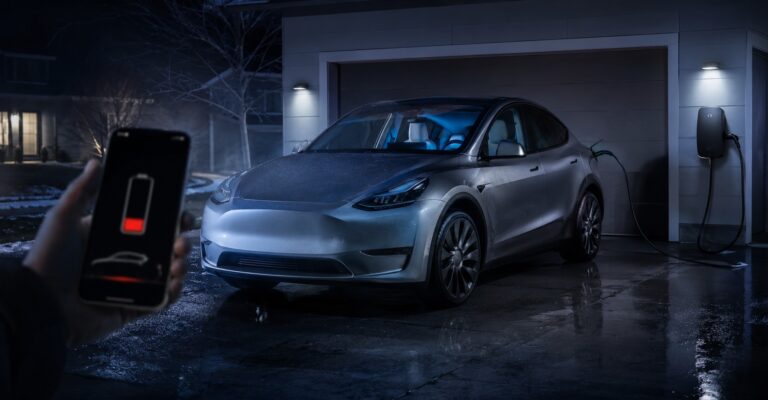
If your Tesla range is dropping suddenly, start with settings and recent driving before assuming battery degradation. Tesla vehicles use range estimates that can shift based on rated range display, energy usage, temperature, tire setup, and driving behavior.
Check whether the charge limit changed. Also review the Energy app, tire pressure, recent software updates, sentry mode use, cabin overheat protection, and whether the car has been parked unplugged in extreme weather. Some features are useful, but they can consume energy while parked.
For Tesla owners, it is also important to separate parked battery drain from driving range loss. If the battery percentage drops while parked, check sentry mode, cabin protection, third-party apps, poor cellular signal, and frequent app wake-ups. If the displayed miles drop while driving, focus on speed, temperature, HVAC use, tires, and route conditions.
Troubleshooting Table: Symptoms, Causes, and Fixes
Use this table to narrow down the cause of an electric car battery performance issue. It is not a replacement for professional diagnostics, but it can help you decide what to check first.
EV Range Troubleshooting Guide
| Symptom | Likely Cause | What to Do First | When to Get Service |
|---|---|---|---|
| Range drops after a cold night | Cold battery and cabin heating demand | Precondition, check tire pressure, reduce heater load | If warning lights appear or charging fails |
| Range drops after road trip | High speed, hills, wind, fast charging, heavy HVAC | Compare efficiency on slower local driving | If efficiency stays poor in normal conditions |
| Range drops after tire change | Different tire compound, size, or pressure | Confirm correct PSI and tire type | If steering pulls or tires wear unevenly |
| Range drops after update | Range estimator recalibration | Drive and charge normally for several cycles | If battery warnings or charging errors appear |
| Range drops with burning smell or heat near wheel | Possible brake drag or mechanical issue | Stop driving if unsafe and inspect carefully | Contact service immediately |
| Range drops while parked | Sentry mode, climate protection, app wake-ups, poor signal | Disable unnecessary parked features temporarily | If drain remains excessive with features off |
Step-by-Step EV Range Troubleshooting
Step 1: Check the Battery Percentage, Not Just Miles
Look at the battery percentage first. If the percentage is stable but the displayed miles changed, the issue may be the estimate. If the percentage is falling unusually fast, the vehicle is using more energy or losing charge while parked.
Step 2: Review Recent Driving
Think about the last few trips. Did you drive faster than usual? Did you carry extra passengers or cargo? Did you climb hills, tow, use a roof box, or drive into strong wind? These changes can make an EV range estimate drop quickly.
Step 3: Check Tire Pressure
Use the recommended pressure listed on the driver-side door label. Do not rely only on appearance because EV tires can look normal while still being low. Check pressure when the tires are cold for a more accurate reading.
Step 4: Look at Climate and Battery Preconditioning
If the weather is very cold or hot, your EV may use extra energy for comfort and battery protection. Preconditioning while plugged in can reduce battery drain during the first part of your drive.
Step 5: Watch Efficiency Data
Most EVs show energy use in miles per kWh or watt-hours per mile. If this number suddenly gets worse, the range drop is probably related to driving conditions or vehicle efficiency. If efficiency looks normal but range is still unusually low, the estimate or battery data may need attention.
Step 6: Check Charging Habits
Frequent DC fast charging, always charging to 100%, or repeatedly running very low can add stress over time. Modern EVs are well protected, but healthy charging habits still help preserve long-term range.
Step 7: Contact Service If the Pattern Does Not Improve
If range remains much lower in mild weather after several normal charge cycles, schedule service. Ask for a battery health check, software scan, tire and brake inspection, and charging system review.
Quick Fix Checklist
Try these quick fixes before assuming your electric vehicle is losing range quickly because of battery failure.
- Check tire pressure and adjust to the vehicle label.
- Precondition the cabin and battery while plugged in.
- Reduce highway speed when possible.
- Use heated seats instead of max cabin heat when comfortable.
- Remove unnecessary cargo, roof racks, or carriers.
- Review energy usage screens for unusual consumption.
- Turn off unnecessary parked features for one night and compare drain.
- Use the correct drive mode for efficiency.
- Check whether a recent software update changed range behavior.
- Schedule service if warning messages appear.
Ownership Cost, Insurance, and Resale Impact
Sudden EV range loss can affect ownership cost even if the cause is not serious. If your range estimate falls, you may charge more often or depend more on public chargers. Public DC fast charging can be convenient, but it is often more expensive than home charging.
Insurance considerations also matter. Most EV owners do not need special coverage for normal range loss, but battery damage from an accident is different. If you are buying or insuring an EV, understand how the insurer handles battery repairs, total-loss decisions, and replacement parts.
Resale value can be affected when buyers believe the battery is weak. That is why battery health reports, service records, tire records, and charging history can help. A used EV with a lower displayed estimate is not always a bad buy, but buyers should verify battery condition instead of relying only on dashboard miles.
Ownership Factors Affected by Range Loss
| Ownership Area | How Range Loss Can Affect It | Smart Owner Move |
|---|---|---|
| Charging cost | More frequent charging may increase monthly cost | Use home charging when possible |
| Road trips | More stops may be needed | Plan chargers before leaving |
| Insurance | Battery repair costs can influence claims | Review EV coverage details |
| Resale value | Buyers may worry about battery health | Keep service and battery reports |
| Family usability | Reduced range can affect school, work, and weekend trips | Match charging routine to real driving needs |
Used EV Shopping and Dealership Tips
If you are shopping for a used electric car, do not judge the vehicle only by the displayed range. Ask for a battery health report when available. Also ask about service history, tire condition, charging equipment, software updates, and whether the vehicle has been used mainly for highway driving, rideshare work, towing, or frequent DC fast charging.
During a test drive, check the efficiency screen instead of only watching the range estimate. Drive at city and highway speeds if possible. Look for warning lights, charging errors, unusual noises, vibration, pulling, or poor brake feel.
For financing or leasing, consider your real range needs. A cheaper used EV may still be a smart purchase if it covers your daily commute comfortably. However, if you regularly drive long distances in winter, a larger battery, faster charging capability, or heat pump may be worth more than a lower monthly payment.
Used EV Range Shopping Checklist
| What to Check | Why It Matters | Good Sign | Red Flag |
|---|---|---|---|
| Battery health report | Shows more than dashboard range | Clear report with normal capacity | Seller avoids battery questions |
| Tire type and condition | Tires affect efficiency and safety | Correct EV-rated or suitable tires | Mismatched or badly worn tires |
| Charging test | Confirms charging hardware works | Charges normally at Level 2 or DC station | Charging errors or slow charging without reason |
| Service records | Shows maintenance history | Documented updates and inspections | Missing history on a high-mileage EV |
| Real commute fit | Prevents range anxiety after purchase | Range comfortably exceeds daily needs | Range barely covers normal driving |
Practical Expert Insight
The biggest mistake EV owners make is treating the displayed range like a fixed promise. It is better to treat it like a weather forecast. It is useful, but it changes when conditions change.
For troubleshooting, focus on energy consumption and repeatable patterns. If your EV range estimate dropped after one cold highway trip, keep watching it. If the vehicle returns to normal after local driving and a full charge cycle, the battery is probably not the issue.
On the other hand, do not ignore a sudden EV range loss that comes with charging problems, reduced power, warning lights, strong mechanical drag, or a major change in mild weather. Those signs deserve professional diagnostics.
How to Prevent Sudden EV Range Loss
You cannot control every factor, but you can make range more predictable. Keep tires inflated, drive smoothly, avoid unnecessary cargo, precondition in extreme weather, and plan charging stops before long trips.
Also, avoid turning every drive into an efficiency test. EVs are built to be used. The goal is not to chase perfect range every day. The goal is to understand what is normal for your vehicle, your climate, and your driving style.
For long-term battery care, follow the owner’s manual. Many EVs are happiest when daily charging stays below 100% unless you need the extra range. However, some battery chemistries may have different recommendations, so always follow your specific vehicle’s guidance.
Helpful Video Guide
If your electric car range is dropping suddenly during seasonal temperature changes, this video offers a helpful visual explanation of how temperature can affect EV range. It is especially useful for new EV owners trying to understand why range estimates change in winter, summer, and mixed driving conditions.
Frequently Asked Questions
Why did my EV range suddenly drop overnight?
Your EV range may drop overnight because the battery cooled down, the car used energy for parked features, or the range estimator recalculated based on recent driving. In cold weather, the battery may show less usable range until it warms up. Features such as sentry mode, cabin protection, remote app checks, and poor cellular signal can also use energy while parked. First, compare battery percentage instead of only displayed miles. Then turn off unnecessary parked features for one night and check whether the drain improves.
Is sudden EV range loss a sign of battery degradation?
Sudden EV range loss is not always a sign of battery degradation. Real battery degradation usually happens gradually over months and years, not overnight. A sudden drop is more often connected to cold weather, highway speed, tire pressure, HVAC use, software changes, or a recalculated range estimate. However, if the range stays much lower in mild weather after several charge cycles, or if you see battery warnings, charging errors, or reduced power, schedule a professional battery health check.
Why is my EV range dropping fast in cold weather?
Cold weather reduces EV range because the battery works less efficiently and the vehicle uses extra energy to heat the cabin and sometimes the battery pack. Short winter trips make this more noticeable because the car spends a lot of energy warming up for only a short drive. Tire pressure also drops in cold weather, which adds rolling resistance. To improve winter range, precondition while plugged in, check tire pressure, drive smoothly, reduce highway speed, and avoid max heat when a moderate setting is enough.
Can low tire pressure really cause an electric vehicle efficiency problem?
Yes, low tire pressure can cause a noticeable electric vehicle efficiency problem. EVs are heavy, and their tires play a major role in rolling resistance. If the tires are underinflated, the motors need more energy to keep the vehicle moving. This can reduce range and may also cause uneven tire wear. Check the recommended PSI on the driver-side door label, not the number printed on the tire sidewall. Always check pressure when the tires are cold for the most accurate result.
What should Tesla owners check when range drops suddenly?
Tesla owners should check charge limit settings, tire pressure, the Energy app, recent software updates, sentry mode, cabin overheat protection, third-party apps, and parked battery drain. If the displayed range drops after highway driving or cold weather, the car may be adjusting its estimate. If battery percentage drops while parked, look for background features waking the vehicle. If the range drop comes with alerts, charging issues, or reduced power, schedule Tesla service and request diagnostic review.
When should I contact an EV service center?
Contact an EV service center if the range drop is large, repeatable, and not explained by weather, speed, tires, HVAC use, or route changes. You should also get service if warning lights appear, charging becomes unreliable, the vehicle limits power, the battery percentage falls unusually fast, or you notice mechanical symptoms such as pulling, dragging brakes, vibration, or heat near a wheel. Ask for a battery health scan, software check, tire inspection, brake inspection, and charging system diagnostic.
Final Practical Checklist
- Compare battery percentage, displayed miles, and real energy consumption.
- Check tire pressure before blaming the battery.
- Think about weather, speed, hills, wind, and HVAC use.
- Precondition the EV while plugged in during cold or hot weather.
- Review parked drain from sentry mode, cabin protection, and mobile apps.
- Watch the pattern across several normal charge cycles.
- Keep service records and battery health reports for resale confidence.
- Contact a qualified EV service center if alerts, charging faults, or reduced power appear.
Final Verdict
Electric car range dropping suddenly is frustrating, but it does not automatically mean the battery is failing. In many real-world cases, the cause is cold weather, high-speed driving, tire pressure, HVAC use, parked battery drain, software recalculation, or a change in your driving routine.
The best approach is to troubleshoot in order. Start with tire pressure, recent driving, temperature, charging behavior, and energy usage data. Then watch whether the range estimate improves after normal driving and charging. If the issue comes with warning lights, charging problems, reduced power, or a persistent major range loss in mild weather, professional diagnostics are the smart next step.
Overall, sudden EV range loss is often manageable when you understand what the vehicle is reacting to. With good habits, proper maintenance, and realistic expectations, most EV owners can reduce range anxiety and keep their electric vehicle practical for daily driving, family use, commuting, and long-term ownership.