Audi Q9 vs BMW X7: Which Luxury SUV Should US Buyers Wait For ?
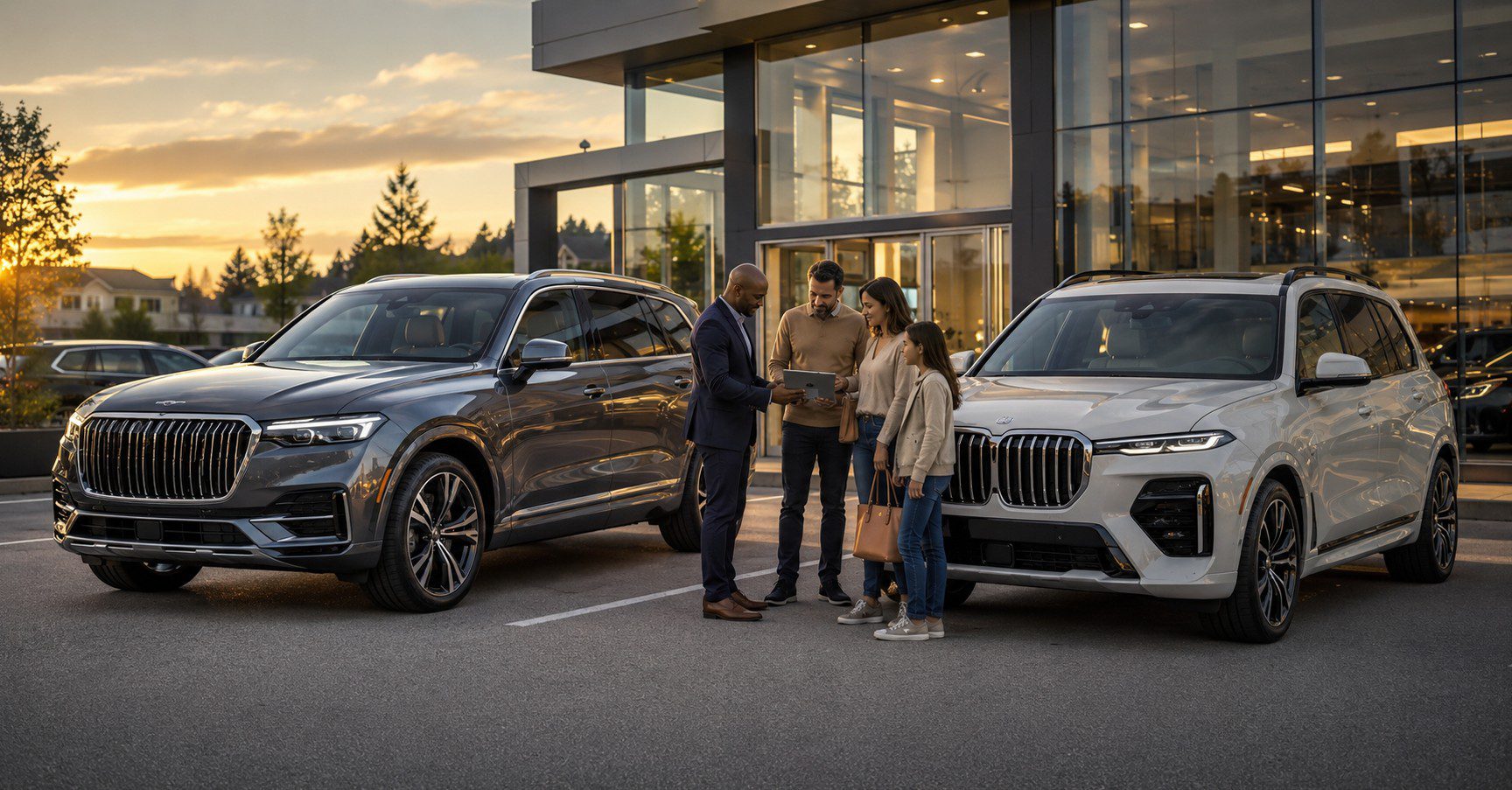
This comparison is different from a normal new-car matchup. The BMW X7 is already available to US shoppers, while the Audi Q9 is still a model many buyers are watching closely. So the better question is not only which SUV looks better on paper. The real question is whether you should buy a BMW X7 now or wait to see if the Audi Q9 becomes the stronger long-term choice.
Quick Answer: Which Option Is Better?
If you need a luxury three-row SUV now, the BMW X7 is the safer and more practical choice. It is already on sale in the United States, has established trims, dealer support, available financing, known service expectations, and a strong reputation as a premium family SUV. It is the better pick for buyers who need a real vehicle soon for commuting, school runs, family travel, business use, or long highway road trips.
What This Comparison Means
The Audi Q9 vs BMW X7 comparison is really about two different buying paths. The BMW X7 represents the established choice. It is a known full-size luxury SUV with three rows, premium materials, powerful engines, available high-performance versions, and a dealership network that can support shoppers today.
The Audi Q9 represents the future challenger. Audi has long offered the Q7 as a three-row SUV, but the Q7 is not as large or as flagship-focused as the BMW X7. A Q9 would give Audi a more direct competitor in the larger premium SUV segment, especially for US buyers who want space, comfort, and status without moving to a domestic body-on-frame luxury SUV.
For helpfulhub.com readers, the key point is simple. Do not compare an available SUV and an upcoming SUV as if both can be purchased the same way today. Instead, compare certainty versus potential. The X7 gives you certainty. The Q9 gives you potential.
Why This Comparison Matters Now
Large luxury SUVs are becoming more important in the US market. Families want three rows, but they also want high-end technology, quiet cabins, large screens, advanced driver assistance, and enough cargo room for road trips. At the same time, shoppers are paying attention to auto insurance costs, financing rates, fuel prices, maintenance cost, and long-term depreciation.
This is why the Audi Q9 vs BMW X7 luxury SUV question is not just about brand loyalty. It is about real ownership. A buyer in Texas may care about highway comfort and cooling performance. A buyer in Colorado may care about winter driving and all-wheel-drive confidence. A buyer in New Jersey or California may care about parking size, insurance premiums, and dealership access.
The BMW X7 already answers many of those questions. The Audi Q9 still needs final US details. However, if Audi positions it correctly, the Q9 could attract buyers who want a newer design, a more modern cabin, and a fresh alternative to the familiar German luxury SUV choices.
Main Difference Between Audi Q9 and BMW X7
The main difference is timing and certainty. The BMW X7 is a current luxury three-row SUV with established trims and known ownership expectations. The Audi Q9 is expected to be Audi’s largest and most luxurious SUV, but many buyer-critical details are still not final for the US market.
Another difference is brand character. BMW usually leans toward a more driver-focused experience, even in large SUVs. The X7 tries to combine comfort with confident power and responsive handling for its size. Audi traditionally focuses on interior design, technology integration, understated luxury, and all-weather confidence. If the Q9 follows that pattern, it may feel calmer and more lounge-like than the X7.
For buyers comparing Audi Q9 luxury SUV coverage with the BMW X7, the smartest approach is to separate confirmed facts from expectations. The X7 can be judged as a real showroom product. The Q9 should be judged as a promising upcoming competitor until full specifications are available.
Audi Q9 vs BMW X7 Quick Comparison Table
| Category | Audi Q9 | BMW X7 |
|---|---|---|
| Market status | Upcoming flagship SUV; final US details may vary | Available now in the US luxury SUV market |
| Best for | Buyers willing to wait for a new Audi flagship | Buyers who need a proven three-row SUV now |
| Size and seating | Expected to target full-size three-row luxury SUV buyers | Three-row luxury SUV with premium family usability |
| Driving character | Expected to emphasize comfort, technology, and refinement | Luxury comfort with strong BMW performance options |
| Pricing clarity | Not fully confirmed for US buyers | Available through BMW dealers, varies by trim and options |
| Ownership certainty | Lower until launch details are confirmed | Higher because service, trims, and resale history are known |
Interior, Space, and Comfort Compared
Interior quality will likely be one of the biggest reasons shoppers compare these SUVs. BMW already offers a premium cabin in the X7, with a large digital display setup, upscale materials, available luxury seating options, and a quiet highway feel. It is designed for families who want comfort but still want the vehicle to feel special.
The Audi Q9 is expected to raise Audi’s SUV cabin experience above the Q7. That matters because many Audi shoppers already like the brand’s clean dashboard design, logical controls, and premium lighting. If the Q9 delivers a roomier third row, more cargo space, and a richer second-row experience, it could become a serious family SUV alternative.
For daily life, the winner depends on what you value. The BMW X7 is already a strong choice for families, executives, and long-distance drivers. The Q9 could be better for buyers who prefer a calmer, more modern Audi atmosphere, but final seat comfort, cargo room, and third-row access need to be tested in real US conditions.
Interior and Comfort Comparison
| Interior Factor | Audi Q9 | BMW X7 |
|---|---|---|
| Cabin design | Expected to be modern, digital, and highly premium | Established luxury cabin with upscale BMW styling |
| Third-row comfort | Expected to improve over smaller Audi SUVs | Useful for families, kids, and occasional adults |
| Second-row experience | Likely a major focus for luxury buyers | Comfortable, premium, and road-trip friendly |
| Cargo flexibility | Expected to be competitive, but final space is not confirmed | Practical for a luxury three-row SUV |
| Cabin personality | Likely calm, tech-forward, and understated | Premium, sporty, and confident |
Cost Comparison
Cost is where US buyers need to be careful. The BMW X7 has real transaction prices, lease offers, dealer inventory, option packages, taxes, registration fees, and insurance quotes. The Audi Q9 does not yet have the same level of confirmed buyer information. That makes any Audi Q9 vs BMW X7 price comparison partly dependent on future Audi announcements.
Luxury SUVs also become expensive because of options. A base MSRP is only the start. Premium paint, larger wheels, upgraded audio, advanced seating, rear entertainment, driver assistance packages, and appearance packages can push the final price higher. Dealer fees, destination charges, local taxes, and financing terms also change the real monthly payment.
If you are tracking the upcoming Audi, keep an eye on Audi Q9 price updates for the USA. For the BMW X7, compare multiple dealers and ask for an out-the-door price before discussing monthly payment.
Cost and Buying Clarity Table
| Cost Factor | Audi Q9 | BMW X7 |
|---|---|---|
| Purchase price | Expected to be premium; final US pricing not confirmed | Known through BMW dealers; varies by trim and options |
| Dealer availability | Depends on launch timing and allocation | Available through current BMW dealer network |
| Discount potential | Unknown at launch; early demand may limit deals | Depends on inventory, region, and trim |
| Lease offers | Not clear until official programs are released | Available but changes monthly by region and credit profile |
| Best buying strategy | Wait for final specs, pricing, and early reviews | Compare dealers, incentives, lease terms, and finance rates |
Pros and Cons Compared
No luxury SUV is perfect. The BMW X7 gives buyers confidence because it is already established, but it can be expensive to buy, insure, fuel, and maintain. The Audi Q9 may bring fresh design and more direct competition, but early buyers may face limited inventory, unknown resale trends, and unclear long-term repair costs.
This is why the best choice depends on your timeline. If your current lease ends soon or your family needs a larger SUV now, the X7 is easier to justify. If your current vehicle still works and you want the newest option, waiting for the Q9 may be smarter.
Pros and Cons Table
| Vehicle | Pros | Cons |
|---|---|---|
| Audi Q9 | Fresh flagship SUV, expected premium cabin, likely strong technology, potential alternative to BMW and Mercedes | Final US pricing, powertrains, resale value, and real-world ownership costs are not fully known |
| BMW X7 | Available now, proven luxury SUV, strong performance choices, established dealer support, known ownership path | Expensive options, premium maintenance, high insurance potential, large size may not suit all drivers |
Total Ownership Cost
Total ownership cost includes more than the sticker price. US luxury SUV buyers should think about depreciation, insurance, fuel, scheduled maintenance, tires, brakes, registration fees, and repairs after warranty coverage ends. A large SUV with big wheels and advanced technology can cost more to own than a midsize SUV, sedan, truck, hybrid vehicle, or electric vehicle.
For the BMW X7, shoppers can estimate ownership cost more easily because the model has a history in the market. For the Audi Q9, early estimates should be conservative. New luxury models can have strong demand at launch, but long-term depreciation and repair trends take time to understand.
Also think about how long you plan to keep the SUV. A three-year lease creates a different cost picture than a seven-year ownership plan. Long-term owners should pay extra attention to warranty coverage, service plans, tire costs, and technology repair risk.
Total Ownership Cost Comparison
| Ownership Factor | Audi Q9 | BMW X7 |
|---|---|---|
| Depreciation | Unknown until the model builds resale history | Premium SUV depreciation varies by trim, mileage, and condition |
| Maintenance cost | Expected to be premium-brand expensive | Premium maintenance costs should be expected |
| Tires and brakes | Likely costly if equipped with large wheels | Can be expensive, especially on larger wheel packages |
| Fuel or energy cost | Depends on final powertrain choices | Depends on engine, driving style, fuel prices, and trim |
| Long-term confidence | Wait for reliability data and owner feedback | More predictable because it is already established |
Financing and Insurance
Financing and insurance can change the real winner in this comparison. A vehicle that looks affordable by MSRP may become expensive once interest rate, down payment, term length, taxes, registration, and insurance premiums are included. That is especially true with luxury SUVs.
For the BMW X7, buyers can request real finance and lease quotes today. You can compare 36-month, 48-month, 60-month, and 72-month financing, but longer terms can increase total interest cost. Leasing may lower the monthly payment, but mileage limits, wear charges, and lease-end fees matter.
For the Audi Q9, financing will depend on launch programs, dealer allocation, and demand. Early buyers may not get the strongest deals right away. Insurance may also be hard to estimate until insurers have more repair-cost data.
Financing and Insurance Comparison
| Factor | Audi Q9 | BMW X7 |
|---|---|---|
| Loan shopping | Wait for official pricing and dealer programs | Compare dealer financing, credit unions, and banks |
| Lease predictability | Unknown until lease programs are announced | More predictable because programs already exist |
| Insurance quotes | May be difficult before full launch | Easy to quote with your insurer before purchase |
| Best advice | Do not order without understanding total monthly cost | Get insurance quotes before signing any deal |
Maintenance and Reliability
Maintenance is one of the biggest differences between a mainstream family vehicle and a full-size luxury SUV. Even routine work can cost more because of premium parts, larger tires, complex electronics, advanced suspension systems, and brand-specific service requirements.
The BMW X7 has the advantage of known service routines. Buyers can ask dealers about maintenance plans, warranty coverage, tire replacement cost, brake service, and extended coverage. Independent European repair shops may also have experience with the model, depending on your area.
The Audi Q9 will need time to prove itself. Early owners of any new model should expect more uncertainty. That does not mean the Q9 will be unreliable. It simply means buyers should avoid assuming long-term reliability before real owner data, service history, and repair patterns are available.
Maintenance and Reliability Table
| Factor | Audi Q9 | BMW X7 |
|---|---|---|
| Service history | Not established yet as a new flagship SUV | Established model with known service expectations |
| Repair predictability | Lower until real-world data builds | Higher because owners and shops have experience |
| Warranty importance | Very important for early buyers | Still important because repairs can be expensive |
| Long-term ownership | Best to wait for reliability feedback if keeping past warranty | More predictable, but still premium-cost ownership |
Safety and Technology
Luxury SUV buyers expect advanced driver assistance, high-quality cameras, parking support, blind-spot monitoring, lane assistance, adaptive cruise control, and strong infotainment. However, safety technology should not be judged only by how many features are listed. It should be judged by how well those features work in daily driving.
The BMW X7 offers a modern technology experience with large screens, connected services, available premium audio, navigation, smartphone integration, and driver assistance features that vary by package and model year. Buyers should check the exact window sticker because technology content can change by trim and option package.
The Audi Q9 is expected to be highly technology-focused. Audi usually does well with digital cockpit design and clean infotainment presentation. However, buyers should wait for final US feature packaging before assuming which systems are standard and which cost extra.
For shoppers who care about future transportation trends, it is also useful to compare luxury SUVs with EV and hybrid market changes. HelpfulHub readers following electric vehicle trends can also review top electric cars for 2026 in the US to understand how luxury SUVs fit into the changing market.
Fuel Economy, Energy Cost, and Future Powertrains
Fuel economy matters even in the luxury SUV segment. A large three-row SUV can use more fuel than a compact SUV, sedan, hybrid vehicle, or electric vehicle. For US buyers who drive long distances, commute daily, or take frequent road trips, fuel cost should be part of the decision.
The BMW X7 uses gasoline powertrains in the US market, with fuel economy depending on engine choice, wheel size, driving style, traffic, weather, and highway speed. Buyers should check the official window sticker for the exact model they are considering.
The Audi Q9 powertrain strategy for US buyers should be checked when final details arrive. If Audi offers mild-hybrid or plug-in hybrid options in some markets, US availability may still differ. Until then, do not assume EV range, charging capability, or electric-only driving unless Audi confirms it for the US version.
This is a good reminder that a luxury SUV is not only about purchase price. Gas vehicle, hybrid vehicle, diesel vehicle, and electric vehicle ownership costs can differ widely. Charging access, fuel prices, state incentives, home charging, and road-trip habits can all affect the best choice.
Family Usability and Daily Driving
For families, the best SUV is the one that works on a normal Tuesday, not just during a test drive. School drop-off, grocery trips, sports practice, airport runs, parking garages, and weekend road trips reveal whether a vehicle is easy to live with.
The BMW X7 is large, comfortable, and premium, but its size can be a downside in tight city parking or older garages. Families should test car-seat access, third-row entry, rear climate controls, cargo room with all seats up, and visibility from the driver’s seat.
The Audi Q9 may become a strong family vehicle if it delivers true full-size space and easy third-row access. Audi shoppers should wait to inspect cargo space, rear-seat comfort, seat-folding controls, and child-seat practicality in person.
Daily drivers should also consider how the SUV feels in traffic. A smooth powertrain, good cameras, simple controls, and comfortable seats matter more over time than a spec sheet. That is where a real test drive is essential.
Best Premium SUV for Long Road Trips
The BMW X7 is already a strong road-trip SUV because it offers a quiet cabin, strong engines, comfortable seating, and the kind of highway confidence luxury buyers expect. For long drives across states, comfort and dealer support are major advantages.
The Audi Q9 could also be a premium road-trip machine if it delivers the expected space, technology, and refinement. Audi’s all-weather confidence may appeal to families who drive through rain, snow, and mountain routes. Still, the final verdict depends on real seats, real cargo room, real fuel economy, and real ride quality.
For road trips, do not focus only on horsepower. Look at seat comfort after two hours, noise levels at highway speed, cargo space with passengers aboard, driver assistance performance, charging or fueling convenience, and how easy the infotainment system is to use without distraction.
Dealership Shopping Tips
When shopping for the BMW X7, compare at least two or three dealers if possible. Ask for the full out-the-door price, not just the monthly payment. Review taxes, destination charges, documentation fees, dealer add-ons, protection packages, and trade-in value separately.
If you are waiting for the Audi Q9, avoid placing a deposit unless you understand whether it is refundable. Also ask whether the dealer expects markups, forced accessories, limited allocation, or delayed delivery. New luxury models can attract early demand, and that can reduce negotiation power.
Buyers comparing multiple premium vehicles may also want to review broader luxury performance comparisons, such as luxury sports car comparison insights, to understand how brand personality affects ownership expectations across premium vehicles.
Which Is Better for Different Buyers?
The best choice depends on your timeline, budget, family needs, and comfort with uncertainty. Some buyers should choose the BMW X7 without waiting. Others should delay and see how the Audi Q9 arrives in the US market.
Best Option by Buyer Type
| Buyer Type | Better Choice | Why |
|---|---|---|
| Family needing a vehicle soon | BMW X7 | Available now with known space, trims, financing, and dealer support |
| Audi loyalist | Audi Q9 | Worth waiting if you want Audi’s largest SUV and prefer the brand’s design |
| Long-distance highway driver | BMW X7 | Already proven as a comfortable premium road-trip SUV |
| Technology-focused buyer | Depends | The X7 is strong now, but the Q9 may bring newer tech when fully revealed |
| Budget-conscious luxury buyer | BMW X7 or wait | Compare real X7 deals now, but wait for Q9 pricing before deciding |
| Long-term owner past warranty | BMW X7 with caution | More ownership data exists, but extended coverage may still be smart |
Practical Expert Insight
The most practical way to think about Audi Q9 vs BMW X7 2026 and Audi Q9 vs BMW X7 2027 is to separate desire from timing. The Q9 may become one of the most interesting luxury SUVs for buyers who want something new. However, a vehicle that has not fully arrived cannot solve an immediate family transportation problem.
If you need a three-row luxury SUV now, test drive the BMW X7 and compare it with the Mercedes-Benz GLS, Cadillac Escalade, Lincoln Navigator, Range Rover, and other large premium SUVs. If you are not in a hurry, track the Audi Q9 and wait for final pricing, powertrain details, crash-test information, warranty terms, and first owner feedback.
A smart buyer does not buy only the badge. A smart buyer compares the full ownership experience. That includes payment, insurance, maintenance, resale value, dealership support, daily comfort, and how the vehicle fits real life.
Future Trends and Long-Term Implications
The luxury SUV market is moving toward bigger screens, more connected services, advanced driver assistance, electrified powertrains, and more personalized cabin experiences. Buyers should expect future SUVs to blend traditional luxury with software-driven features.
This trend may help the Audi Q9 if Audi uses the vehicle to showcase its next generation of interior technology and comfort. It may also push BMW to keep improving the X7 with updated software, design, safety features, and powertrain refinement.
For long-term buyers, the challenge is technology aging. A luxury SUV can feel cutting-edge when new, but software, screens, subscriptions, and driver assistance systems can age quickly. Before buying, ask how updates work, what features require subscriptions, and what happens after the basic warranty ends.
Common Mistakes to Avoid
One common mistake is comparing a future Audi Q9 to a current BMW X7 as if every detail is already confirmed. That can lead to unrealistic expectations. Wait for final US specifications before making a serious decision.
Another mistake is shopping by monthly payment only. A low monthly payment can hide a long loan term, high total interest, a large down payment, or poor trade-in value. Always compare the full out-the-door cost.
Luxury SUV buyers also forget insurance. Before you buy or order either vehicle, get quotes from your insurer. Premium SUVs can cost more to repair, and that can affect rates.
Finally, do not ignore size. A full-size luxury SUV may feel amazing on the highway but stressful in a tight garage or crowded city. Test the vehicle in the kind of places you actually drive.
FAQs
Is the Audi Q9 better than the BMW X7?
It is too early to say the Audi Q9 is better than the BMW X7 because the Q9 still needs final US pricing, specifications, powertrain details, and real-world reviews. The BMW X7 is already available and has a proven place in the luxury three-row SUV market. The Q9 may become a strong challenger if it offers excellent space, technology, comfort, and value. For now, the X7 is better for buyers who need certainty. The Q9 is better for shoppers who can wait and want to see Audi’s newest flagship SUV before deciding.
Should I wait for the Audi Q9 or buy the BMW X7 now?
Buy the BMW X7 now if your family needs a premium three-row SUV soon, your lease is ending, or you want clear pricing and available dealer support. Wait for the Audi Q9 if your current vehicle still works and you prefer Audi’s design, technology, and brand personality. Waiting makes sense only if you are comfortable with unknown pricing, possible early demand, and limited launch inventory. A practical approach is to test drive the X7 now, then compare it again once the Q9 has final US details.
Which SUV is better for families?
The BMW X7 is currently the safer family recommendation because US buyers can inspect the cabin, test third-row access, check cargo space, install car seats, and compare trims today. It works well for school runs, commuting, long road trips, and premium family use. The Audi Q9 could become a very strong family SUV if it delivers true full-size space, easy third-row access, and a comfortable second row. However, families should wait for real-world testing before assuming it is better than the X7.
Which SUV will cost more to own?
Both SUVs should be treated as premium-cost vehicles. The BMW X7 has known ownership factors, including luxury-brand maintenance, insurance, tires, fuel, and depreciation. The Audi Q9’s total cost will depend on final pricing, warranty coverage, powertrain choices, repair costs, insurance ratings, and resale value. Early Q9 buyers may face less predictable ownership costs because the model will need time to build a record. For either SUV, get insurance quotes, compare financing terms, and budget for maintenance before buying.
Is the BMW X7 good for road trips?
Yes, the BMW X7 is well suited for road trips if you want a quiet cabin, strong power, premium seating, and three-row flexibility. It is especially appealing for families who take highway trips, airport drives, weekend travel, or long interstate routes. However, fuel cost, tire wear, and premium maintenance should be part of the budget. Before buying, test the seats, check cargo room with passengers onboard, and make sure the driver assistance features you want are included on the exact trim you choose.
Will the Audi Q9 be electric?
US buyers should not assume the Audi Q9 will be fully electric unless Audi confirms that for the US market. Audi may use electrified technology in future vehicles, but the final Q9 powertrain lineup, fuel economy, charging capability, and EV range should be checked from official US information when available. If you want a fully electric luxury SUV, compare current EV options separately. The Q9 may still be relevant to future transportation, but buyers should avoid making decisions based on unconfirmed EV claims.
Which one has better resale value?
The BMW X7 has an advantage because it already has used-market history. Resale value still depends on trim, mileage, condition, accident history, color, options, service records, and local demand. The Audi Q9’s resale value is unknown until it reaches the market and builds buyer demand over time. A new model can be exciting, but early depreciation can be hard to predict. If resale value matters, avoid overpaying for options, keep service records, and compare lease terms against long-term ownership cost.
Final Practical Checklist
- Choose the BMW X7 if you need a luxury three-row SUV now.
- Wait for the Audi Q9 if you prefer Audi and can delay your purchase.
- Do not compare unconfirmed Q9 specs with confirmed X7 specs as equal facts.
- Ask for the full out-the-door price before discussing monthly payment.
- Get insurance quotes before buying either SUV.
- Check cargo room, third-row access, and car-seat fit in person.
- Compare lease and finance offers from multiple sources.
- Budget for premium tires, brakes, maintenance, and repairs.
- Review warranty coverage and extended service plan options.
- Test drive on highways, city roads, and parking areas similar to your daily life.
Final Verdict
The balanced verdict is clear. The BMW X7 is the better choice for US buyers who need a proven full-size luxury SUV today. It offers real availability, known trims, established dealer support, and a strong mix of comfort, performance, technology, and family practicality. It is not cheap to own, but it is easier to evaluate before signing a deal.
The Audi Q9 is the more exciting wait-and-see option. It could finally give Audi a direct answer to the BMW X7 and other flagship luxury SUVs. If Audi delivers strong space, premium comfort, smart technology, and competitive pricing, the Q9 may become one of the most important luxury SUV launches for US buyers.
For now, the best recommendation is buyer-focused. Buy the BMW X7 if you need certainty. Wait for the Audi Q9 if you want the newest Audi flagship and can afford to delay. Either way, compare the full cost of ownership, not just the badge, the screen size, or the monthly payment.