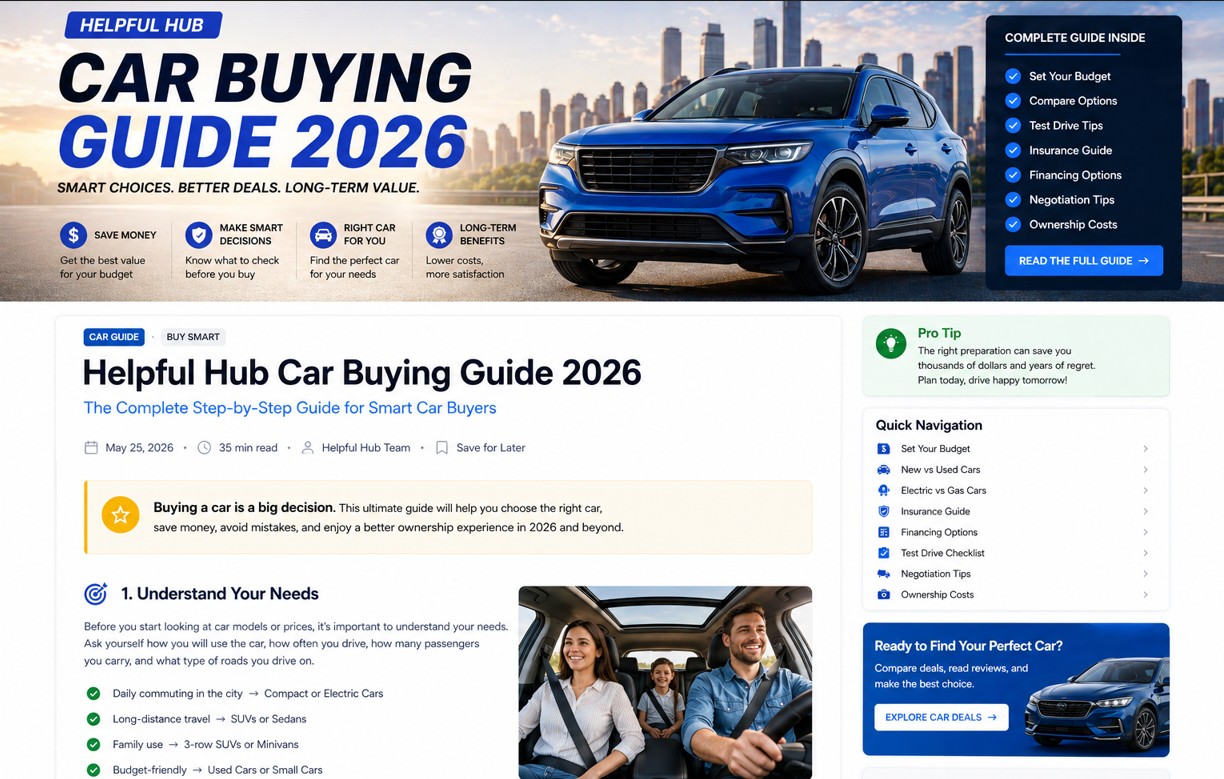
Helpful Car Buying Guide – How to Choose the Right Car in 2026
This complete new car buying guide 2026 helps drivers choose the right vehicle based on budget, safety, fuel economy, and future technology trends.
Buying a car in 2026 is one of the most important financial decisions you can make. With rising vehicle prices, expanding electric vehicle options, new financing models, and complex insurance systems, the process is no longer simple. A smart buyer today needs to think beyond just choosing a car—they need to understand long-term costs, value, and usability.
This complete Helpful Hub Car Buying Guide will walk you step-by-step through everything you need to know before purchasing a car, whether it is your first vehicle, a family upgrade, or an investment for business use.
Understanding Your Needs Before Buying a Car
Before you even look at car models or prices, the most important step is understanding your purpose. Many buyers make the mistake of choosing a car based on emotion rather than logic. This leads to overspending or buying a vehicle that does not match their daily needs.
Ask yourself a few simple questions. How often will you use the car? Will it be used for daily commuting, long-distance travel, or occasional use? Do you need space for a family, or is it just for personal use? Will you drive mostly in the city or on highways?
If your daily driving involves heavy traffic and short distances, a small compact car or an electric vehicle is often the best choice. These cars are easier to park, consume less energy, and are cheaper to maintain. On the other hand, if you travel frequently with family or require more space, an SUV or crossover may be more suitable.
Setting a Realistic Budget
One of the biggest mistakes car buyers make is focusing only on the purchase price. The true cost of owning a car goes far beyond the sticker price.
You need to consider insurance, fuel or electricity costs, maintenance, repairs, registration fees, and depreciation. A car that seems affordable initially may become expensive over time due to high running costs.
A smart rule is to ensure that your total car expenses do not exceed 30 to 40 percent of your annual income. This includes loan payments, insurance, and maintenance.
If you are financing your car, make sure the monthly payment fits comfortably within your budget. Never stretch your finances just to buy a more expensive model. Financial stress after purchase is one of the most common regrets among car buyers.
Choosing Between New and Used Cars
The next important decision is whether to buy a new car or a used car. Each option has its advantages and disadvantages.
A new car offers the latest features, full warranty coverage, and peace of mind. You do not have to worry about hidden issues, and the driving experience is usually better. However, new cars are significantly more expensive and lose value quickly due to depreciation.
Used cars, on the other hand, are much more affordable and have already gone through the biggest depreciation phase. You can often get a higher-end model for the same price as a new lower-end car. However, used cars come with risks, including potential mechanical problems and limited warranty coverage.
If you choose a used car, it is essential to check the vehicle history, service records, and condition carefully. Getting a professional inspection before purchase is highly recommended.
Gas Cars vs Electric Vehicles in 2026
One of the biggest changes in the automotive industry is the rise of electric vehicles. Buyers today must decide whether to choose a traditional gasoline car or switch to an electric vehicle.
Gasoline cars are still widely available and usually have a lower upfront cost. Refueling is quick and convenient, and service centers are easily accessible. However, fuel costs continue to rise, and maintenance expenses can be high over time.
Electric vehicles offer a completely different experience. They have lower running costs, require less maintenance, and produce zero emissions. Charging an EV is significantly cheaper than fueling a gas car. However, EVs usually have a higher initial price, and charging infrastructure may vary depending on your location.
For city driving and daily commuting, electric vehicles are becoming the preferred choice. For long-distance travel or areas with limited charging stations, gasoline cars may still be more practical.
Researching the Right Car Model
Once you have decided your budget and type of car, the next step is research. This is where many buyers fail because they rely only on advertisements or dealer recommendations.
You should compare multiple models before making a decision. Look at fuel efficiency, safety ratings, reliability, resale value, and user reviews. Online reviews, YouTube videos, and automotive forums can provide valuable insights.
Pay attention to long-term ownership costs. Some cars may be cheap to buy but expensive to maintain. Others may have excellent reliability and lower overall costs.
Research is what separates a smart buyer from an impulsive one.
Understanding Car Insurance
Car insurance is a mandatory expense in most countries and a major part of ownership cost. The price of insurance depends on several factors, including the car model, location, driver age, and driving history.
Electric vehicles often have slightly higher insurance costs due to expensive components like batteries and advanced technology. However, some insurance companies offer discounts for eco-friendly vehicles.
It is always a good idea to compare insurance quotes before buying a car. Choosing the right insurance plan can save you a significant amount of money over time.
Maintenance and Reliability
Maintenance is another critical factor that many buyers ignore. A car that requires frequent repairs or expensive parts can quickly become a financial burden.
Reliable brands and models tend to have lower maintenance costs and better long-term performance. Before buying, check how easily spare parts are available and whether service centers are accessible in your area.
Regular maintenance is essential to keep your car in good condition. Following the manufacturer’s service schedule can prevent major issues and extend the life of your vehicle.
The Importance of a Test Drive
A test drive is one of the most important steps in the car buying process. It allows you to experience the car in real conditions and evaluate its comfort, handling, and performance.
During a test drive, pay attention to seating comfort, visibility, steering response, braking, and overall driving feel. Make sure the car meets your expectations and feels right for your needs.
Never skip the test drive, even if you are confident about your choice. It can reveal issues that are not visible on paper.
Negotiating the Best Deal
Many buyers accept the first price offered by the dealer, but this is a mistake. Negotiation is a normal part of car buying, and you can often save a significant amount of money by comparing offers.
Visit multiple dealerships and check online listings to understand the market price. Ask about discounts, promotions, and additional benefits. Even small savings can make a big difference in the final cost.
Being patient and informed gives you the advantage during negotiation.
Financing Options and Loan Strategy
If you are not paying in cash, you will likely need a car loan. Understanding financing options is essential to avoid paying unnecessary interest.
A good strategy is to make a down payment of at least 20 percent and choose a shorter loan term. This reduces the total interest paid and helps you pay off the loan faster.
Always read the loan agreement carefully and understand the terms before signing.
Avoiding Common Car Buying Mistakes
There are several common mistakes that buyers make, and avoiding them can save you money and stress.
Buying based on emotions rather than logic is one of the biggest mistakes. Ignoring long-term costs, skipping research, and failing to compare options are also common issues.
Always take your time, gather information, and make a decision based on facts rather than excitement.
Best Car Types for Different Needs
Different types of cars serve different purposes. Compact cars are ideal for city driving and offer excellent fuel efficiency. SUVs provide more space and are suitable for families and long trips. Electric cars are perfect for modern, eco-friendly driving with lower running costs.
Choosing the right type of car depends on your lifestyle, budget, and driving needs.
Future Trends in Car Buying
The automotive industry is evolving rapidly, and the future of car buying is changing. Electric vehicles are expected to dominate the market, and new technologies like autonomous driving and connected systems are becoming more common.
Online car buying is also becoming popular, allowing buyers to compare and purchase vehicles from the comfort of their homes.
Staying informed about these trends can help you make a better decision.
Final Thoughts
Buying a car is not just about selecting a model—it is about making a smart financial and lifestyle decision. A well-informed buyer can save thousands of dollars and enjoy a better ownership experience.
By following this Helpful Hub Car Buying Guide, you can approach the process with confidence and clarity. Take your time, do your research, and choose a car that truly meets your needs.
A smart decision today will benefit you for years to come.
best car buying guide for first time buyers 2026
how to choose the right car in 2026
complete new car buying guide 2026 usa
smart tips before buying a new car 2026
best budget friendly cars buying guide 2026