EV Charging Cost 2026: How Much Does It Cost to Charge an Electric Car ?
Electric vehicles (EVs) are rapidly gaining popularity worldwide. With rising fuel prices and increasing environmental awareness, more people are switching to electric cars.
However, one of the most common questions buyers ask is:
👉 “How much does it cost to charge an electric car?”
In this complete guide, you’ll learn everything about EV charging costs, including home charging, public charging, and how to save money.
💰 Average EV Charging Cost in 2026
The cost of charging an electric vehicle depends on three key factors:
- Electricity rates in your region
- Battery capacity (kWh)
- Charging method (home vs public)
Typical Costs:
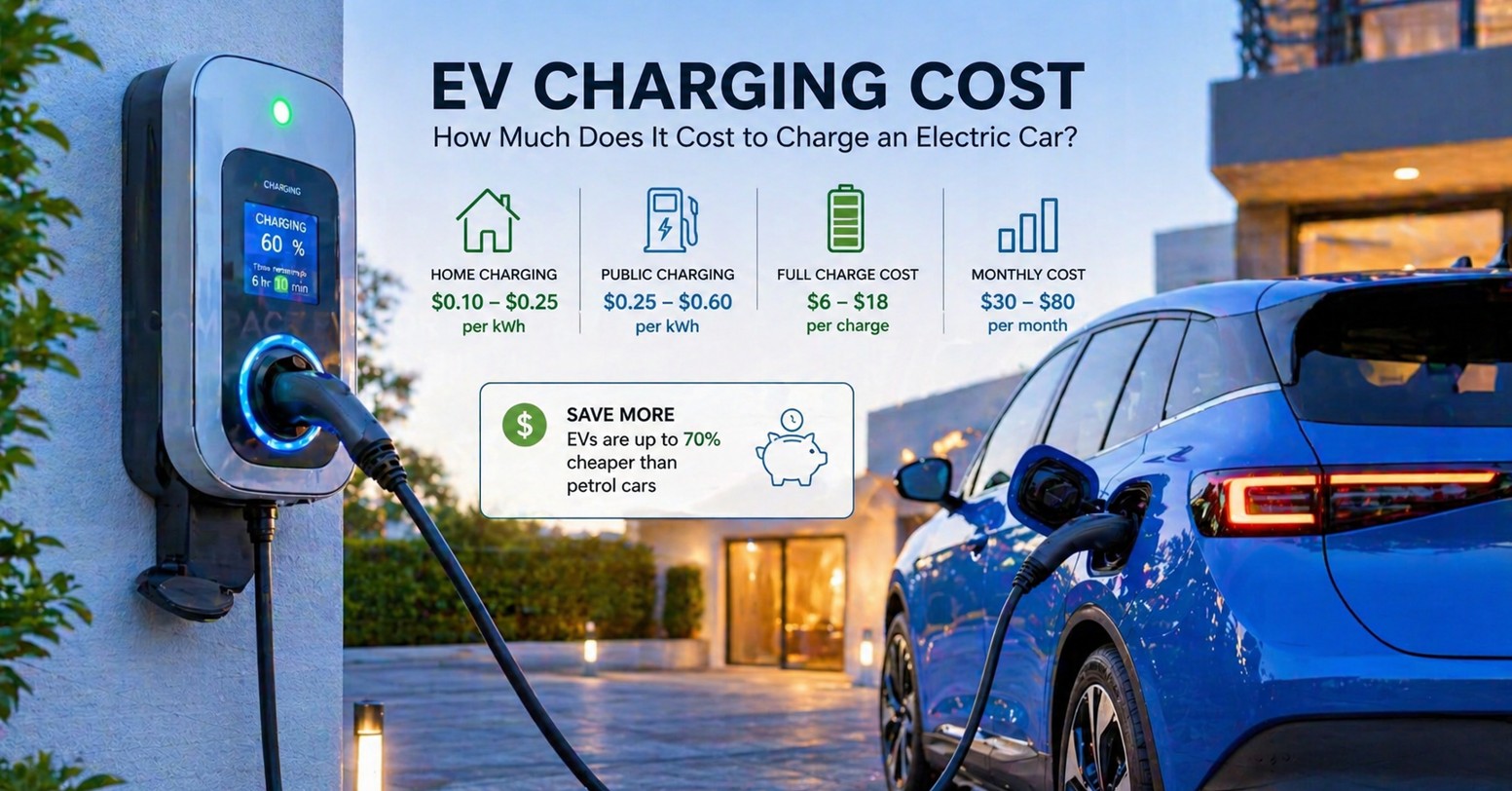
- Home Charging: $0.10 – $0.25 per kWh
- Public Charging: $0.25 – $0.60 per kWh
- Full Charge Cost: $6 – $18 per charge
- Monthly Charging Cost: $30 – $80
👉 Compared to gasoline cars, EVs can reduce fuel expenses by up to 70%.
🏠 Home Charging vs Public Charging
🔌 Home Charging (Most Affordable Option)
Charging your EV at home is the cheapest and most convenient option.
✔ Lower electricity rates
✔ Overnight charging available
✔ Ideal for daily driving
👉 Best for regular EV users
⚡ Public Charging Stations
Public charging stations offer faster charging but at a higher cost.
✔ Fast charging (30–60 minutes)
✔ Widely available in cities
❌ Higher price per kWh
👉 Best for long trips or emergency charging
🚗 Real Cost Example
Let’s consider a small electric car with a 40 kWh battery:
- Full charge cost ≈ $8
- Driving range ≈ 250 km
👉 Cost per kilometer:
👉 Approximately $0.03/km
This is significantly cheaper than gasoline vehicles.
🌍 EV Charging Cost by Region
| Region | Average Cost per kWh |
|---|---|
| USA 🇺🇸 | $0.15 |
| UK 🇬🇧 | $0.30 |
| Europe 🇪🇺 | $0.25 |
| Asia 🌏 | $0.08 – $0.20 |
👉 Electricity costs vary, but EV charging remains more affordable than fuel worldwide.
📊 Factors That Affect Charging Cost
Several factors influence your EV charging expenses:
- Electricity pricing (peak vs off-peak)
- Battery size
- Driving habits
- Weather conditions
- Charging speed (fast vs slow)
👉 Cold weather can slightly increase energy consumption.
💡 How to Reduce EV Charging Costs
Here are smart ways to save money:
✔ Charge during off-peak hours
✔ Use home charging whenever possible
✔ Avoid frequent fast charging
✔ Maintain smooth driving habits
✔ Consider solar charging for long-term savings
⚡ EV vs Gas Cost Comparison
| Expense Type | Electric Car | Gas Car |
|---|---|---|
| Monthly Cost | $30 – $80 | $150 – $300 |
| Cost per km | ~$0.03 | ~$0.10+ |
👉 EVs are clearly more cost-efficient in the long run.
🚀 Why EV Charging is the Future
Electric vehicles offer:
✔ Lower running costs
✔ Reduced carbon emissions
✔ Less maintenance
✔ Long-term savings
As technology improves, EV charging will become even cheaper and more accessible.
🔚 Conclusion
EV charging costs in 2026 are significantly lower than traditional fuel expenses. While the initial purchase price of an EV may be higher, the long-term savings make it a smart investment.
👉 If you want lower monthly expenses and eco-friendly transportation, electric vehicles are the future.
Continue reading related electric vehicle guides from HelpfulHub.
Explore More Helpful EV Guides