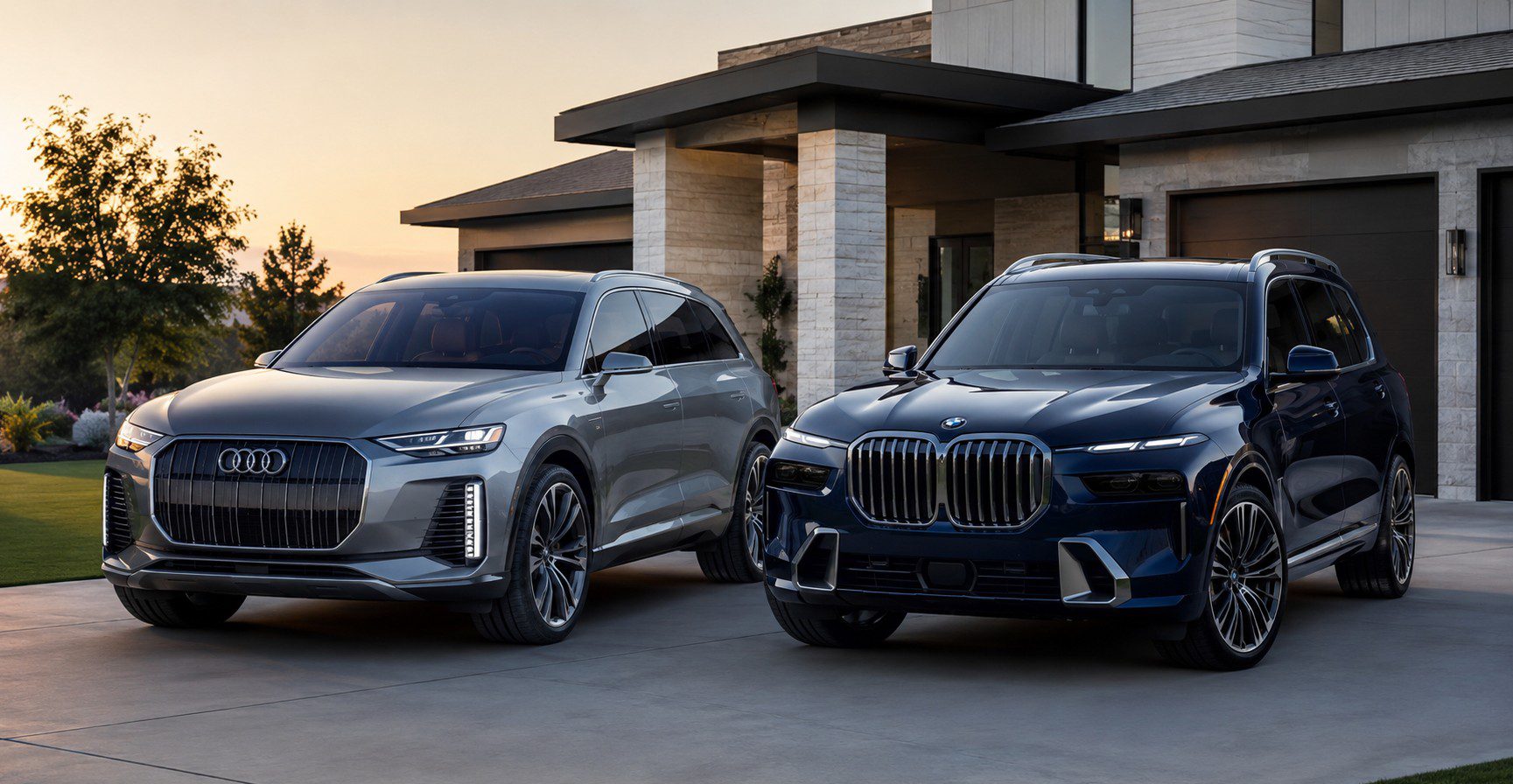
Audi Q9 vs BMW X7: Which Luxury SUV Is Better for Families and Daily Driving in 2026?
Audi Q9 vs BMW X7: Which Luxury SUV Is Better for Families and Daily Driving in 2026?
The audi q9 vs bmw x7 comparison is one of the most interesting luxury SUV matchups for 2026 because it brings together two very different ideas of premium family transportation. The BMW X7 is already a proven full-size luxury SUV with strong engines, three-row seating, advanced technology, and a confident road presence. The Audi Q9, on the other hand, is Audi’s new large flagship SUV entry, designed to give Audi shoppers a true rival to the X7 and Mercedes-Benz GLS.
For US buyers, this comparison matters because a full-size luxury SUV is not a small purchase. It has to work for school runs, highway trips, airport pickups, business use, weekend travel, winter weather, family vacations, and daily commuting. Buyers are not only comparing badge prestige. They are comparing real comfort, cargo space, insurance costs, maintenance, technology, fuel economy, hybrid possibilities, and long-term ownership confidence.
This guide breaks down the Audi Q9 and BMW X7 in a practical way. Instead of only focusing on horsepower or styling, we will look at how each SUV may fit real American families and drivers in 2026.
Quick Answer Box
Quick answer: The BMW X7 is the safer choice if you want a proven luxury SUV with confirmed pricing, available trims, strong performance, and an established ownership record. The Audi Q9 is worth waiting for if you like Audi’s design, want a fresh full-size luxury SUV, and are interested in its roomy cabin, six- or seven-seat layout, automatic doors, panoramic roof, and new flagship interior experience. For families who need a vehicle immediately, the BMW X7 is easier to recommend because it is already on sale and well understood. For buyers who can wait, the Q9 could become a serious competitor if its final US pricing, powertrains, ride quality, fuel economy, and dealership availability are competitive. The smartest approach is to test drive the BMW X7 now, then compare it with the Q9 when local Audi dealers have real inventory.
Table of Contents
- What This Comparison Means
- Quick Specs and Positioning Overview
- Audi Q9 vs BMW X7 Interior and Technology
- Comfort, Space, and Family Practicality
- Performance and Driving Experience
- Fuel Economy, Hybrid Tech, and Daily Driving
- Price, Features, and Value
- Ownership Costs, Insurance, and Maintenance
- Safety Technology and Driver Assistance
- Step-by-Step Buying Advice
- Best Models and Options to Consider
- Common Mistakes to Avoid
- Future Trends: Luxury SUVs, Hybrid Cars, and EV Charging
- My Practical Recommendation
- Frequently Asked Questions
- Final Checklist
- Conclusion
What This Comparison Means
An audi q9 vs bmw x7 luxury suv comparison is not just about choosing between two German brands. It is about choosing between a new Audi flagship SUV and an already established BMW full-size SUV. That difference matters.
The BMW X7 has already been tested by real owners, reviewers, families, and dealerships. Buyers can walk into a BMW showroom, compare trims, test drive different versions, and get real insurance quotes. The X7 also has a clear identity: it is a large luxury SUV with a strong focus on performance, technology, premium materials, and three-row practicality.
The Audi Q9 is more of a wait-and-see vehicle. Audi has officially shown the interior and confirmed that it is a large full-size SUV with six- or seven-seat capability. It is expected to become Audi’s answer to the X7 and Mercedes GLS. But final US-market pricing, engine choices, fuel economy, trim details, and real-world road manners still need full confirmation.
That makes this comparison partly practical and partly strategic. If you need a luxury SUV now, the X7 has the advantage. If you are shopping slowly and want the newest Audi flagship experience, the Q9 may be worth waiting for.
Who Should Care About This Comparison?
This comparison is especially useful for:
- Families needing a premium three-row SUV
- Current Audi owners who want something larger than a Q7
- BMW shoppers considering whether to wait for the Q9
- Drivers comparing luxury comfort, technology, and ownership costs
- Buyers who want future transportation features without moving fully electric yet
- People who care about auto insurance, fuel economy, and maintenance before buying
A large luxury SUV should fit your life, not only your driveway. That is why this guide focuses on real-world ownership rather than just showroom excitement.
Quick Specs and Positioning Overview
The BMW X7 is a known product. It is a large three-row SUV with multiple versions, including the xDrive40i, X7 M60i, and ALPINA XB7. The xDrive40i is the more practical choice for many buyers, while the M60i and ALPINA versions are aimed at shoppers who want more power and performance.
The Audi Q9 is expected to sit above the Audi Q7 and Q8. Audi describes it as its first large full-size SUV, which suggests it is not simply a slightly stretched Q7. It is meant to be a true flagship SUV with a more spacious, luxury-focused cabin.
| Vehicle | Position | Main Strength | Best Buyer |
|---|---|---|---|
| Audi Q9 | Upcoming full-size Audi flagship SUV | Fresh interior concept, six/seven-seat layout, premium technology focus | Buyer who can wait and wants Audi’s largest SUV |
| BMW X7 xDrive40i | Core full-size BMW luxury SUV | Balanced power, comfort, technology, and daily usability | Family buyer wanting proven luxury and performance |
| BMW X7 M60i | Performance-focused full-size luxury SUV | Stronger engine, sportier personality, premium features | Driver who wants a large SUV with serious power |
| BMW ALPINA XB7 | Ultra-premium high-performance X7 | Luxury, exclusivity, and high output | Buyer prioritizing performance and exclusivity over cost |
The big takeaway is simple: the BMW X7 is the known competitor, while the Audi Q9 is the new challenger. That gives the X7 a confidence advantage and gives the Q9 a freshness advantage.
Audi Q9 vs BMW X7 Interior and Technology
The audi q9 vs bmw x7 interior and technology matchup may be the most important part of this comparison. Most buyers in this class already expect strong engines and all-wheel drive. The cabin is where these SUVs will win or lose daily satisfaction.
The Audi Q9 interior appears focused on space, exclusivity, and a more dramatic entry experience. Audi has highlighted automatic doors, a six- or seven-seat layout, a panoramic sunroof, and a roomier cabin than previous Audi SUVs. That suggests the Q9 is being designed not only as transportation, but as a luxury space for families and executives.
The BMW X7 interior is already known for its premium dashboard design, large curved display, upscale materials, available captain’s chairs, and a modern infotainment experience. BMW’s technology can feel advanced and performance-oriented, but some buyers may need time to learn the controls, menus, and digital features.
Cabin Design Feel
Audi usually leans toward clean, minimal, modern design. BMW leans toward a more driver-focused luxury environment. In simple terms, the Q9 may feel more like a futuristic lounge, while the X7 feels more like a premium command center.
That difference matters because luxury is personal. Some drivers love BMW’s sporty cockpit feel. Others prefer Audi’s calm, clean, tech-forward design. The right choice depends on what feels natural to you during a real test drive.
Technology Usability
Do not judge technology only by screen size. A good luxury SUV interface should be fast, easy to use, and not distracting. When comparing the Q9 and X7, pay attention to basic daily tasks:
- Changing climate settings while driving
- Switching audio sources
- Using navigation
- Connecting Apple CarPlay or Android Auto
- Adjusting driver assistance settings
- Using cameras and parking sensors
- Charging phones in the front and rear seats
The best technology is the kind you understand after a few days. If you need to stop the car to find common controls, the system may not be ideal for your lifestyle.
Comfort, Space, and Family Practicality
The audi q9 vs bmw x7 family suv review question comes down to how each vehicle handles real family life. A luxury SUV must do more than look expensive. It must carry people comfortably, manage cargo, support child seats, and make daily routines easier.
The Audi Q9 has a strong opportunity here because Audi is clearly focusing on space. The six- or seven-seat layout should allow buyers to choose between maximum passenger capacity and a more premium second-row captain’s chair experience.
The BMW X7 is already family-friendly, but it is not the largest SUV in every practical measurement compared with some American full-size SUVs. Its advantage is refinement. It feels premium, composed, and well engineered, but buyers should still test the third row and cargo area carefully.
Second Row and Third Row
For families, the second row may matter even more than the front seats. Parents should check whether child seats fit properly, whether adults can access the third row easily, and whether kids can buckle themselves without frustration.
If the Q9 delivers better second-row flexibility and easier third-row access, it could become a very strong family choice. If the X7 feels more comfortable on the road and has easier-to-use technology, BMW may still win for many families.
Cargo Practicality
Large luxury SUVs often look huge from the outside, but cargo space behind the third row can still be limited. This matters if you regularly carry luggage, strollers, sports equipment, groceries, or pet gear while all three rows are in use.
Before choosing either SUV, test the cargo area in real terms. Bring a stroller, suitcase, sports bag, or cooler if those items are part of your daily life. A premium SUV should make life easier, not force you to fold seats every time you need cargo room.
| Family Need | Audi Q9 Advantage | BMW X7 Advantage | What to Test |
|---|---|---|---|
| Child seats | Expected strong family-focused seating flexibility | Proven three-row family layout | Install your actual child seats before buying |
| Third-row access | Could benefit from larger full-size design | Known packaging and available captain’s chairs | Have adults and kids enter the third row |
| Road trip comfort | Expected lounge-like cabin focus | Proven highway comfort and refinement | Take a longer test drive if possible |
| Cargo space | May offer more room if packaging is strong | Usable but should be checked carefully | Test luggage space behind the third row |
Performance and Driving Experience
The audi q9 vs bmw x7 performance comparison will become clearer when final Q9 powertrain details are confirmed. For now, the BMW X7 has the stronger known position because its engine lineup and driving personality are already established.
The X7 xDrive40i is likely the best fit for many buyers because it balances power, comfort, and cost better than the higher-performance versions. The X7 M60i is more exciting and powerful, but it also costs more to buy, insure, fuel, and maintain. The ALPINA XB7 is for shoppers who want exclusivity and performance without worrying as much about cost.
The Audi Q9 will likely focus on smoothness, quietness, traction, and long-distance comfort. Audi’s quattro all-wheel-drive reputation should help the Q9 feel secure in rain, snow, and highway driving. But until full road tests are available, buyers should avoid assuming it will drive better than the X7.
Driving Feel: Sporty vs Relaxed
BMW usually gives its SUVs a slightly sportier character. Steering, throttle response, and suspension tuning often feel more driver-focused than many competitors. That can be enjoyable if you like feeling connected to the road.
Audi often aims for confident, calm, smooth performance. If the Q9 follows that pattern, it may feel less aggressive than the X7 but very composed and comfortable. For many families, that may actually be the better daily driving experience.
Parking and City Driving
Both vehicles are large. That means buyers should pay attention to parking cameras, turning radius, visibility, mirror size, and parking assistance. A full-size luxury SUV can be excellent on the highway but stressful in tight garages or busy school pickup lanes.
During a test drive, do not only drive on open roads. Try parking, backing up, turning into a narrow driveway, and using the cameras. These small moments shape daily ownership more than a quick acceleration run.
Fuel Economy, Hybrid Tech, and Daily Driving
The audi q9 vs bmw x7 fuel economy and comfort comparison is important because large luxury SUVs are expensive to fuel. Even if the monthly payment fits your budget, fuel cost can become noticeable if you drive long distances or commute daily.
The BMW X7 uses mild-hybrid technology in current versions, which helps smoothness and efficiency, but it is still a large luxury SUV. It should not be expected to deliver economy-car fuel costs. The Audi Q9 may also use some form of electrified assistance, but final US powertrain details must be confirmed.
Hybrid and EV Considerations
Luxury SUVs are moving toward electrification. Mild hybrids, plug-in hybrids, and fully electric vehicles are becoming more common. However, buyers should understand the difference.
| Technology | How It Helps | Best For | Buyer Warning |
|---|---|---|---|
| Mild hybrid | Improves smoothness and supports efficiency | Drivers who do not want to plug in | Does not provide full electric driving |
| Plug-in hybrid | Can reduce fuel use when charged regularly | Owners with home or workplace charging | Benefits drop if you rarely charge |
| Fully electric SUV | Quiet drive, instant torque, home charging potential | Drivers with strong EV charging access | Road trips need charging planning |
| Gas luxury SUV | Simple refueling and long-distance flexibility | Road-trip families and rural drivers | Fuel cost can be high |
If you are considering a future plug-in hybrid Q9 or another electrified luxury SUV, think carefully about EV charging. Home charging can make a plug-in vehicle very convenient. Without home charging, the benefit may be much smaller.
Price, Features, and Value
The audi q9 vs bmw x7 price and features comparison is tricky because BMW X7 pricing is already available, while Q9 pricing still needs final US confirmation. That gives BMW a transparency advantage.
The X7 starts in the upper luxury SUV range and rises quickly with performance trims and options. The Q9 is expected to sit above the Q7, so it will likely be priced competitively against the X7 and Mercedes GLS rather than as a budget alternative.
How to Think About Value
Value in this class does not mean cheapest. It means getting the right mix of comfort, technology, reliability, safety, resale value, dealer support, and ownership cost for your needs.
A lower monthly payment is not always the best deal if the vehicle lacks features you need or has higher long-term costs. At the same time, a fully loaded model may not be smart if you are paying for features you rarely use.
| Cost Area | Audi Q9 | BMW X7 | Practical Advice |
|---|---|---|---|
| Purchase price | Expected premium full-size SUV pricing | Confirmed luxury SUV pricing with multiple trims | Compare real transaction prices, not only MSRP |
| Options | Final packages not fully confirmed | Many luxury and performance options available | Avoid features you will not use |
| Insurance | Could be high due to new flagship status | Already quotable with insurers | Request quotes before buying |
| Maintenance | Premium Audi maintenance expected | Premium BMW maintenance expected | Budget for tires, brakes, service, and repairs |
| Depreciation | Unknown first-year market behavior | More established resale pattern | Consider lease if resale risk worries you |
Ownership Costs, Insurance, and Maintenance
Ownership cost is where many luxury SUV shoppers get surprised. A vehicle can feel affordable during the sales conversation but become expensive once insurance, fuel, tires, maintenance, registration, and repairs are included.
Both the Audi Q9 and BMW X7 are premium vehicles, so owners should expect premium running costs. Large wheels, advanced sensors, panoramic glass, complex lighting, all-wheel-drive systems, and luxury interiors can all increase repair costs.
Insurance Considerations
Auto insurance rates depend on your location, driving history, age, vehicle value, deductible, coverage limits, and insurer. A new luxury SUV may cost more to insure because replacement parts, sensors, cameras, headlights, and body panels are expensive.
Before buying either SUV, call at least two insurance providers. Ask for quotes using the exact trim, estimated mileage, deductible, and coverage level. If you are leasing or financing, confirm the coverage your lender requires.
Maintenance Factors
Large luxury SUVs often use expensive tires and brakes. If the SUV has air suspension or adaptive suspension, repairs can also become costly outside warranty. Technology-heavy interiors may require software updates and dealer diagnostics.
For the BMW X7, ownership costs are easier to estimate because the vehicle is already established. For the Audi Q9, early buyers should plan conservatively until real-world maintenance patterns become clearer.
Safety Technology and Driver Assistance
Safety technology is a major reason buyers choose modern luxury SUVs. Both Audi and BMW are expected to offer advanced driver assistance features, but buyers should compare what is standard versus optional.
Useful features may include adaptive cruise control, lane keeping assistance, blind-spot monitoring, automatic emergency braking, surround-view cameras, parking assistance, rear cross-traffic alerts, and safe exit warnings.
Safety Features Families Should Prioritize
- Strong crash-test performance when available
- Blind-spot monitoring
- Rear cross-traffic alert
- Automatic emergency braking
- Adaptive cruise control for highway driving
- Surround-view camera for parking
- Child-seat anchor accessibility
- Rear-seat reminder features
- Good headlights and night visibility
Driver assistance is helpful, but it is not self-driving. Systems can struggle with poor weather, faded lane markings, construction zones, glare, and dirty sensors. The driver must always stay alert.
Step-by-Step Buying Advice
A smart luxury SUV purchase should be slow and practical. This is especially true when comparing a proven model like the BMW X7 with a new model like the Audi Q9.
Step 1: Test Drive the BMW X7 First
Because the X7 is available now, use it as your benchmark. Test the xDrive40i first unless you already know you want a performance trim. Pay attention to seat comfort, steering, visibility, technology, third-row access, and cargo space.
Step 2: Decide Whether You Can Wait for the Q9
If your current vehicle is reliable, waiting may be reasonable. If your current car is unsafe, too small, or expensive to repair, waiting for an unknown delivery timeline may not make sense.
Step 3: Compare Total Cost, Not Just Monthly Payment
Calculate taxes, registration, insurance, fuel, tires, maintenance, and depreciation. A luxury SUV with a slightly lower monthly payment may still cost more over time if insurance or maintenance is higher.
Step 4: Ask Dealers About Deposits Carefully
If you join an Audi Q9 waitlist, ask whether the deposit is refundable. Get the answer in writing. Also ask whether the dealer plans to add market adjustments or mandatory packages.
Step 5: Wait for Real Q9 Reviews
Early previews are useful, but real reviews matter more. Wait for road tests that discuss ride quality, third-row comfort, cargo space, infotainment usability, fuel economy, and daily driving behavior.
Best Models and Options to Consider
For the BMW X7, the xDrive40i is likely the most sensible model for many families. It provides luxury, space, and strong everyday performance without the higher purchase price and running costs of the M60i or ALPINA XB7.
The X7 M60i is better for buyers who truly care about performance. It may feel more exciting, but it can also bring higher insurance, fuel, tire, and maintenance costs. The ALPINA XB7 is a specialty choice for buyers who want top-level performance and exclusivity.
For the Audi Q9, the best trim is harder to recommend until final US pricing and packages are confirmed. In general, buyers should look for the trim that includes the comfort and safety features they need without overpaying for cosmetic extras.
Options Worth Considering
- Advanced driver assistance package
- Surround-view camera system
- Heated and ventilated seats
- Second-row captain’s chairs if you want easier third-row access
- Premium audio if you spend a lot of time driving
- All-weather floor protection for families
- Towing package only if you truly need it
Options to Think Twice About
- Very large wheels if your roads are rough
- Expensive appearance packages with little daily benefit
- Performance trims if you mostly drive in traffic
- Rear executive packages if children are usually in the back
- Dealer add-ons that do not improve long-term value
Common Mistakes to Avoid
Luxury SUV buyers often make emotional decisions. That is understandable because vehicles like the Q9 and X7 are exciting. But avoiding common mistakes can save money and frustration.
Mistake 1: Buying Before Checking Insurance
Insurance can change the true cost of ownership. Always get quotes before signing. This is especially important for new flagship SUVs with expensive sensors and body panels.
Mistake 2: Ignoring Third-Row Comfort
A three-row SUV is only useful if the third row works for your passengers. Test it with adults, teenagers, or child seats depending on your needs.
Mistake 3: Paying for Unnecessary Performance
A high-performance luxury SUV can be exciting, but many families do not need the most powerful trim. Extra performance can increase fuel, insurance, tire, and maintenance costs.
Mistake 4: Assuming Newer Always Means Better
The Audi Q9 will be newer than the BMW X7, but newer does not automatically mean better. First-year models can have unknown resale patterns, software updates, and early ownership questions.
Mistake 5: Not Comparing Dealer Offers
Dealer pricing can vary. Compare multiple dealers, ask about market adjustments, review all fees, and avoid rushing because of pressure tactics.
Future Trends: Luxury SUVs, Hybrid Cars, and EV Charging
The luxury SUV market is changing quickly. Buyers now expect more than leather seats and strong engines. They want connected technology, advanced safety systems, efficient powertrains, hybrid cars, EV charging options, smart driving features, and better long-distance comfort.
The Audi Q9 may represent Audi’s push toward a more modern luxury SUV experience. The BMW X7 represents a refined version of today’s premium SUV formula. Both vehicles must compete in a market where electric vehicles and plug-in hybrids are becoming more important.
Should You Wait for More Electrification?
If you have home charging and short daily trips, a plug-in hybrid or electric SUV may be worth considering. If you drive long distances often, live in an apartment, or travel through areas with limited charging, a gas or mild-hybrid SUV may still be more convenient.
The key is not choosing the most futuristic option. The key is choosing the powertrain that fits your daily life. Future transportation should make ownership easier, not more stressful.
My Practical Recommendation
My practical recommendation is this: choose the BMW X7 if you want a proven full-size luxury SUV now. It is already available, easy to test drive, easy to quote for insurance, and offered in several clear trims. For many families, the X7 xDrive40i will be the most balanced choice because it offers luxury and performance without going too far into expensive performance territory.
Wait for the Audi Q9 if you are an Audi loyalist, want the newest flagship SUV experience, and do not need to buy immediately. The Q9 could be very appealing if Audi delivers excellent interior space, smooth driving, strong technology, and competitive pricing. But I would avoid a non-refundable deposit until final US specs, pricing, and dealer terms are clear.
For most careful buyers, the best strategy is to test drive the BMW X7 now, study your budget, get insurance quotes, and then compare the Q9 in person when it reaches local dealerships. That gives you the strongest decision without rushing.
Frequently Asked Questions
Is the Audi Q9 better than the BMW X7?
It is too early to say that the Audi Q9 is better than the BMW X7 because the Q9 still needs final US pricing, powertrain details, and real-world reviews. The BMW X7 is already a proven luxury SUV with known trims, performance, technology, and ownership expectations. The Q9 may offer a fresher cabin, more modern Audi design, and strong family-focused space. The better SUV will depend on your priorities: proven performance and availability, or waiting for Audi’s newest full-size flagship.
Which SUV is better for families, Audi Q9 or BMW X7?
The BMW X7 is easier to recommend right now because families can test it, compare trims, and check real cargo and seating space. The Audi Q9 could become excellent for families if its six- or seven-seat layout, second-row flexibility, third-row access, and cargo area work well in real life. Families should not decide only from photos. Bring child seats, strollers, luggage, and normal family gear when test-driving either SUV.
Is the BMW X7 worth buying in 2026?
Yes, the BMW X7 remains a strong choice for 2026 buyers who want a full-size luxury SUV with three rows, premium technology, strong performance, and established ownership support. The xDrive40i is likely the most practical model for many families. Higher trims may be more exciting but also more expensive to buy, insure, fuel, and maintain. Buyers should compare total ownership cost before choosing a trim.
Should I wait for the Audi Q9?
You should wait for the Audi Q9 if you are not in a rush and want Audi’s first true large full-size SUV. It may offer a roomier cabin, fresh design, premium technology, and strong family comfort. However, if you need a vehicle immediately, waiting may not be practical. Also, avoid making a final decision until Audi confirms US pricing, powertrains, fuel economy, options, and delivery timing.
Which SUV has better interior technology?
The Audi Q9 may feel more futuristic because it is a newer design with a major focus on in-car experience. The BMW X7 already has a modern premium cabin with advanced digital features and strong infotainment. The best technology is not only about screens; it is about how easy the system is to use while driving. Test climate controls, navigation, phone pairing, cameras, and driver assistance before deciding.
Which SUV is more comfortable for long trips?
The BMW X7 is already known as a comfortable long-distance luxury SUV. The Audi Q9 has strong potential because Audi is focusing on space, seating, and a premium cabin experience. For road trips, compare seat support, cabin noise, climate control, ride quality, cargo space, and driver assistance. A short test drive may not be enough. Try to spend enough time in each SUV to judge real comfort.
Will the Audi Q9 have better fuel economy than the BMW X7?
That depends on final Audi Q9 powertrain details, which still need confirmation for the US market. The BMW X7 uses mild-hybrid technology, but it remains a large luxury SUV, so buyers should expect premium fuel costs. If Audi offers a plug-in hybrid Q9 in the future, it could help drivers with home charging and short daily trips. Without confirmed numbers, buyers should not assume the Q9 will be cheaper to fuel.
Which SUV will cost more to insure?
Insurance depends on your location, driving record, coverage levels, deductible, age, vehicle trim, and insurer. The BMW X7 can be quoted now because it is already on sale. The Audi Q9 may be expensive to insure at launch because it is a new flagship luxury SUV with advanced technology and potentially costly replacement parts. The safest move is to request quotes from multiple providers before signing any deal.
Is the Audi Q9 a fully electric SUV?
The Audi Q9 is not confirmed as a fully electric SUV in the details currently available. It is expected to be Audi’s large full-size flagship SUV, and future hybrid or electrified possibilities may become part of the conversation. Buyers interested in electric vehicles should wait for official Audi powertrain details. If EV charging is important to you, compare available electric SUVs and plug-in hybrids alongside the Q9.
Which BMW X7 trim is best for most buyers?
For most families, the BMW X7 xDrive40i is likely the best starting point. It offers the full-size luxury SUV experience with strong daily performance and a more reasonable ownership profile than the M60i or ALPINA XB7. The M60i is better for buyers who truly want higher performance. The ALPINA XB7 is for shoppers who prioritize exclusivity and power over cost efficiency.
Final Checklist
- Test drive the BMW X7 before waiting for the Audi Q9.
- Confirm Audi Q9 US pricing and specifications before placing a deposit.
- Ask whether any Q9 deposit is refundable.
- Compare insurance quotes for exact trims.
- Check third-row comfort with real passengers.
- Bring child seats if you have young children.
- Compare cargo space with all seats in use.
- Review fuel economy and possible hybrid options.
- Budget for tires, maintenance, registration, and repairs.
- Avoid paying for options that do not improve daily use.
Conclusion
The audi q9 vs bmw x7 comparison is not a simple winner-loser decision. The BMW X7 is the proven choice. It is available now, offers strong performance, has a premium interior, and gives families a known full-size luxury SUV experience. For many buyers, especially those who need a vehicle soon, the X7 is the safer and more practical recommendation.
The Audi Q9 is the exciting new challenger. It gives Audi a long-awaited full-size SUV that can finally compete more directly with the X7 and Mercedes GLS. Its official interior preview suggests a strong focus on space, luxury, technology, and family comfort. If Audi prices it competitively and delivers strong real-world driving quality, the Q9 could become one of the most important luxury SUVs of 2026.
The smartest next step is practical: test drive the BMW X7 now, track official Audi Q9 updates, check insurance and ownership costs, and wait for real US-market Q9 reviews before making a final decision. A premium SUV should feel exciting, but it should also make sense for your family, budget, and everyday life.