Honda in USA: History, Models, Manufacturing, Reliability, EV Future, and Buyer Guide
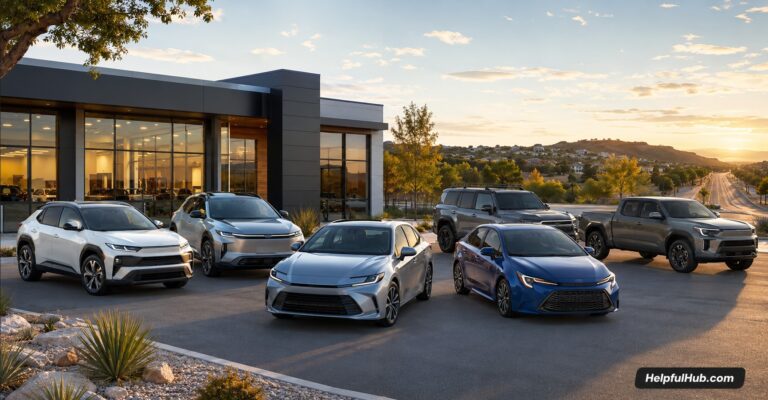
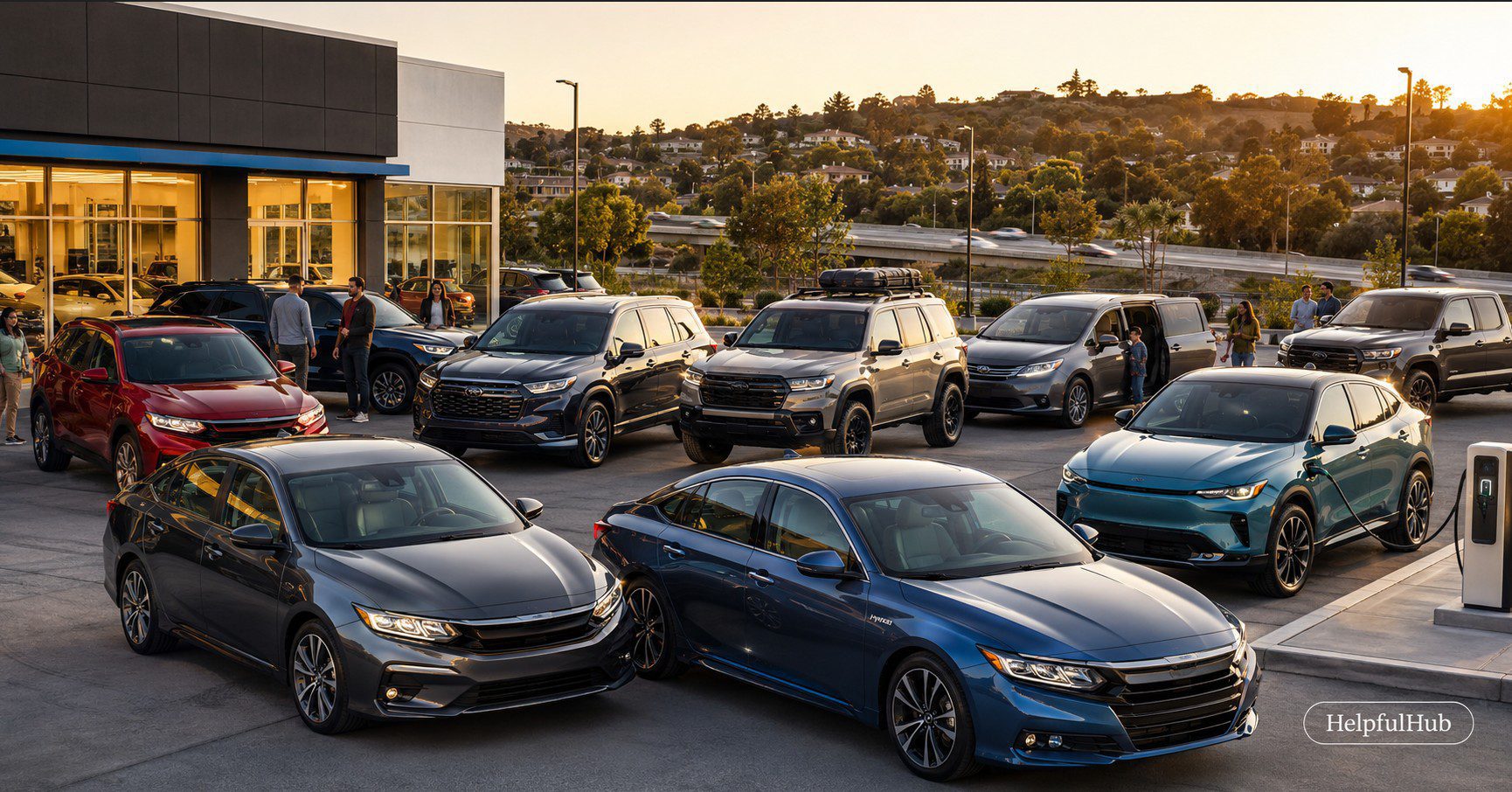
Honda has become one of the most trusted car brands in the United States because it blends reliability, fuel economy, resale value, practical design, safety features, and strong dealer support. Honda sells sedans, hatchbacks, SUVs, a minivan, a pickup, hybrids, and electric options for American drivers. From the Civic and Accord to the CR-V, Pilot, Odyssey, Ridgeline, Prologue, and future hybrid models, Honda in USA remains a strong choice for commuters, students, parents, road-trip families, and long-term owners.
Honda matters in the US auto market because American drivers often want the same things Honda has built its reputation around: dependable transportation, strong fuel economy, useful interiors, high resale value, safety technology, and ownership costs that feel easier to plan. For many shoppers, Honda is not just a badge on a car. It is a familiar name connected to daily commutes, family road trips, college parking lots, weekend projects, and long-term value..
Table of Contents
- Honda in USA Overview
- Honda’s Early History in America
- Honda’s First Cars in the US
- Honda Manufacturing in America
- Why Honda Became Popular in the United States
- Honda USA Model Lineup
- Honda Sedans and Hatchbacks in USA
- Honda SUVs and Crossovers in USA
- Honda Hybrids in USA
- Honda Electric Vehicles in USA
- Honda Family Cars and Daily Drivers
- Honda Reliability and Resale Value
- Honda Maintenance and Ownership Cost
- Honda Insurance Cost Factors
- Honda Safety and Technology
- Honda vs Toyota in USA
- New Honda vs Used Honda
- Best Honda Models for Different Buyers
- Honda Future in America
- Buying Tips for US Honda Shoppers
- Final Verdict
- FAQs
Honda in USA sits in the heart of the mainstream car market. It competes with Toyota, Nissan, Hyundai, Kia, Subaru, Ford, Chevrolet, Mazda, and Acura in different ways. Honda does not usually chase the flashiest design or the longest feature list for the lowest price. Instead, Honda focuses on balanced vehicles that feel easy to drive, easy to own, and easy to recommend.
Honda USA serves many buyer types. A student may shop for a Civic because it feels efficient, affordable, and simple to park. A young family may compare the CR-V with the Toyota RAV4, Hyundai Tucson, Kia Sportage, Nissan Rogue, Mazda CX-5, and Subaru Forester. A larger family may compare the Pilot or Odyssey with three-row SUVs and minivans from Toyota, Kia, Chrysler, Hyundai, Ford, and Chevrolet. A truck buyer who wants daily comfort may look at the Ridgeline instead of a traditional body-on-frame pickup.
The Honda USA lineup includes compact cars, midsize sedans, hatchbacks, small SUVs, compact SUVs, midsize SUVs, three-row SUVs, a minivan, a pickup, hybrid models, and electric choices. Exact trims, prices, MPG ratings, range, offers, and availability may change by model year and location, so shoppers should check Honda’s official site or a local Honda dealer for the latest MSRP, trims, offers, and availability.
Honda America also benefits from a strong dealer and service network. That matters because a car is not just a purchase. It is a product the owner may service for years. Easy parts availability, familiar service procedures, certified pre-owned options, and strong used market demand help Honda stay relevant after the original sale.

For many Americans, Honda represents practical confidence. The brand often appeals to shoppers who want a vehicle that does not feel risky. They want a car that can handle school runs, work commutes, grocery trips, weekend sports, highway travel, and long-term ownership without drama. That is the reason Honda cars for sale in USA remain popular across both new and used markets.
Honda’s Early History in America
Honda began in Japan in 1948 and grew from an engineering-focused company into a global mobility brand. The United States became one of Honda’s most important markets after American Honda Motor Co. opened in Los Angeles in 1959. At the time, Honda was not yet known as a major car company in America. It first built its US image through motorcycles.
That motorcycle period shaped Honda’s American identity. Small Honda motorcycles looked different from the large American bikes many riders knew. Honda promoted simple, friendly, approachable transportation. The famous “you meet the nicest people” spirit helped the brand reach riders who did not see themselves as traditional motorcycle buyers.
Honda’s early American challenge was trust. The company had to persuade US buyers that a Japanese brand could build dependable products for American roads. It had to build dealer relationships, parts support, brand awareness, and a reputation from the ground up. That process took time, but Honda’s small engines, efficient design, and engineering culture helped it gain attention.
American Honda slowly shifted from a motorcycle name to a serious automotive name. That shift did not happen through one model alone. It happened through a pattern. Honda offered small, efficient, practical machines at a time when many buyers wanted better fuel economy, lower operating costs, and dependable daily transportation.
This early history explains why Honda history in USA still matters today. Honda did not enter the US market as a giant. It grew through persistence, product quality, and smart timing. That story still supports the brand’s modern image as a practical, trusted choice.
Honda’s first cars in the US were small by American standards. The Honda N600 helped introduce Honda automobiles to US buyers before the Civic and Accord became household names. At first, small Honda cars looked unusual in a market filled with larger sedans, wagons, and domestic models. But the timing soon helped Honda.
The 1970s made fuel economy much more important to American drivers. Gas prices, energy concerns, and changing buyer priorities created room for compact and efficient cars. Honda understood how to build small vehicles that used space cleverly and delivered strong real-world economy for the time.
The Honda Civic USA story became one of the most important parts of Honda’s growth. The Civic gave buyers a compact car that felt smart, efficient, and useful. It appealed to commuters, students, first-time buyers, and budget-conscious families. Over time, the Civic also gained a sporty side through trims and performance versions, but its core value stayed practical.
The Honda Accord USA story added another layer. The Accord gave Honda a stronger position in the family sedan market. It felt more comfortable and more substantial than the smallest compact cars while still keeping Honda’s efficient, easy-to-own personality. The Accord became a key model for families, professionals, and long-distance commuters.

Honda gained momentum because compact and efficient cars worked well in America when buyers needed them. The company did not simply sell small cars. It sold small cars that felt well engineered. That difference helped Honda earn long-term respect.
Honda manufacturing in USA plays a major role in Honda’s American identity. Honda invested in US production early, especially in Ohio. The Marysville story remains one of the most important chapters in Honda plants in America because it showed that Honda wanted to build vehicles close to American customers, not only export them from overseas.
The Marysville Auto Plant in Ohio became a landmark for Honda America. It helped establish Honda as a manufacturer with deep roots in the US economy. The plant has produced important Honda and Acura vehicles over the years and helped support a wider supplier network, logistics system, and skilled workforce.
The Anna Engine Plant in Ohio also matters. It became a major Honda engine facility and continues to support Honda’s manufacturing strategy. As the industry moves toward hybrids and EVs, Honda’s Ohio operations remain important because flexible manufacturing can help the company respond to changing demand.
US manufacturing matters to many Honda buyers because it connects the brand to American jobs and local production. A shopper comparing Honda vs Toyota USA, Honda vs Nissan, Honda vs Hyundai, Honda vs Kia, Honda vs Subaru, Ford, Chevrolet, Mazda, or Acura may care about where a vehicle comes from. Still, the answer can vary by model, trim, and model year.
Many Honda models use domestic and globally sourced parts. Some vehicles sold in America are built in the US, while others may come from Canada, Mexico, Japan, or another production location depending on the model year and supply plan. Buyers who want exact origin details should check the window sticker on the specific vehicle they plan to buy.
Honda became popular in America because it matched real buyer needs. The brand built trust by delivering vehicles that often felt sensible, efficient, and durable. That appeal helped Honda cross generations, from parents who owned Accords and Civics to younger drivers who now shop for Civics, HR-Vs, CR-Vs, Pilots, and Prologues.
- Reliability: Honda reliability USA remains one of the brand’s biggest strengths. Many shoppers believe a well-maintained Honda can serve for many years. Reliability still depends on model year, maintenance, recalls, service history, driving style, and inspection quality.
- Fuel economy: Honda fuel economy guide USA searches often come from commuters and families who want lower fuel bills. Civic, Accord, CR-V Hybrid, Accord Hybrid, and Civic Hybrid models can appeal to buyers who drive often.
- Practical design: Honda interiors usually focus on usable space, clear controls, good visibility, and smart cargo solutions. That makes the brand easy to live with.
- Strong resale value: Honda resale value USA helps new buyers and used buyers. Strong demand can support better trade-in values, though condition, mileage, region, and market timing still matter.
- Low maintenance reputation: Honda maintenance cost USA can feel manageable when owners follow the service schedule and fix small issues early. Parts availability also helps.
- Comfortable daily driving: Honda vehicles often feel composed in traffic, simple to park, and comfortable enough for longer trips.
- Family-friendly packaging: The CR-V, Pilot, and Odyssey show Honda’s focus on family life. Cargo space, seating flexibility, and easy access matter to parents.
- Safety features: Honda Sensing explained simply means a suite of driver-assist features that can support safer driving when used correctly. Drivers must still stay alert.
- Dealer network: A strong dealer network helps with test drives, warranty work, maintenance, parts, and certified pre-owned shopping.
- Brand trust: Honda’s reputation grew over decades. That trust still influences shoppers who want a safe mainstream choice.
The Honda USA lineup changes by model year, supply, region, and dealer inventory. The table below gives a buyer-friendly overview of important Honda models in USA. For exact MSRP, trims, MPG, incentives, and availability, check Honda’s official site or a local Honda dealer before making a purchase decision.
| Model | Vehicle Type | Best For | Key Buyer Appeal |
|---|---|---|---|
| Honda Civic | Compact sedan | Students, commuters, first-time buyers | Efficient, practical, fun to drive, strong used demand |
| Honda Civic Hatchback | Compact hatchback | Drivers who want cargo flexibility | Useful rear opening, sporty feel, daily practicality |
| Honda Civic Hybrid | Compact hybrid | High-mileage commuters | Better efficiency with familiar Civic usability |
| Honda Accord | Midsize sedan | Families and highway drivers | Comfort, space, refined driving, long history |
| Honda Accord Hybrid | Midsize hybrid sedan | Commuters and small families | Strong fuel economy and smooth hybrid power |
| Honda HR-V | Subcompact SUV | Urban drivers and budget SUV shoppers | Small size, easy parking, SUV seating position |
| Honda CR-V | Compact SUV | Small families and daily drivers | Cargo space, comfort, efficiency, broad appeal |
| Honda CR-V Hybrid | Compact hybrid SUV | Families who want fuel savings | Hybrid efficiency with family-friendly space |
| Honda Passport | Two-row midsize SUV | Adventure buyers | Rugged feel, cargo room, TrailSport personality |
| Honda Pilot | Three-row midsize SUV | Larger families | Three rows, road-trip comfort, available AWD |
| Honda Odyssey | Minivan | Parents and large families | Sliding doors, flexible seating, family-first layout |
| Honda Ridgeline | Midsize pickup | Truck utility with daily comfort | Open bed, smooth ride, practical storage |
| Honda Prologue | All-electric SUV | EV shoppers | Electric driving, SUV shape, public and home charging focus |
| Honda Prelude Hybrid | Sport hybrid coupe | Drivers who want a sporty Honda comeback | Hybrid coupe interest with emotional appeal |
| Honda TrailSport Models | Rugged-style trims | Outdoor and adventure-focused shoppers | More rugged design, AWD focus where available, lifestyle appeal |
For deeper model research, readers can compare 2026 Honda Models USA, 2026 Honda Prelude Hybrid, 2026 Honda Passport, 2026 Honda CR-V TrailSport Hybrid, 2026 Honda Prologue, 2026 Honda Pilot Refresh, 2026 Honda Accord Refresh, and 2026 Honda HR-V.

Honda Sedans and Hatchbacks in USA
Honda sedans and hatchbacks remain important even though many Americans now buy SUVs. Civic and Accord still serve buyers who want efficiency, comfort, strong resale value, and a lower driving feel than a crossover. They also matter in the used Honda cars USA market because older Civics and Accords are common choices for budget buyers.
Honda Civic
Honda Civic USA is one of the most recognized compact car names in America. It appeals to first-time buyers, students, commuters, small households, and drivers who want a car that feels easy to own. The Civic is popular because it balances fuel economy, driving feel, reliability reputation, and everyday comfort.
The Civic also has a wide personality range. A basic Civic can work as a practical commuter. A Civic Hatchback can add cargo flexibility. Sportier trims can feel more engaging without losing daily usefulness. Hybrid availability adds another angle for drivers who want stronger efficiency without moving into a full EV.
Used Civic demand remains strong because many buyers view it as a safe used car choice. A used Civic can still be a smart option, but shoppers should check mileage, service records, accident history, tire condition, brake condition, recalls, and any transmission or engine concerns tied to the specific model year.
Honda Accord
Honda Accord USA has long been one of the most important midsize sedans in America. It appeals to drivers who want more space and comfort than a Civic without moving into an SUV. The Accord works well for small families, professionals, highway commuters, and buyers who value a calmer, more mature driving experience.
The Accord Hybrid is especially important because it gives shoppers a strong fuel-saving option in a practical sedan body. Many drivers searching for Honda hybrid MPG guide USA compare the Accord Hybrid with the Toyota Camry Hybrid, Hyundai Sonata Hybrid, and other efficient sedans. Exact MPG ratings vary by model year and trim, so buyers should check current EPA and Honda data.
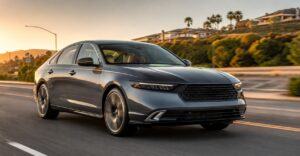
The Accord vs Civic decision usually comes down to size, budget, and comfort. The Civic costs less in many cases, parks easier, and feels more compact. The Accord gives more rear-seat space, a more substantial highway feel, and more family comfort. Both can make sense depending on the buyer’s life stage.
Honda Prelude Hybrid
Honda Prelude Hybrid USA has created strong interest because the Prelude name carries emotional value for longtime Honda fans. The idea of a sport hybrid coupe gives Honda a different type of electrified product. It is not just about saving fuel. It is also about making hybrid technology feel more exciting.
Shoppers should treat Prelude details carefully until they review the latest official Honda information. Final specs, trims, pricing, performance details, and availability can change. Still, the Prelude Hybrid matters because it shows Honda wants hybrids to serve more than family sedans and SUVs. It gives the Honda USA lineup a sportier image.
Honda SUVs and Crossovers in USA
Honda SUVs in USA drive much of the brand’s modern sales appeal. Many American buyers now prefer a higher seating position, easier cargo loading, available AWD, and more flexible family space.
Honda HR-V
Honda HR-V USA is the small SUV choice in the lineup. It works well for urban drivers, young professionals, students who want an SUV shape, and budget-minded shoppers who do not need CR-V size. The HR-V offers a higher seating position than a sedan while staying easier to park than larger SUVs.
The HR-V may not be the most powerful or largest option in the class, but it makes sense for drivers who value simplicity, size, and Honda’s reputation. It can be a practical first SUV for buyers who want a daily driver with more flexibility than a compact sedan.
Honda CR-V
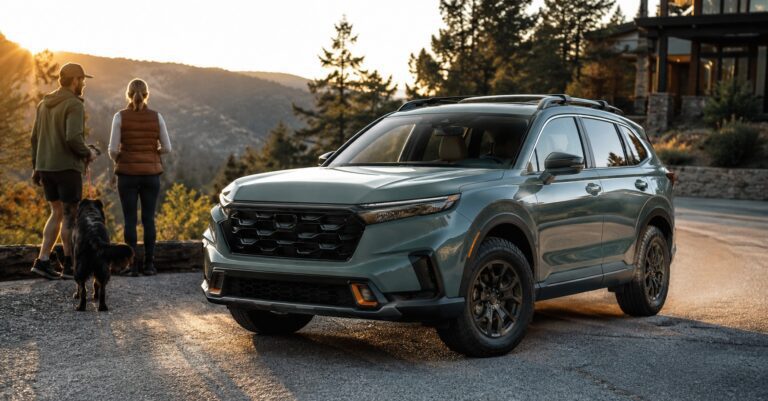
Honda CR-V USA is one of Honda’s strongest family vehicles. It competes in the extremely important compact SUV class against the Toyota RAV4, Nissan Rogue, Hyundai Tucson, Kia Sportage, Subaru Forester, Ford Escape, Chevrolet Equinox, and Mazda CX-5. The CR-V’s appeal comes from space, comfort, fuel economy, and easy daily usability.
The CR-V works well for small families, commuters who want cargo room, pet owners, and road-trip drivers. The CR-V Hybrid adds better fuel economy potential and gives buyers a strong middle ground between gas-only SUVs and full EVs. For many families, the CR-V Hybrid may feel like the sweet spot in the Honda hybrid SUV buying guide USA conversation.
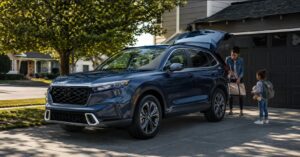
Readers interested in a more rugged compact hybrid SUV angle can review 2026 Honda CR-V TrailSport Hybrid for a focused guide.
Honda Passport
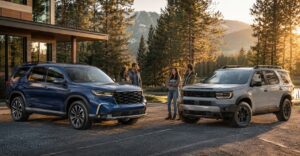
Honda Passport USA fits shoppers who want more size and adventure personality than a CR-V but do not need a third row. It serves drivers who carry gear, travel with dogs, take weekend trips, or prefer a tougher midsize SUV feel. Passport TrailSport models add a more rugged attitude and can appeal to buyers who like outdoor styling and available off-road-focused upgrades.
The Passport may not be the lowest-cost Honda SUV, but it fills a useful gap. It gives two-row buyers more room and stronger adventure identity than smaller crossovers. Compare it with models such as Toyota 4Runner, Jeep Grand Cherokee, Subaru Outback, Ford Bronco Sport in some shopping cases, and other two-row SUVs depending on budget and needs.
Honda Pilot
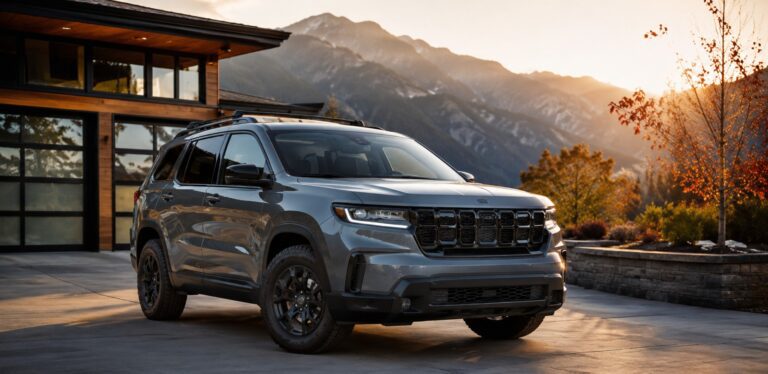
Honda Pilot USA is the three-row family SUV in Honda’s lineup. It works for parents, road-trip families, carpool duty, sports gear, and buyers who want more seating than a CR-V. The Pilot competes with Toyota Highlander, Kia Telluride, Hyundai Palisade, Subaru Ascent, Ford Explorer, Chevrolet Traverse, Mazda CX-90, and Nissan Pathfinder.
The Pilot’s key strengths include space, family comfort, available AWD, and road-trip practicality. Buyers should compare trims carefully because features, seating setups, towing-related equipment, and technology can vary. The Pilot TrailSport can appeal to shoppers who want a more adventurous look and stronger rough-road personality.
Honda Prologue
Honda Prologue USA is Honda’s all-electric SUV choice for American buyers. It gives Honda shoppers an EV option with an SUV body style, quiet driving, instant electric torque, and charging-focused ownership. Honda has promoted the Prologue with an EPA range rating up to 308 miles in certain configurations, but shoppers should check the exact trim and drivetrain before deciding.
EV ownership needs planning. A Prologue buyer should think about home charging, workplace charging, public DC fast charging, local electricity rates, winter range changes, insurance costs, tire costs, and repair network comfort. Federal, state, and local EV incentives can change, so buyers should verify eligibility before purchase or lease.
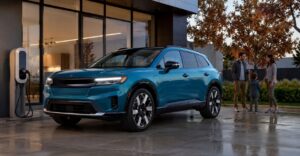
Readers considering electric ownership can compare 2026 Honda Prologue, EV Charging Guide, and Hybrid Cars vs Electric Cars before visiting a dealer.
Honda Hybrid Cars in USA
Honda hybrid cars USA have become more important as drivers look for better fuel economy without full EV lifestyle changes. A hybrid can reduce fuel use in traffic, support smooth acceleration, and avoid charging concerns. That makes hybrids attractive for commuters, families, rideshare drivers, and long-distance drivers who do not want to plan charging stops.
Honda’s modern two-motor hybrid system uses electric power and gasoline power in a way that often feels smooth and natural. In many driving situations, the system can blend electric drive, engine power, and regenerative braking without asking the driver to manage anything. The owner simply fuels the car like a normal gasoline vehicle.
Hybrids fit US buyers now because they answer two common concerns at once. Fuel prices can change quickly, and EV charging access still varies by home, apartment, workplace, and region. A hybrid gives efficiency benefits with less lifestyle adjustment than a full electric vehicle.
| Honda Hybrid Model | Body Style | Best For | Why Buyers Like It |
|---|---|---|---|
| Honda Accord Hybrid | Midsize sedan | Commuters and small families | Strong efficiency, comfortable cabin, refined highway feel |
| Honda CR-V Hybrid | Compact SUV | Families and daily drivers | Fuel savings with SUV space and cargo utility |
| Honda Civic Hybrid | Compact sedan or hatchback | Students and high-mileage drivers | Compact size, lower fuel use, familiar Civic practicality |
| Honda Prelude Hybrid | Sport coupe | Honda fans and driving enthusiasts | Sporty hybrid identity with comeback appeal |
Honda’s future direction points toward more electrification, and hybrids will likely remain a key bridge for buyers who are not ready for a full EV. Shoppers should compare hybrid MPG, trim pricing, warranty coverage, and total ownership cost rather than choosing only by fuel economy numbers.
Honda Electric Cars in USA
Honda electric cars USA currently center on the Honda Prologue for mainstream EV shoppers. The Prologue gives Honda dealers an electric SUV to offer buyers who want quiet driving, home charging, and lower tailpipe emissions. It also gives loyal Honda owners a way to try EV ownership without leaving the brand.
EV charging basics matter before any purchase. Level 1 charging uses a standard household outlet but can be slow. Level 2 home charging is much more practical for regular EV use. DC fast charging helps on road trips, but cost, charger reliability, plug compatibility, and station crowding can vary by location.
Range needs also vary. A driver with a 30-mile commute and home charging may find an EV easy to own. A renter without reliable charging may find a hybrid easier. A family that takes frequent highway road trips should study real route charging, winter range, cargo load, passenger load, and charging stops before choosing an EV.
EV tax credits and incentives can change. A buyer should not assume a Prologue or any electric SUV qualifies for a specific incentive without checking current federal rules, state programs, utility rebates, and dealer paperwork. Lease structures may also differ from purchase incentives.
Insurance and repair considerations also deserve attention. EVs may cost more to repair in some situations because of battery systems, sensors, specialized parts, and certified repair needs. That does not mean an EV is a bad choice. It means smart buyers should compare insurance quotes and maintenance expectations before signing.
Some Honda shoppers may prefer hybrids today because hybrids reduce fuel use without charging requirements. Others may prefer the Prologue because they have home charging, want electric driving, and can plan around range. The best answer depends on the buyer’s home, driving pattern, budget, and comfort with EV technology.
Best Honda Cars for Families and Daily Drivers
Honda has several strong choices for families and daily drivers. The best model depends on family size, parking space, budget, fuel economy goals, and cargo needs. A small family may not need a Pilot. A large family may quickly outgrow an HR-V. A commuter may value a Civic more than an SUV.
- Best Honda for small families: Honda CR-V. It offers a strong mix of space, comfort, fuel economy, and easy daily use.
- Best Honda for large families: Honda Pilot or Honda Odyssey. The Pilot fits SUV shoppers, while the Odyssey remains one of the most practical family vehicles because of sliding doors and flexible seating.
- Best Honda for commuters: Honda Civic or Honda Accord Hybrid. The Civic works well for lower-cost commuting, while the Accord Hybrid adds comfort and efficiency.
- Best Honda for students: Honda Civic or Honda HR-V. Both can work for parking, daily driving, and budget-conscious ownership.
- Best Honda for adventure buyers: Honda Passport TrailSport or Honda Pilot TrailSport. These models add rugged personality and more outdoor-friendly appeal.
- Best Honda for EV shoppers: Honda Prologue. It gives Honda buyers an electric SUV option with modern EV ownership features.
- Best Honda for truck utility: Honda Ridgeline. It works for buyers who want a pickup bed but prefer a smoother daily ride.
For broader shopping comparisons, readers can also review Best SUVs for Families, New Car vs Used Car, and Car Maintenance Checklist.
Honda reliability USA is one of the most powerful reasons buyers consider the brand. Many shoppers believe a Honda can run for a long time with proper care. That reputation did not come from marketing alone. It came from decades of Civics, Accords, CR-Vs, and other models that served families, commuters, and used car buyers across the country.
Used Hondas stay popular because they often feel like safer used car bets than lesser-known models. A used Civic, Accord, CR-V, Pilot, or Odyssey with strong service records can attract buyers quickly. That demand supports Honda resale value USA, especially for clean vehicles with reasonable mileage and no major accident history.
Resale value depends on many factors. Model popularity, mileage, condition, accident history, trim, color, service records, location, fuel prices, and used car supply all matter. Hybrid models may appeal strongly when gas prices rise. SUVs may hold demand when families need space. Sedans may attract budget buyers when new car prices feel high.
Honda reliability compared to Toyota is a common search. Both brands have strong reputations. Toyota often leads the hybrid conversation because of its long hybrid history, while Honda often appeals to buyers who like a slightly more engaging driving feel and practical cabin design. The best choice depends on the exact model, model year, maintenance history, and buyer priorities.
Reliability is never automatic. It depends on maintenance, driving style, climate, engine, transmission, recalls, service records, and how the previous owner treated the vehicle. A poorly maintained Honda can be a bad buy. A well-maintained competitor can be a great buy. Smart shoppers inspect the actual vehicle, not just the badge.
Honda Maintenance and Ownership Cost – Honda ownership cost USA often feels manageable because many Honda models have strong parts availability and familiar service needs. Still, ownership cost depends on the model, mileage, trim, driving conditions, labor rates, and whether the owner uses a dealer or independent shop.
Basic maintenance includes oil changes, tire rotations, air filters, cabin filters, brake inspections, brake fluid, coolant, transmission service when recommended, wiper blades, batteries, tires, and alignment. Honda owners should follow the Maintenance Minder or official service schedule for their exact model and year.
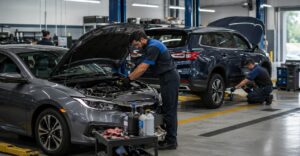
Hybrid owners should understand hybrid battery warranty basics and keep service records. Hybrid systems can be durable, but repairs may cost more if major components fail outside warranty. Buyers of used hybrids should check warranty status, battery health indicators when available, and service history.
Dealer service can help with warranty work, recalls, software updates, and model-specific procedures. Independent shops may offer lower labor costs for routine maintenance after warranty. The best plan often uses both wisely.
| Ownership Cost Area | What Affects It | Buyer Tip |
|---|---|---|
| Oil changes | Engine type, oil specification, driving conditions | Follow the Maintenance Minder and keep receipts |
| Tires | Wheel size, driving style, AWD, road conditions | Price tire replacements before choosing large wheels |
| Brakes | City driving, hills, towing, regenerative braking on hybrids | Inspect brakes before buying a used Honda |
| Fluids | Model, mileage, service schedule | Use Honda-approved specifications when required |
| Hybrid system | Battery warranty, age, mileage, diagnostics | Check warranty coverage and service history |
| Repairs | Parts cost, labor rates, accident history | Get a pre-purchase inspection on used cars |
| Depreciation | Demand, mileage, trim, market conditions | Choose popular trims and maintain the vehicle well |
Honda Insurance Cost in USA – No single answer applies to every driver. Insurance companies look at state, ZIP code, driver age, driving record, credit-based insurance score where allowed, annual mileage, coverage level, deductible, vehicle value, repair cost, theft risk, trim, safety tech, and claim history.
A sporty trim may cost more than a base trim. A new vehicle may cost more to insure than an older one because it has a higher replacement value. A vehicle with advanced sensors may help prevent some crashes, but sensor repairs can also increase repair bills after a collision.
Honda insurance rates for new drivers can be higher because age and experience matter. A first-time buyer should compare quotes before buying, not after. The difference between two trims or two models can affect monthly cost enough to change the real budget.
Shoppers should compare quotes from several insurers, test different deductibles, ask about student discounts, safe driver discounts, multi-policy discounts, and telematics programs if comfortable. Readers can also review Car Insurance Quotes Online before choosing a vehicle.
Honda safety features for US drivers often center on Honda Sensing. Honda Sensing is a group of driver-assist technologies that may include collision mitigation braking, road departure mitigation, adaptive cruise control, lane keeping assist, traffic sign recognition, and related systems depending on model and trim.
Adaptive cruise control can help maintain a set following distance on the highway. Collision mitigation braking can warn the driver and may apply braking in certain situations. Lane keeping assist can help support lane centering under proper conditions. Blind spot monitoring may help detect vehicles beside the car on equipped trims.
Technology features also matter. Many Honda models offer Apple CarPlay, Android Auto, touchscreen infotainment, USB ports, wireless charging on some trims, digital displays, hybrid energy displays, navigation on select trims, and connected services. Feature availability changes by model and trim, so shoppers should test the exact vehicle before buying.
Driver assistance has limits. Weather, road markings, dirty sensors, sharp curves, construction zones, and unusual traffic can affect performance. Honda Sensing does not replace an attentive driver. The driver must steer, brake, watch the road, and remain responsible at all times.
Honda vs Toyota USA is one of the biggest comparisons in the American car market. Both brands have strong reliability reputations, high resale value, family-friendly models, efficient hybrids, and deep dealer networks. The right choice depends on the buyer, not only the brand.

Toyota has a broad hybrid lineup and a long reputation in hybrid technology. Honda has strong hybrid models too, especially Accord Hybrid, CR-V Hybrid, Civic Hybrid, and future performance-hybrid directions. Toyota may appeal to buyers who want the widest hybrid selection. Honda may appeal to drivers who prefer a slightly more responsive feel, cleaner interior layouts, or specific models like Civic, Accord, CR-V, Odyssey, Ridgeline, and Passport.
| Category | Honda | Toyota | Best Choice For |
|---|---|---|---|
| Reliability reputation | Very strong, especially with good maintenance | Very strong, with wide buyer trust | Both brands are strong |
| Hybrid leadership | Strong hybrids in key models | Very broad hybrid lineup | Toyota for widest hybrid choice, Honda for select strong models |
| Driving feel | Often more engaging and responsive | Often calm and easygoing | Honda for drivers who value feel |
| Model range | Strong core lineup with sedans, SUVs, minivan, truck, EV | Very wide lineup with many hybrids, trucks, SUVs, and cars | Toyota for maximum range, Honda for balanced simplicity |
| SUVs | HR-V, CR-V, Passport, Pilot, Prologue | Corolla Cross, RAV4, Highlander, Grand Highlander, 4Runner, bZ, and more | Depends on size and hybrid needs |
| Resale value | Strong resale value in many models | Strong resale value in many models | Both, with model-specific differences |
| Maintenance | Generally manageable with good service habits | Generally manageable with good service habits | Compare exact model and local service costs |
| Buyer personality | Practical but often a little sportier | Practical, conservative, and broad | Honda for balanced driving feel, Toyota for maximum familiarity |
Honda reliability compared to Toyota and Honda maintenance cost compared to Toyota should always be judged by exact model, year, mileage, service history, and inspection. A clean used Accord may be better than a neglected Camry. A well-kept RAV4 Hybrid may be better than a poorly maintained CR-V Hybrid. The vehicle’s history matters.
New Honda vs Used Honda: Which Should You Buy?
New Honda cars USA appeal to buyers who want warranty coverage, the latest safety tech, current infotainment, available financing or lease offers, and a known ownership history. A new Honda also lets the buyer choose trim, color, options, and dealer add-ons more directly.
New Honda benefits include factory warranty, latest Honda Sensing updates, fresh tires and brakes, updated hybrid or EV technology, and easier financing in some cases. Buyers should still negotiate the out-the-door price and watch for dealer add-ons.
Used Honda cars USA appeal to buyers who want a lower purchase price and slower depreciation. A used Civic, Accord, CR-V, Pilot, Odyssey, or Ridgeline can be a smart choice when it has clean history and strong maintenance records. Honda certified pre-owned cars USA can add warranty coverage and inspection standards compared with a normal used car.
Used Honda benefits include lower upfront cost, a strong used market, certified pre-owned options, and wide model availability. The trade-off is uncertainty. A used vehicle may have hidden wear, accident repairs, missed maintenance, worn tires, weak brakes, or upcoming service needs.
Before buying used, check Carfax or AutoCheck, service records, open recalls, title status, tire condition, brake condition, fluid leaks, warning lights, hybrid battery warranty status, and accident history. A pre-purchase inspection from an independent mechanic can save money and stress.
Best Honda Models for Different US Buyers
Honda buyer guide USA searches often come from people who know they want a Honda but do not know which model fits. The table below gives a practical starting point. Buyers should still test drive and compare total cost before deciding.
| Buyer Type | Best Honda Model | Why It Fits |
|---|---|---|
| First-time buyer | Honda Civic | Easy to drive, efficient, popular, and strong in the used market |
| College student | Honda Civic or HR-V | Good size, practical ownership, and simple daily use |
| Daily commuter | Honda Civic Hybrid or Accord Hybrid | Strong fuel economy and comfortable road manners |
| Small family | Honda CR-V | Useful cargo space, family-friendly cabin, and easy driving |
| Large family | Honda Pilot or Odyssey | More seating and better family trip flexibility |
| Road trip family | Honda Pilot | Three rows, cargo room, comfort, and available AWD |
| Hybrid shopper | Accord Hybrid or CR-V Hybrid | Fuel savings without charging requirements |
| EV shopper | Honda Prologue | Electric SUV choice for buyers with charging access |
| Adventure buyer | Passport TrailSport or Pilot TrailSport | Rugged look, outdoor focus, and SUV utility |
| Truck utility buyer | Honda Ridgeline | Pickup bed usefulness with comfortable daily driving |
| Used car buyer | Civic, Accord, or CR-V | Strong availability and long-standing demand |
| Budget buyer | Used Civic or HR-V | Lower price potential with practical ownership |
| Long-term owner | CR-V, Accord, Civic, or Pilot | Proven nameplates with broad service support |
Honda’s Future in America
Honda future vehicles USA will likely focus on a mix of hybrids, EVs, software, safety technology, and flexible manufacturing. The challenge is clear. Honda must keep the reliability and practical design that made it trusted while adding more electrification and modern connected technology.
Hybrid expansion looks important because many US buyers want better fuel economy but are not ready for full EV ownership. Accord Hybrid, CR-V Hybrid, Civic Hybrid, and Prelude Hybrid interest show that Honda can use hybrid systems in practical and emotional ways. More efficient SUVs will also matter because the US market continues to favor crossovers.
EV development will remain a long-term priority. Honda must compete with Tesla, Hyundai, Kia, Ford, GM, Toyota, Subaru, Mazda, and new EV-focused brands. Range, charging speed, battery cost, software quality, reliability, and dealer education will all shape the EV ownership experience.
Battery and charging networks will matter as much as the vehicles themselves. A good EV must fit real American life. That means home charging support, road-trip confidence, public charging access, clear ownership education, and transparent pricing.
Honda’s US manufacturing role may become even more important as the company adapts plants for gas, hybrid, and electric production. Flexible production can help Honda respond if buyers move faster or slower toward EVs than expected.
The biggest challenge for Honda in America is balance. The brand must add technology without making vehicles feel complicated. It must improve efficiency without losing driving feel. It must build EVs without weakening hybrid strength. If Honda does that well, Honda in USA can remain one of the safest mainstream choices for American households.
Honda Buying Tips for US Shoppers
Buying a Honda can be simple, but smart preparation still matters. The best deal is not only the lowest monthly payment. It is the vehicle that fits your needs, budget, insurance, maintenance plan, and long-term resale goals.
- Compare trims before visiting a dealer: Know which features you need and which features you can skip.
- Check the total out-the-door price: Focus on selling price, taxes, title, registration, documentation fees, and dealer add-ons.
- Compare financing and lease offers: Look at APR, term length, down payment, mileage limits, and total cost.
- Ask about dealer add-ons: Paint protection, nitrogen, alarms, accessories, and protection packages can raise the price.
- Test drive city and highway routes: Listen for noise, check visibility, test acceleration, and confirm seat comfort.
- Check cargo space with real needs: Bring a stroller, sports bag, suitcase, or child seat if family practicality matters.
- Compare insurance quotes: Get quotes for the exact VIN or trim before buying.
- Review the maintenance schedule: Understand oil changes, fluids, tires, brakes, and hybrid or EV service needs.
- Check resale value: Popular colors, trims, and clean service records can help future value.
- For EVs, check charging access: Confirm home, work, and road-trip charging before choosing a Prologue.
- For hybrids, understand battery warranty: Know the warranty period and what transfers to the next owner.
Final Verdict: Is Honda Still a Smart Choice in the USA?
Honda remains a strong choice for US buyers who want reliability, fuel economy, practical design, strong resale value, safety, and daily usability. The brand’s best products do not usually feel extreme. They feel balanced. That balance is why Honda Civic USA, Honda Accord USA, Honda CR-V USA, Honda Pilot USA, Honda Odyssey USA, Honda Ridgeline USA, and Honda Prologue USA continue to attract different types of shoppers.
Toyota may lead in some hybrid and model-range areas. Hyundai and Kia may offer strong feature value. Subaru may appeal to AWD-focused buyers. Tesla may attract EV-first shoppers. Ford, Chevrolet, Nissan, Mazda, and Acura each bring their own strengths. Honda’s advantage is that it often gives buyers a safe, familiar, practical choice with enough comfort, technology, and long-term confidence.
For many American households, Honda in USA still makes sense because the brand understands real life. It builds vehicles for school mornings, work commutes, highway miles, grocery runs, family vacations, first cars, used car lots, and long-term ownership. That practical trust is hard to replace.
FAQs About Honda in USA
1. When did Honda come to the USA?
American Honda began in the United States in 1959 in Los Angeles. Honda first built its US reputation with motorcycles before growing into cars, manufacturing, SUVs, hybrids, and EVs.
2. Is Honda popular in the United States?
Yes. Honda is one of the most trusted mainstream brands in America. Civic, Accord, CR-V, Pilot, Odyssey, Ridgeline, and Prologue all serve different US buyer needs.
3. Are Honda cars reliable in the USA?
Honda has a strong reliability reputation in the US. Still, reliability depends on model year, maintenance, driving habits, recalls, mileage, and service records.
4. Which Honda model is best for families?
The Honda CR-V is a strong choice for small families. Larger families should compare the Honda Pilot and Honda Odyssey because they offer more seating and cargo flexibility.
5. Which Honda SUV is best in the USA?
The best Honda SUV depends on need. HR-V suits urban buyers, CR-V suits small families, Passport suits adventure buyers, Pilot suits larger families, and Prologue suits EV shoppers.
6. Is Honda Civic good for first-time buyers?
Yes. The Honda Civic is popular with first-time buyers because it is practical, efficient, easy to drive, widely available, and strong in the used market.
7. Is Honda Accord still worth buying?
Yes, especially for drivers who want a comfortable midsize sedan. The Accord Hybrid can also be a strong choice for commuters who want better fuel economy.
8. Is Honda CR-V better than Honda HR-V?
The CR-V is larger, more family-friendly, and more comfortable for cargo-heavy use. The HR-V is smaller, easier to park, and often better for budget-focused urban drivers.
9. Does Honda sell hybrid cars in the USA?
Yes. Honda sells hybrid options such as Accord Hybrid, CR-V Hybrid, Civic Hybrid, and other electrified models depending on model year and availability.
10. Does Honda sell electric cars in the USA?
Yes. The Honda Prologue is Honda’s all-electric SUV for US buyers. Availability, trims, range, charging details, and incentives can change, so check current official information.
11. Is the Honda Prologue a good EV for US buyers?
The Prologue can be a good EV for buyers who want an electric SUV and have reliable charging access. Shoppers should compare range, charging, insurance, incentives, and local dealer support.
12. Are Honda cars expensive to maintain?
Many Honda models have manageable maintenance costs because parts and service support are widely available. Costs still vary by model, mileage, labor rates, and repair needs.
13. Is Honda insurance expensive?
Honda insurance costs vary by driver, state, ZIP code, age, driving record, trim, vehicle value, coverage level, and repair cost. Compare quotes before buying.
14. Which is better, Honda or Toyota?
Both brands are strong. Toyota offers a very broad hybrid lineup, while Honda often appeals to buyers who like practical design and a more engaging driving feel. Compare exact models.
15. Should I buy a new Honda or used Honda?
Buy new if you want warranty coverage, latest tech, and known history. Buy used if you want a lower purchase price. Always inspect used Hondas carefully.
16. What is Honda’s future in America?
Honda’s future in America will likely focus on hybrids, EVs, software, safety technology, efficient SUVs, and flexible US manufacturing while protecting the brand’s reliability reputation.