Learn More About Professional Car Interior Detailing Kits and How to Choose the Right Tools for a Cleaner Car
Learn More About Professional Car Interior Detailing Kits and How to Choose the Right Tools for a Cleaner Car
A clean car interior changes the way a vehicle feels every day. It makes a used car feel newer, keeps a family SUV more comfortable, helps protect leather seats and plastic trim, and makes daily driving less stressful. That is why choosing a Professional Car Interior Detailing Kit matters for US drivers who want a cleaner, fresher, and better-maintained vehicle without paying for a professional detail every time dust, crumbs, pet hair, or coffee spills show up.
Many car owners buy random towels, one brush, and a cheap vacuum, then wonder why their dashboard still looks dusty, air vents stay dirty, and console gaps keep collecting crumbs. Interior detailing works best when you have the right tool for each surface. A dashboard needs a soft brush and safe cleaner. Air vents need slim tools. Leather seats need gentle towels. Carpets need suction and agitation. Pet hair needs a different approach than ordinary dust.
This guide explains how to choose the right interior detailing kit, what tools actually matter, what to avoid, how much to spend, and how SUV owners, families, used car buyers, EV drivers, and daily commuters can clean their vehicle interior at home with better results.
Quick Answer Box
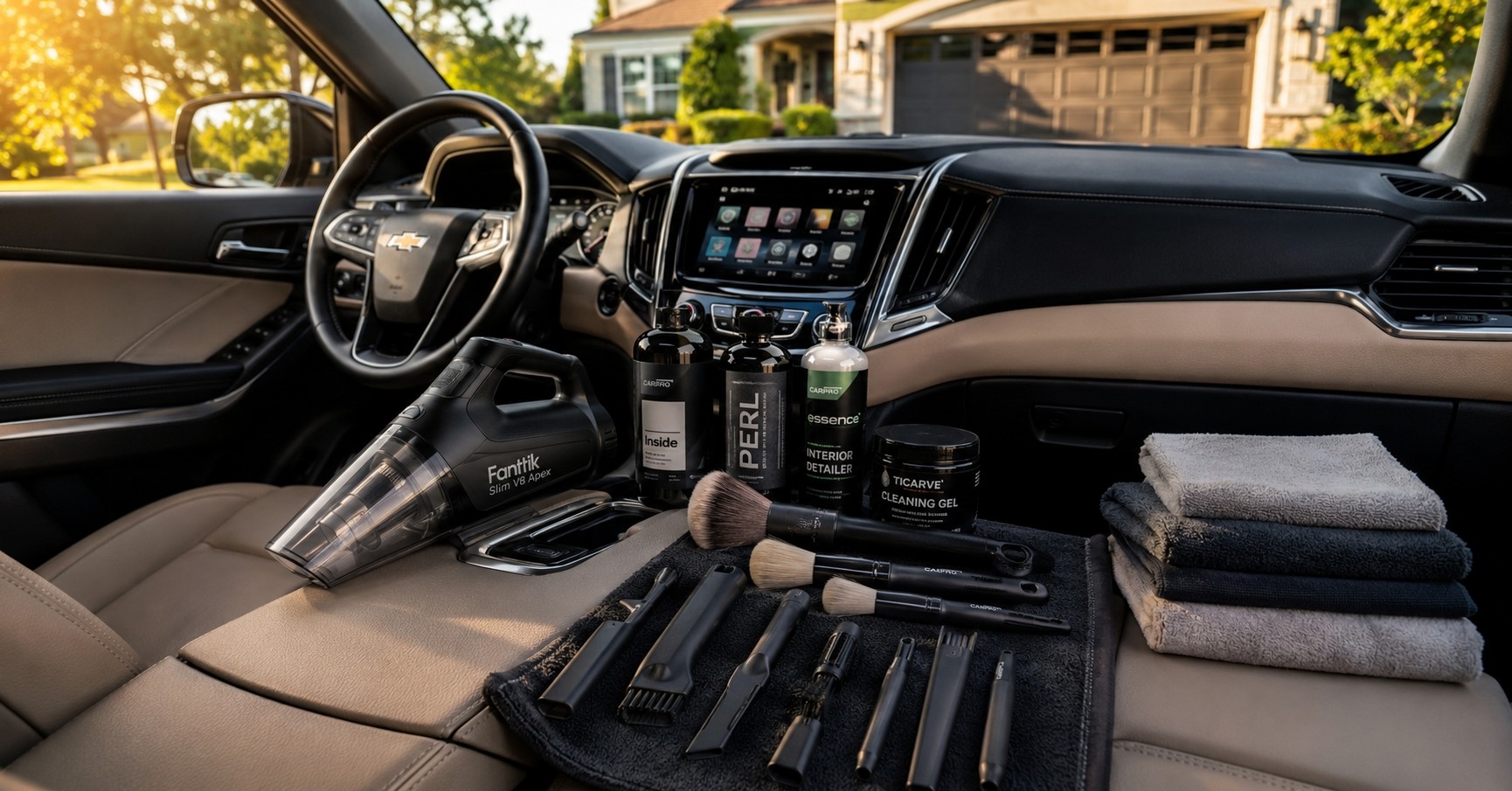
A good Professional Car Interior Detailing Kit should include a portable vacuum, soft detailing brushes, microfiber towels, crevice tools, cleaning gel, an interior-safe cleaner, leather-safe products if your car has leather, and tools for vents, cupholders, carpets, and console gaps. Beginners should avoid harsh chemicals, stiff brushes on delicate trim, and low-quality towels that can leave lint or scratches.
For most US drivers, the best choice is an all-in-one car interior cleaning kit with vacuum support, multiple brush sizes, microfiber towels, and simple tools for daily mess. SUV owners and families should choose larger kits with stronger vacuum tools and pet hair removal accessories. Used car buyers should focus on deep-clean tools for seats, vents, door panels, carpets, and hidden storage areas. A complete kit saves time, protects interior materials, and helps maintain long-term vehicle value.
Table of Contents
- What a Professional Car Interior Detailing Kit Means
- Why Interior Detailing Matters for US Drivers
- Key Tools Every Interior Detailing Kit Should Include
- Best Professional Car Interior Detailing Kit for Beginners
- All-in-One Cleaning Kits With Vacuum Tools
- Best Interior Detailing Kit for SUV and Family Car Owners
- Tools for Dashboards, Air Vents, and Console Gaps
- How to Choose Interior Detailing Brushes
- Safe Tools for Leather Seats and Interior Trim
- Why Microfiber Towels and Cleaning Gel Matter
- Interior Cleaning Tools for Used Cars
- Tools for Pet Hair, Dust, Crumbs, and Daily Mess
- Cost Analysis and Kit Comparison
- Insurance, Maintenance, and Ownership Value
- Interior Detailing for EVs, Hybrids, and Modern Cars
- Step-by-Step Interior Detailing Process
- Common Mistakes to Avoid
- My Practical Recommendation
- Frequently Asked Questions
- Final Checklist
- Conclusion
What a Professional Car Interior Detailing Kit Means
A professional interior detailing kit is not just a bag of random car cleaning products. It is a group of tools designed to clean different surfaces inside a vehicle without damaging them. The goal is to remove dust, crumbs, fingerprints, body oils, pet hair, food particles, sand, lint, stains, and odors while protecting the materials inside the car.
A basic household cleaning setup is usually not enough for a modern vehicle interior. Cars have tight gaps, delicate screens, soft-touch dashboards, leather seats, plastic trim, piano black panels, rubber floor mats, fabric carpets, cupholders, door pockets, air vents, stitching, buttons, and storage compartments. Each area needs the right pressure, cleaner, and tool.
A Professional Car Interior Detailing Kit usually includes:
- Portable vacuum or vacuum attachments
- Soft detailing brushes
- Microfiber towels
- Crevice tools
- Cleaning gel for tight spaces
- Interior-safe cleaner
- Leather-safe cleaner or conditioner
- Pet hair removal tool
- Glass towel or interior glass cloth
- Storage bag or organizer
The best kits are practical, not complicated. You do not need every tool sold online. You need the tools that match your vehicle, your mess level, and your cleaning routine.
Why Interior Detailing Matters for US Drivers
Most US drivers spend a lot of time inside their vehicles. Commuting, school drop-offs, grocery trips, road trips, rideshare driving, pet travel, and weekend errands all create interior mess. Dust builds up quickly. Crumbs fall into seat gaps. Sunscreen, hand lotion, coffee, fast food, and pet hair can make a newer vehicle feel old before its time.
Interior detailing matters because it supports comfort, hygiene, resale value, and long-term ownership. A clean interior is also easier to inspect when buying a used car. Dirty seats, stained carpets, sticky controls, and dusty vents can hide deeper problems.
Key Benefits
- Improves daily driving comfort
- Helps protect leather, vinyl, plastic, and fabric
- Reduces dust and allergens inside the cabin
- Makes used cars feel fresher after purchase
- Helps preserve resale appeal
- Removes pet hair, crumbs, sand, and daily debris
- Keeps buttons, screens, and vents easier to use
- Supports better long-term car ownership habits
Interior detailing is also part of smart vehicle maintenance. Just like checking tire pressure, changing oil, monitoring EV charging habits, or comparing auto insurance coverage, keeping the cabin clean helps protect the ownership experience.
Key Tools Every Interior Detailing Kit Should Include
The most useful interior detailing kits are built around surfaces. A dashboard tool is not always good for carpets. A carpet brush is not safe for leather. A strong vacuum is helpful, but it cannot clean sticky buttons or dusty vents by itself.
| Tool | Best Use | Why It Matters | Beginner Tip |
|---|---|---|---|
| Portable Vacuum | Seats, carpets, mats, trunk, cargo area | Removes loose dirt before wiping surfaces | Choose strong suction and crevice attachments |
| Soft Detailing Brushes | Dashboard, vents, buttons, console seams | Lifts dust from tight areas | Use soft bristles on delicate surfaces |
| Microfiber Towels | Wiping trim, seats, screens, glass, panels | Reduces lint and surface marks | Use separate towels for dirty and clean areas |
| Cleaning Gel | Vents, cupholders, small gaps, switches | Pulls dust from tight spaces | Do not use on wet or sticky surfaces |
| Crevice Tool | Seat rails, console gaps, door pockets | Reaches areas hands cannot reach | Use before wiping to remove loose debris |
| Leather-Safe Cleaner | Leather seats, steering wheel, armrests | Cleans without harsh stripping | Test on a hidden area first |
| Pet Hair Tool | Fabric seats, carpet, cargo area | Removes hair better than towels alone | Use before vacuuming for better results |
A kit with these core items can handle most daily interior cleaning problems. More advanced tools can help, but this foundation matters most.
Best Professional Car Interior Detailing Kit for Beginners
The best professional car interior detailing kit for beginners is not the largest kit. It is the kit that is easy to use, safe for common surfaces, and organized enough that you will actually use it regularly.
Beginners should look for a balanced kit that includes vacuum support, soft brushes, microfiber towels, and a simple interior cleaner. Avoid kits that include too many unknown chemical products. Interior surfaces vary by brand, trim, and age, so gentle tools are safer than aggressive cleaning.
Beginner Kit Must-Haves
- One portable vacuum or vacuum attachment set
- Three to five microfiber towels
- Two soft interior brushes
- One vent brush or small detail brush
- One crevice tool
- Cleaning gel
- Interior-safe cleaner
- Small storage bag
A beginner should focus on weekly light cleaning instead of rare deep cleaning. Light cleaning is faster and prevents dirt from becoming embedded in carpets, fabric, and trim.
All-in-One Cleaning Kits With Vacuum Tools
An all in one car interior cleaning kit with vacuum is one of the most practical options for daily drivers. A vacuum removes loose debris before you wipe surfaces. That matters because wiping dusty surfaces before vacuuming can drag grit across trim and create tiny scratches, especially on glossy black panels.
A good portable vacuum should have:
- Strong suction for crumbs and sand
- Crevice attachment for seat gaps
- Brush attachment for fabric and vents
- Easy-to-empty dust container
- Long battery life or reliable corded power
- Compact storage size
For families, pet owners, and SUV drivers, vacuum performance matters more than flashy accessories. If the vacuum is weak, you will spend more time cleaning and still leave dirt behind.
Cordless vs Corded Vacuum
| Vacuum Type | Pros | Cons | Best For |
|---|---|---|---|
| Cordless Portable Vacuum | Easy to move, convenient for quick cleaning, good for apartments | Battery life and suction vary | Daily mess, crumbs, light dust |
| Corded Car Vacuum | Consistent power, useful for longer sessions | Less flexible, needs power access | Deep cleaning and larger vehicles |
| Shop Vacuum With Attachments | Strong suction, great for carpets and cargo areas | Larger and less convenient | SUVs, trucks, pet hair, heavy dirt |
If you own a larger SUV or pickup truck, a small cordless vacuum may be useful for quick touch-ups, but a stronger vacuum is better for deep cleaning.
Best Interior Detailing Kit for SUV and Family Car Owners
The best car interior detailing kit for SUV owners should be larger and more practical than a small compact-car kit. SUVs and family vehicles have more seats, bigger cargo areas, more cupholders, more floor space, and more hidden mess.
Family SUVs often deal with:
- Snack crumbs
- Spilled drinks
- School bags
- Sports gear
- Beach sand
- Pet hair
- Car seat marks
- Dusty rear vents
- Sticky cupholders
A family car cleaning kit should include a stronger vacuum, several microfiber towels, a carpet brush, a pet hair tool, interior cleaner, and a dedicated cloth for screens and glass.
SUV and Family Vehicle Kit Setup
| Vehicle Type | Recommended Tools | Priority Area | Practical Note |
|---|---|---|---|
| Compact SUV | Portable vacuum, soft brushes, microfiber towels, gel | Dashboard, seats, cargo floor | Clean weekly to prevent buildup |
| Three-Row SUV | Strong vacuum, pet hair tool, carpet brush, extra towels | Rear seats, cupholders, cargo area | Use separate towels for kids and driver area |
| Family Sedan | Crevice tool, vent brush, microfiber towels, safe cleaner | Seat gaps, console, door panels | Focus on high-touch areas |
| Pickup Truck | Heavy-duty vacuum, rubber mat cleaner, brush set | Floor mats, pedals, door pockets | Remove mats before vacuuming |
| EV or Hybrid | Soft cloths, screen-safe towel, vent brush, gentle cleaner | Touchscreens, glossy trim, vents | Avoid overspray near electronics |
Tools for Dashboards, Air Vents, and Console Gaps
A car interior cleaning kit for dashboard and vents should focus on soft, precise tools. Dashboards collect dust quickly because of airflow, sunlight, and static. Air vents trap fine particles. Console gaps collect crumbs, lint, and small debris.
For dashboards, use a soft microfiber towel and a safe interior cleaner. Avoid soaking the dashboard. Spray the cleaner onto the towel, not directly onto buttons, screens, or vents.
For vents, use a soft detail brush or foam vent tool. Cleaning gel can help remove dust from vent edges, but it should not be forced deep into moving vent parts.
For console gaps, use a vacuum crevice tool first, then a small brush, then a towel around a plastic trim-safe tool if needed.
Best Tools for Tight Interior Areas
- Soft boar-style detail brush for vents
- Small microfiber towel for dashboard wiping
- Cleaning gel for cupholders and textured trim
- Crevice vacuum tool for seat gaps
- Soft foam swabs for buttons and seams
- Interior-safe cleaner for sticky spots
The key is patience. Interior cleaning is not about scrubbing harder. It is about using the correct tool with controlled pressure.
How to Choose Interior Detailing Brushes
A professional car detailing brush kit for interior cleaning usually includes several brush sizes and bristle types. The right brush can clean dust from vents, stitching, buttons, speaker grilles, cupholders, and trim seams without damaging the surface.
Brush softness matters. A brush that works well on floor mats may be too stiff for piano black trim or digital screens. Never use a hard brush on glossy panels, soft-touch dashboards, instrument clusters, or infotainment screens.
Brush Types and Uses
| Brush Type | Best Use | Avoid Using On | Tip |
|---|---|---|---|
| Ultra-Soft Detail Brush | Vents, screens around edges, dashboard seams | Wet carpets or heavy grime | Use dry first to lift dust |
| Medium Interior Brush | Door panels, textured plastic, cupholders | Leather and glossy trim | Pair with mild cleaner |
| Carpet Brush | Floor mats, carpets, cargo area | Seats, leather, dashboard | Vacuum after agitation |
| Leather Brush | Leather grain and stitching | Old cracked leather | Use gentle pressure only |
When in doubt, start with the softest brush. You can always increase cleaning strength, but you cannot undo scratched trim easily.
Safe Tools for Leather Seats and Interior Trim
The best car cleaning kit for leather seats and interior trim should be gentle. Modern automotive leather often has protective coatings, and harsh chemicals can dry, discolor, or weaken the surface over time.
Leather seats, steering wheels, armrests, and door panels collect body oils, sunscreen, lotion, sweat, and dust. Cleaning them regularly with safe products helps maintain appearance and comfort.
Leather Cleaning Rules
- Vacuum first to remove grit
- Use a leather-safe cleaner
- Spray cleaner on towel or applicator, not directly on electronics
- Use gentle pressure
- Wipe away residue with a clean microfiber towel
- Condition only if the product and material require it
- Test any product on a hidden area first
Plastic trim also needs care. Glossy trim scratches easily. Textured plastic traps dust. Rubberized surfaces can become sticky if harsh chemicals are used. A safe interior cleaner and clean microfiber towel usually work better than aggressive scrubbing.
Why Microfiber Towels and Cleaning Gel Matter
A car detailing kit with microfiber towels and cleaning gel is useful because these two items handle different problems. Microfiber towels clean and dry surfaces. Cleaning gel reaches shapes and gaps that towels cannot handle.
Good microfiber towels are soft, absorbent, and reusable. They help reduce lint and surface marks compared with paper towels. You should use different towels for different jobs.
Simple Microfiber Towel System
- One towel for dashboard and trim
- One towel for leather or seats
- One towel for dirty lower panels
- One towel for glass
- One dry towel for final wipe
Cleaning gel is helpful for air vents, cupholders, small storage trays, gear selector areas, and textured trim. It picks up dust and tiny particles quickly. However, it is not a replacement for vacuuming, stain removal, or proper wiping.
Do not use cleaning gel on wet surfaces, fabric seats, carpets, or areas with heavy sticky residue. Use it as a finishing tool, not a deep-cleaning product.
Interior Cleaning Tools for Used Cars
Interior car cleaning tools for used cars are especially important because a used car interior may hide years of dust, food particles, pet hair, smoke smell, spilled drinks, and poor maintenance. Even if the vehicle looks good in photos, the cabin can tell the real ownership story.
After buying a used car, detail these areas first:
- Steering wheel
- Door handles
- Seat belts
- Air vents
- Cupholders
- Seat gaps
- Floor mats
- Carpet under mats
- Trunk or cargo area
- Touchscreen and buttons
A used car cleaning kit should include disinfecting-safe interior products, microfiber towels, a vacuum, soft brushes, and odor-control tools. Avoid covering smells with strong fragrance. Find and remove the source instead.
Used Car Deep Clean Order
- Remove trash and personal items
- Remove floor mats
- Vacuum seats, carpets, trunk, and gaps
- Brush vents and dashboard seams
- Wipe steering wheel, buttons, and door handles
- Clean seats based on material
- Clean glass last
- Let the vehicle air out
This process can make a used car feel dramatically better without expensive upgrades.
Tools for Pet Hair, Dust, Crumbs, and Daily Mess
The best car interior cleaning kit for pet hair and dust needs more than a towel. Pet hair sticks to fabric, carpets, cargo liners, and seat backs. Crumbs hide in seat rails. Dust returns quickly on dashboards and screens.
Pet owners should look for:
- Rubber pet hair removal tool
- Strong vacuum suction
- Crevice attachment
- Seat cover or cargo liner
- Fabric-safe brush
- Odor-control product safe for vehicles
For dust, keep a soft microfiber towel and small brush in the vehicle. A quick weekly wipe prevents heavy buildup. For crumbs, vacuum before they get pushed deep into seat tracks.
If you drive with kids, pets, or sports gear, a small maintenance kit in the cargo area can save time. Keep one towel, one small brush, and a compact trash bag in the vehicle.
Cost Analysis and Kit Comparison
A complete car interior detailing kit for home use can cost less than several professional detailing appointments. However, the right budget depends on how often you clean, how large your vehicle is, and how messy the interior gets.
| Kit Level | Typical Tools Included | Best For | Practical Value |
|---|---|---|---|
| Basic Kit | Microfiber towels, small brush, cleaning gel | Light dust and quick touch-ups | Good for clean vehicles and weekly care |
| Beginner Complete Kit | Vacuum, towels, brushes, crevice tool, cleaner, gel | Most daily drivers | Best starting point for beginners |
| SUV and Family Kit | Strong vacuum, extra towels, pet hair tool, carpet brush | Families, pets, road trips | Better for large interiors and mess |
| Premium Detail Kit | Multiple brushes, leather tools, glass towels, organizer, stronger vacuum | Enthusiasts and used car buyers | Best for deeper cleaning and long-term care |
For most people, the best value is a middle-level kit. Very cheap kits may include low-quality towels and weak tools. Very expensive kits may include items you rarely use.
What Is Worth Paying More For?
- Stronger vacuum suction
- Better microfiber towels
- Soft brushes that do not shed
- Durable crevice tools
- Safe interior cleaner
- Reusable storage bag
What Is Not Always Necessary?
- Too many duplicate brushes
- Strong fragrance sprays
- Harsh stain removers for beginners
- Overly aggressive scrub pads
- Cheap towels that leave lint
Insurance, Maintenance, and Ownership Value
Interior detailing does not directly lower your auto insurance premium. However, a clean and well-maintained interior can support ownership value, resale presentation, and vehicle condition documentation.
If your vehicle is damaged in an accident, insurance providers focus on coverage, repair cost, vehicle value, and policy details. But for private resale, trade-ins, lease returns, and used car inspections, interior condition matters a lot.
A clean interior can help show that the vehicle was cared for. Dirty carpets, stained seats, damaged trim, and odors can reduce buyer confidence. For leased vehicles, poor interior care may also create extra charges depending on lease terms.
Interior detailing should be part of a wider maintenance routine that includes:
- Tire pressure checks
- Oil changes or EV system checks
- Brake inspections
- Cabin air filter replacement
- Battery health checks
- Washer fluid and wiper maintenance
- Insurance coverage review
For car ownership, small habits matter. A clean cabin, organized storage, and regular maintenance make the vehicle easier to live with and easier to sell later.
Interior Detailing for EVs, Hybrids, and Modern Cars
Electric vehicles, hybrid cars, and newer family vehicles often have large touchscreens, glossy trim, digital clusters, soft-touch panels, and advanced safety technology sensors. Interior detailing for these vehicles should be gentle and controlled.
Do not spray cleaner directly onto screens, buttons, charging controls, steering wheel controls, or digital displays. Spray onto a microfiber towel first. Use a screen-safe cloth for infotainment screens and instrument panels.
EV and hybrid owners should pay attention to:
- Touchscreen fingerprints
- Glossy center console scratches
- Charging cable dust and cargo area dirt
- Floor mats from daily commuting
- Rear-seat mess from family use
- Air vents and cabin filter freshness
Modern automotive trends are moving toward cleaner cabins, smarter materials, and more digital controls. That makes safe interior detailing more important, not less.
Step-by-Step Interior Detailing Process
Using a Professional Car Interior Detailing Kit correctly matters more than owning the biggest kit. Follow this order for better results.
Step 1: Remove Everything
Take out trash, receipts, bottles, bags, child toys, chargers, and personal items. Slide seats forward and backward to expose hidden debris.
Step 2: Remove Floor Mats
Take out rubber or carpet mats before vacuuming. Shake them outside. Vacuum both sides. If they are rubber, clean them separately and let them dry before reinstalling.
Step 3: Vacuum From Top to Bottom
Start with seats, then console gaps, then carpets, then trunk or cargo area. Use a crevice tool around seat rails and between cushions.
Step 4: Brush Vents and Seams
Use a soft detail brush to loosen dust from vents, dashboard seams, speaker grilles, buttons, and trim edges. Vacuum again if needed.
Step 5: Wipe Hard Surfaces
Use an interior-safe cleaner and microfiber towel. Spray onto the towel, not directly onto the dashboard. Wipe gently and dry with a clean towel.
Step 6: Clean Seats Based on Material
Use leather-safe products for leather and fabric-safe products for cloth. Do not soak seats. Moisture trapped inside cushions can create odor problems.
Step 7: Use Cleaning Gel for Small Areas
Press cleaning gel lightly into cupholders, vent edges, and small storage areas. Do not force it into electronics or deep mechanical openings.
Step 8: Clean Interior Glass Last
Use a clean glass towel. Interior windshield film can build up from cabin materials, fingerprints, and climate control use. Clean glass improves visibility and comfort.
Step 9: Let the Cabin Air Out
Open doors or windows for a few minutes when safe. Let cleaned surfaces dry before driving.
Common Mistakes to Avoid
Interior detailing mistakes can damage surfaces or waste time. Avoid these common problems:
- Using household cleaners on automotive interiors
- Spraying cleaner directly onto screens or buttons
- Using stiff brushes on leather or glossy trim
- Wiping dusty surfaces before vacuuming
- Using one dirty towel for the entire interior
- Soaking seats or carpets with too much liquid
- Ignoring seat gaps and air vents
- Using strong fragrances instead of removing odor sources
- Buying a kit without checking whether it fits your vehicle needs
- Letting wet floor mats go back into the vehicle too soon
The safest rule is simple: vacuum first, use gentle tools, work slowly, and test products before applying them widely.
My Practical Recommendation
For most US drivers, the best choice is a mid-level Professional Car Interior Detailing Kit that includes a reliable vacuum, soft brushes, microfiber towels, crevice tools, cleaning gel, and a safe interior cleaner. This setup is strong enough for regular maintenance but simple enough for beginners.
If you drive a family SUV, carry pets, or recently bought a used car, choose a larger kit with a stronger vacuum, pet hair remover, carpet brush, and extra towels. If you drive an EV, hybrid, or luxury vehicle with large screens and glossy trim, prioritize soft towels, screen-safe cloths, and gentle cleaners.
Do not buy based only on the number of pieces in the box. A 12-piece kit with good tools is better than a 40-piece kit full of weak accessories. Focus on tool quality, surface safety, and how often you will actually use the kit.
Frequently Asked Questions
1. What should a professional car interior detailing kit include?
A good kit should include a portable vacuum or vacuum attachments, microfiber towels, soft detailing brushes, crevice tools, cleaning gel, interior-safe cleaner, and material-specific tools for leather, fabric, carpets, and vents. SUV owners, families, and pet owners should also look for a pet hair remover and stronger vacuum suction. The best kit is not always the largest one. It should match your vehicle size, interior material, and cleaning routine.
2. Is an all-in-one car interior cleaning kit with vacuum worth it?
Yes, an all-in-one kit with a vacuum is worth it for most drivers because loose dirt should be removed before wiping surfaces. Vacuuming first helps prevent grit from scratching trim and makes the rest of the cleaning process easier. A kit with vacuum tools is especially useful for crumbs, sand, pet hair, seat gaps, floor mats, and cargo areas. Make sure the vacuum has enough suction and useful attachments, not just a small motor and basic nozzle.
3. What is the best car interior detailing kit for SUV owners?
The best kit for SUV owners should include a strong vacuum, crevice tool, carpet brush, pet hair tool, several microfiber towels, interior cleaner, soft brushes, and cleaning gel. SUVs have more cargo space, rear-seat mess, cupholders, and floor area than smaller cars. Families should choose extra towels and tools for rear seats, vents, car seat areas, and cargo liners. A compact kit may work for light cleaning, but larger SUVs need stronger tools.
4. Can I use the same tools on leather seats and plastic trim?
You can use some of the same microfiber towels on both surfaces if they are clean, but cleaners and brushes should be chosen carefully. Leather needs gentle products and soft tools. Plastic trim can handle slightly different cleaners depending on texture and finish. Avoid stiff brushes on leather, glossy trim, screens, and soft-touch panels. Always test a cleaner on a hidden area first, especially in luxury cars, used cars, EVs, and vehicles with delicate interior finishes.
5. Is cleaning gel safe for car interiors?
Cleaning gel is useful for vents, cupholders, small gaps, and textured trim when used correctly. It should be pressed lightly onto dry surfaces to pick up dust and small particles. It should not be pushed deep into electronics, buttons, screens, or wet areas. Cleaning gel is not a replacement for vacuuming or wiping. It works best as a finishing tool after loose dirt has already been removed.
6. How often should I detail my car interior?
Most daily drivers should do a light interior cleaning once a week or every two weeks. This includes removing trash, vacuuming crumbs, wiping dust, and cleaning high-touch areas. A deeper detail can be done monthly or seasonally depending on use. Family vehicles, pet vehicles, rideshare cars, and work trucks may need more frequent cleaning. Regular light cleaning is easier and safer than waiting until the cabin becomes heavily dirty.
7. What tools help most with pet hair and dust?
For pet hair, use a rubber pet hair remover, strong vacuum, crevice tool, and fabric-safe brush. Pet hair often sticks to carpets, cargo areas, and fabric seats, so vacuuming alone may not be enough. For dust, use a soft detail brush and clean microfiber towel. Keep a small towel in the vehicle for quick dashboard touch-ups. Pet owners should also consider seat covers or cargo liners to reduce long-term cleaning time.
8. Can interior detailing help resale value?
Interior detailing can help resale appeal because buyers notice clean seats, fresh carpets, clear screens, clean vents, and odor-free cabins. It does not guarantee a higher sale price, but it can make the vehicle easier to show and more attractive compared with a dirty interior. For trade-ins, private sales, and lease returns, interior condition matters. Regular cleaning also helps prevent stains, odors, and surface wear from becoming permanent.
9. What should I avoid when cleaning a modern EV or hybrid interior?
Avoid spraying cleaner directly onto touchscreens, digital displays, charging controls, steering wheel buttons, or glossy trim. Use a microfiber towel instead. Do not use harsh chemicals, stiff brushes, or soaking methods. EVs and hybrids often have large screens, piano black panels, and sensitive electronics, so gentle cleaning is best. Also keep charging cables and cargo areas clean, especially if you store charging equipment inside the vehicle.
10. Is a professional kit better than paying for interior detailing?
A professional detail can be useful for heavy stains, odors, smoke smell, or neglected used cars. But a good home kit is better for regular maintenance because you can clean small messes before they become bigger problems. Many drivers use both approaches: a professional deep clean occasionally and a home detailing kit for weekly or monthly upkeep. If you own a family car, SUV, EV, or pet vehicle, having your own kit is practical.
Final Checklist
- Choose a kit based on your vehicle size and mess level
- Make sure the kit includes microfiber towels and soft brushes
- Choose strong vacuum tools for SUVs, pets, and family cars
- Use leather-safe products on leather seats
- Use gentle tools on screens and glossy trim
- Vacuum before wiping surfaces
- Use separate towels for different areas
- Clean vents, cupholders, and seat gaps regularly
- Test cleaners on hidden areas first
- Store your kit in the trunk or garage for easy access
Conclusion
A Professional Car Interior Detailing Kit is one of the most useful car care purchases for drivers who want a cleaner, fresher, and better-maintained vehicle. The right kit can help clean dashboards, vents, leather seats, fabric carpets, console gaps, pet hair, dust, crumbs, and daily mess without needing a professional appointment every time.
For beginners, the best choice is a simple but complete kit with a vacuum, microfiber towels, soft brushes, crevice tools, cleaning gel, and safe interior cleaner. SUV owners, families, pet owners, and used car buyers should choose stronger tools and extra towels. EV and hybrid owners should focus on gentle screen-safe cleaning and careful use around electronics.
The goal is not to buy the biggest kit. The goal is to buy the right tools and use them consistently. With a practical setup and a simple cleaning routine, your car interior can stay more comfortable, more attractive, and easier to maintain throughout ownership.