The Future of Automotive Technology: Smart Cars, EV Innovation, AI Safety Systems, and the Next Generation of Driving
Introduction
The automotive industry is changing faster than at any other time in modern history. Just a few years ago, most drivers focused mainly on horsepower, fuel economy, and interior comfort. Today, buyers are also thinking about connected vehicles, smart safety systems, electric driving range, advanced navigation, battery technology, and the growing role of automotive technology in everyday driving.
For US drivers, this shift matters in real-world ways. New vehicle technology can improve highway safety, reduce fuel costs, simplify maintenance, and make long-distance driving less stressful. Families shopping for a safe SUV now compare advanced driver assistance systems alongside crash test ratings. EV buyers want to know how charging networks, battery durability, and software updates affect ownership costs over time.
At the same time, many buyers feel overwhelmed. Modern vehicles include features that sound impressive but are not always explained clearly by dealerships or advertisements. Terms like connected driving systems, adaptive safety technology, over-the-air updates, and advanced smart driving systems can confuse first-time buyers.
This complete guide explains how modern automotive technology works, what future transportation trends are shaping the market, which features are genuinely useful, and how US buyers can make smarter long-term vehicle decisions.
Quick Answer Box
Modern automotive technology combines smart safety systems, connected vehicle features, electric powertrains, software-based driving assistance, and advanced battery innovation to improve safety, efficiency, convenience, and long-term ownership experience.
For most US drivers, the best automotive technology features today include adaptive cruise control, blind-spot monitoring, automatic emergency braking, wireless smartphone integration, EV charging support, advanced navigation systems, and real-time vehicle diagnostics.
Future automotive technology trends are moving toward smarter electric vehicles, improved EV battery range, faster charging systems, connected infrastructure, semi-autonomous driving support, and predictive safety systems designed to reduce accidents before they happen.
When shopping for a modern vehicle, buyers should focus on practical technology that improves daily driving rather than flashy features that may become outdated quickly. Long-term software support, battery warranties, maintenance costs, insurance rates, and charging access are just as important as performance or luxury features.
Table of Contents
- What Automotive Technology Means Today
- How Modern Vehicle Technology Has Changed Driving
- Connected Vehicles and Smart Transportation
- AI Technology in Modern Vehicles
- Smart Automotive Safety Systems
- Future EV Battery Technology
- Advanced Smart Driving Systems
- Future Automotive Technology Trends
- Best Automotive Technology Features for Families
- Cost Analysis and Ownership Expenses
- Insurance Considerations for Smart Vehicles
- EV Charging and Energy Efficiency
- Maintenance and Long-Term Reliability
- Best Vehicles with Modern Technology
- Buying Advice for US Drivers
- Common Technology Mistakes to Avoid
- My Practical Recommendation
- Internal Linking Suggestions
- FAQ Section
- Final Checklist
- Conclusion
What Automotive Technology Means Today
Modern automotive technology refers to the systems, software, electronics, connectivity tools, and powertrain innovations built into today’s vehicles.
In older vehicles, technology usually meant simple features like power windows or cruise control. Today, even affordable family vehicles may include:
- Automatic emergency braking
- Adaptive cruise control
- Lane keeping assistance
- 360-degree cameras
- Wireless smartphone integration
- Connected navigation systems
- Real-time traffic monitoring
- Over-the-air software updates
- Battery monitoring systems
- Driver fatigue detection
Many modern vehicles now function more like connected computers on wheels than traditional cars.
This change is especially noticeable in electric vehicles. EVs depend heavily on software systems to manage charging, battery performance, energy efficiency, climate control, navigation, and regenerative braking.
Automotive technology is no longer limited to luxury vehicles. Mid-range sedans, family SUVs, hybrid cars, and compact crossovers increasingly offer advanced smart features that were once only available in premium models.
How Modern Vehicle Technology Has Changed Driving
Driving today feels very different compared to even ten years ago.
Modern vehicles can now help drivers avoid collisions, reduce highway fatigue, improve parking visibility, and monitor dangerous driving situations in real time.
Highway Driving Assistance
One of the most practical developments is adaptive cruise control.
Instead of maintaining only a fixed speed, adaptive systems automatically slow down or speed up based on traffic flow.
This reduces stress during long commutes and highway driving.
Combined with lane-centering technology, modern vehicles can assist drivers during heavy traffic situations while still requiring driver attention.
Parking Technology
Parking has also improved significantly.
Modern vehicles now offer:
- Automatic parking assistance
- 360-degree surround cameras
- Rear cross-traffic alerts
- Proximity sensors
- High-definition reversing cameras
These features are especially useful for larger SUVs and trucks commonly used in the United States.
Vehicle Connectivity
Connected vehicles now integrate smartphones directly into the dashboard experience.
Wireless Apple CarPlay and Android Auto allow drivers to:
- Use navigation apps
- Play music
- Reply to messages safely
- Access voice assistants
- Monitor charging status
This convenience has become one of the most requested features among younger buyers.
Connected Vehicles and Smart Transportation
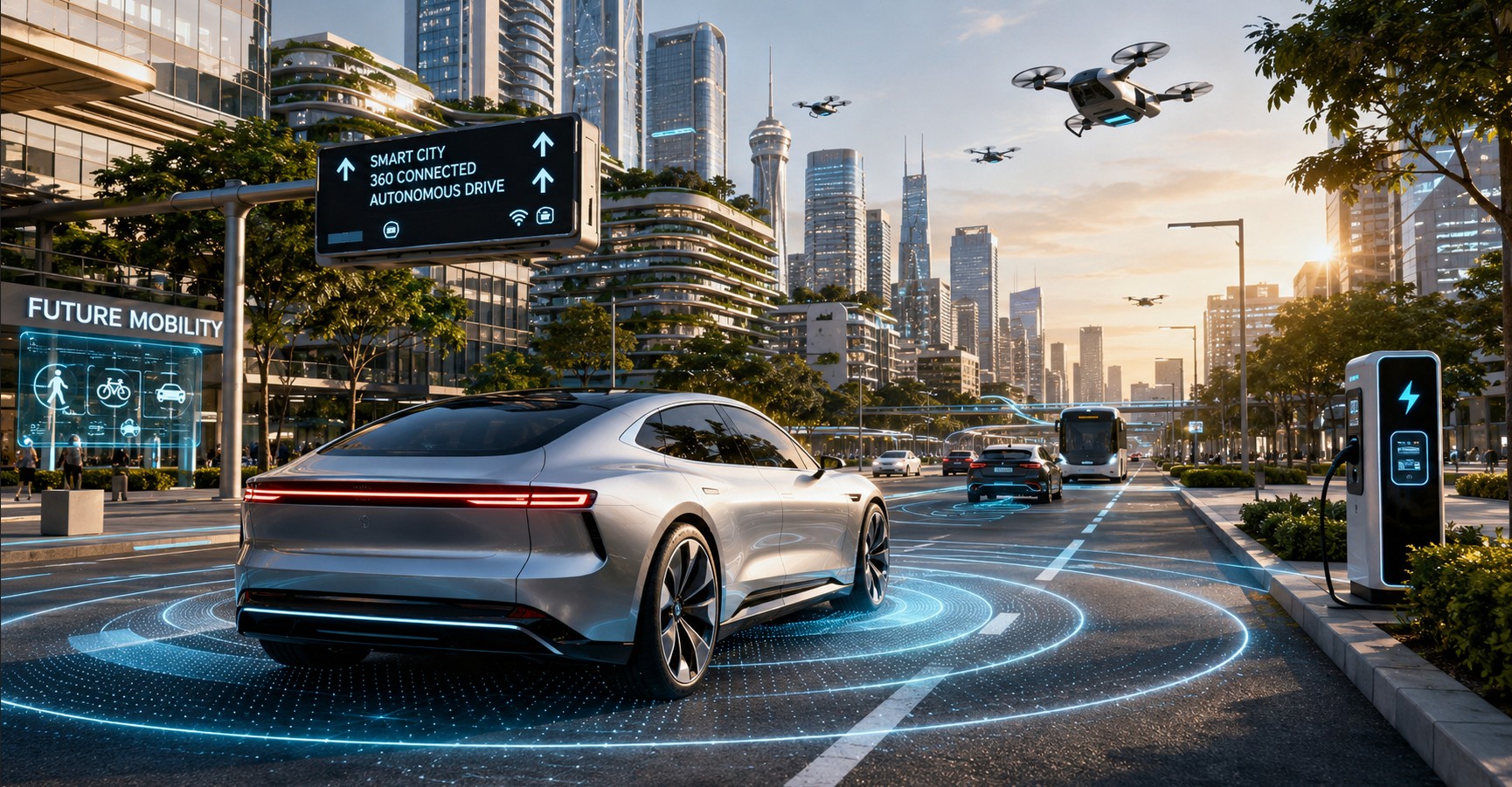
Connected vehicles represent one of the biggest future transportation shifts happening today.
These vehicles communicate with cloud-based systems, smartphone apps, service centers, navigation systems, and sometimes even other vehicles.
How Connected Cars Work
Modern connected vehicles use cellular data, GPS systems, onboard sensors, and wireless communication technology.
These systems can:
- Provide remote vehicle access
- Send maintenance alerts
- Track charging progress
- Update navigation maps
- Improve route planning
- Monitor vehicle health
- Enable software updates
Many EV owners now use mobile apps daily to check battery status or pre-condition cabin temperature before driving.
Benefits of Connected Vehicle Technology
Practical advantages include:
- Reduced maintenance surprises
- Better navigation efficiency
- Improved charging planning
- Enhanced theft tracking
- Faster emergency response systems
- Remote diagnostics
Potential Drawbacks
Connected systems also create concerns:
- Subscription fees for premium features
- Privacy considerations
- Software reliability issues
- Higher repair costs
- Cybersecurity risks
Buyers should always review which features remain free after warranty periods end.
AI Technology in Modern Vehicles
AI technology in modern vehicles focuses mainly on improving safety, efficiency, predictive maintenance, and driver convenience.
Most vehicles do not drive themselves fully, but many systems now analyze road conditions, traffic behavior, and driver actions continuously.
Smart Driver Assistance
Modern systems can recognize:
- Lane markings
- Pedestrians
- Cyclists
- Road signs
- Nearby vehicles
- Traffic flow patterns
This allows advanced safety systems to react faster during dangerous situations.
Driver Monitoring Systems
Some vehicles now monitor driver attention using cameras and sensors.
If the system detects fatigue or distraction, it may issue alerts or suggest rest breaks.
This technology is becoming more common in luxury SUVs and premium EVs.
Predictive Maintenance
Connected vehicles can now predict maintenance needs based on driving habits and vehicle data.
Instead of waiting for parts to fail, systems may warn drivers about:
- Battery health issues
- Tire wear
- Brake performance
- Fluid problems
- Charging irregularities
This can reduce unexpected repair costs over time.
Smart Automotive Safety Systems
Safety technology is now one of the most important parts of automotive technology.
Many accidents happen because of distraction, fatigue, blind spots, or delayed reaction times. Modern safety systems help reduce these risks.
Most Useful Safety Features
| Technology | Main Benefit | Best For |
|---|---|---|
| Automatic Emergency Braking | Helps prevent front collisions | City driving |
| Blind Spot Monitoring | Detects hidden vehicles | Highway driving |
| Lane Keeping Assist | Helps maintain lane position | Long-distance commuting |
| Adaptive Cruise Control | Maintains safe traffic distance | Road trips |
| Rear Cross Traffic Alert | Improves reversing safety | Parking lots |
| Driver Attention Monitoring | Detects fatigue or distraction | Long drives |
Are Advanced Safety Systems Worth It?
For most US drivers, yes.
Families, commuters, and older drivers especially benefit from these technologies.
However, buyers should remember that safety systems are assistance tools, not replacements for attentive driving.
Drivers still remain fully responsible for vehicle control.
Future EV Battery Technology
Battery development is one of the most important future car technology innovations shaping the automotive industry.
Current EV batteries are already improving rapidly, but future EV battery technology promises:
- Longer driving range
- Faster charging
- Lower battery degradation
- Improved cold-weather performance
- Reduced manufacturing costs
- Better energy density
Solid-State Batteries
Solid-state batteries are expected to become one of the biggest future automotive technology trends.
Compared to current lithium-ion batteries, solid-state systems may offer:
- Higher energy capacity
- Shorter charging times
- Improved safety
- Lighter battery packs
- Longer lifespan
Several major automakers are investing heavily in this area.
Charging Improvements
Charging technology is also improving quickly.
Modern fast chargers already allow many EVs to recover significant range within 20 to 40 minutes.
Future charging systems may reduce charging time even further.
Battery Longevity
Battery warranties now commonly reach:
- 8 years
- 100,000 miles
- Sometimes longer
Real-world data suggests many EV batteries maintain strong performance well beyond warranty periods when properly maintained.
Advanced Smart Driving Systems
Advanced smart driving systems combine sensors, cameras, radar, mapping systems, and connected software to assist drivers.
These systems continue evolving toward semi-autonomous driving support.
Current Capabilities
Most modern systems can:
- Maintain highway lanes
- Adjust speed automatically
- Monitor surrounding traffic
- Assist during traffic jams
- Provide parking support
Limitations
Despite marketing claims, no mainstream consumer vehicle currently replaces fully attentive human driving in all situations.
Weather conditions, poor road markings, construction zones, and unexpected traffic behavior can still confuse automated systems.
Drivers must remain prepared to take control instantly.
Future Potential
Future transportation systems may include:
- Vehicle-to-vehicle communication
- Smart traffic coordination
- Predictive accident avoidance
- Advanced autonomous delivery systems
- Connected highway infrastructure
However, widespread adoption will likely happen gradually over many years.
Future Automotive Technology Trends
Several major trends are shaping the future of the automotive industry.
Electrification
Electric vehicles continue expanding across nearly every category:
- Family SUVs
- Luxury sedans
- Pickup trucks
- Compact crossovers
- Commercial fleets
Battery range and charging access continue improving yearly.
Software-Based Vehicles
Vehicles increasingly rely on software updates for:
- Performance improvements
- Navigation upgrades
- Battery optimization
- Safety updates
- Feature additions
This creates new long-term ownership considerations.
Subscription Features
Some automakers now charge monthly fees for premium features.
Examples include:
- Advanced navigation
- Heated seats
- Driving assistance packages
- Enhanced connectivity
Buyers should carefully review ongoing subscription costs before purchasing.
Smarter Energy Management
Future vehicles may better integrate with:
- Home energy systems
- Solar charging setups
- Smart electrical grids
- Vehicle-to-home power systems
This could improve long-term energy flexibility for homeowners.
Best Automotive Technology Features for Families
Families often benefit most from practical safety and convenience features.
Top Recommended Features
- Rear seat reminders
- Automatic emergency braking
- Blind spot monitoring
- Adaptive cruise control
- Large infotainment screens
- Wireless charging
- Remote climate control
- 360-degree parking cameras
- Rear cross-traffic alerts
- Connected navigation systems
Technology Worth Prioritizing
For most buyers, safety technology matters more than flashy entertainment features.
Features that reduce driver stress and improve visibility provide daily value over many years.
Cost Analysis and Ownership Expenses
Modern automotive technology affects both purchase price and long-term ownership costs.
Initial Vehicle Cost
Vehicles with advanced technology packages often cost more upfront.
Premium features may add:
- $2,000 to $10,000+
- Higher trim requirements
- Subscription services
Long-Term Savings
Some technology can reduce costs over time:
- Improved fuel economy
- Lower EV charging costs
- Reduced brake wear from regenerative braking
- Predictive maintenance alerts
- Potential insurance discounts
Potential Repair Costs
Technology-heavy vehicles may also cost more to repair after accidents.
Sensors, cameras, radar systems, and calibration requirements increase repair complexity.
| Technology Feature | Potential Benefit | Possible Ownership Cost |
|---|---|---|
| Adaptive Cruise Control | Reduced highway fatigue | Radar calibration repairs |
| EV Battery System | Lower fuel expenses | Battery replacement risk |
| Connected Navigation | Better traffic routing | Subscription fees |
| Large Touchscreens | Modern convenience | Higher replacement cost |
| Parking Cameras | Improved visibility | Sensor repair expenses |
Insurance Considerations for Smart Vehicles
Insurance companies increasingly evaluate vehicle technology when calculating premiums.
Possible Insurance Benefits
Some insurers offer discounts for vehicles with:
- Automatic emergency braking
- Anti-theft tracking
- Lane departure warnings
- Connected safety systems
Factors That May Increase Costs
Repair complexity may increase insurance rates for some high-tech vehicles.
Luxury EVs and vehicles with advanced sensors often cost more to repair after collisions.
Even a minor bumper repair may require expensive recalibration procedures.
Practical Insurance Advice
- Compare quotes before buying
- Ask about technology discounts
- Review battery coverage
- Understand replacement part costs
- Check EV repair availability locally
EV Charging and Energy Efficiency
Charging convenience remains one of the biggest practical concerns for new EV buyers.
Home Charging
Most EV owners charge primarily at home.
Level 2 home chargers provide faster overnight charging compared to standard outlets.
Installation costs vary depending on:
- Electrical panel capacity
- Garage setup
- Local labor costs
Public Charging
Public charging networks continue expanding across the United States.
However, charging availability still varies by region.
| Charging Type | Typical Charging Speed | Best Use Case |
|---|---|---|
| Level 1 | Slow overnight charging | Occasional home use |
| Level 2 | Several hours | Daily home charging |
| DC Fast Charging | 20–45 minutes | Road trips |
Energy Efficiency
EV efficiency depends heavily on:
- Driving style
- Climate conditions
- Vehicle weight
- Tire condition
- Highway speeds
Cold weather can temporarily reduce driving range significantly.
Maintenance and Long-Term Reliability
Modern vehicles require different maintenance approaches compared to older gasoline-only cars.
EV Maintenance
Electric vehicles generally require:
- Less oil-related maintenance
- Fewer moving parts
- Reduced brake wear
- Battery health monitoring
- Tire maintenance
Technology Maintenance Challenges
Software systems create new maintenance considerations:
- System updates
- Sensor calibration
- Infotainment troubleshooting
- Connectivity problems
Choosing brands with strong software support matters increasingly.
Long-Term Ownership Considerations
Before purchasing a high-tech vehicle, buyers should consider:
- Battery warranty length
- Dealer service quality
- Repair network availability
- Software support history
- Resale value trends
Best Vehicles with Modern Technology
Several modern vehicles currently stand out for balancing technology, practicality, and real-world usability.
| Vehicle | Technology Highlights | Pros | Cons |
|---|---|---|---|
| Tesla Model Y | Software ecosystem, charging network | Strong EV efficiency | Minimal physical controls |
| Hyundai Ioniq 5 | Fast charging, advanced cabin tech | Comfortable interior | Limited charging infrastructure in some areas |
| Kia EV9 | Family-focused technology | Large SUV practicality | Higher purchase price |
| Ford F-150 Lightning | Truck utility with EV technology | Home backup power | Heavy towing reduces range |
| Toyota Prius Hybrid | Fuel-saving hybrid systems | Excellent efficiency | Less exciting performance |
Step-by-Step Buying Advice for US Drivers
Step 1: Define Your Driving Needs
Think realistically about:
- Daily commute distance
- Road trip frequency
- Family size
- Charging access
- Winter driving conditions
Step 2: Prioritize Useful Technology
Focus on features you will use regularly.
Safety systems usually provide more long-term value than flashy entertainment features.
Step 3: Research Insurance Costs
Insurance differences between vehicles can be significant.
Get quotes before finalizing your decision.
Step 4: Evaluate Charging Access
If considering an EV:
- Review local charging availability
- Consider home charging installation
- Research road trip charging routes
Step 5: Test the Technology Yourself
During test drives:
- Use the infotainment system
- Try parking cameras
- Test visibility
- Check seat comfort
- Review menu complexity
Some systems feel intuitive while others may become frustrating daily.
Common Technology Mistakes to Avoid
Buying Too Much Unnecessary Technology
Not every premium feature improves daily ownership.
Some buyers pay extra for features they rarely use.
Ignoring Software Support
Software quality now matters almost as much as engine reliability.
Poor software support can create long-term frustrations.
Underestimating Charging Needs
Some buyers choose EVs without considering realistic charging access.
Home charging convenience often determines overall satisfaction.
Choosing Technology Over Comfort
Comfort, visibility, seating, and practicality still matter greatly.
A vehicle packed with features may still feel uncomfortable daily.
My Practical Recommendation
For most American drivers, the smartest approach is balancing modern automotive technology with real-world practicality.
Advanced safety systems are usually worth prioritizing because they improve daily driving confidence and may help reduce accident risk. Adaptive cruise control, blind spot monitoring, emergency braking, and high-quality camera systems provide genuine long-term value.
Electric vehicles make the most sense for drivers who have reliable home charging access and predictable daily commuting habits. Buyers who frequently tow heavy loads or travel long rural distances may still prefer hybrids or efficient gasoline vehicles for now.
When comparing modern vehicles, buyers should pay close attention to software quality, dealership support, warranty coverage, and long-term maintenance reputation instead of focusing only on large screens or flashy marketing features.
Technology should simplify driving, not complicate ownership.
Internal Linking Suggestions
- Anchor text: Best tiny electric cars for city driving 2026
Suggested link article: Tiny Electric Cars 2026 Guide
Placement idea: EV trends section - Anchor text: EV charging cost guide
Suggested link article: EV Charging Cost Explained
Placement idea: Charging section - Anchor text: electric mobility scooters
Suggested link article: Electric Mobility Scooters 2026
Placement idea: Future transportation section - Anchor text: best family electric SUVs
Suggested link article: Family EV SUV Buying Guide
Placement idea: Family vehicle section - Anchor text: affordable hybrid vehicles
Suggested link article: Best Hybrid Cars for Daily Driving
Placement idea: Ownership cost section - Anchor text: future EV battery technology
Suggested link article: EV Battery Innovation Guide
Placement idea: Battery technology section - Anchor text: smart driving safety systems
Suggested link article: Advanced Car Safety Features Guide
Placement idea: Safety section - Anchor text: connected vehicle technology
Suggested link article: Connected Cars Explained
Placement idea: Connected vehicles section
FAQ Section
1. What is automotive technology?
Automotive technology refers to the electronic systems, safety features, software, connectivity tools, and powertrain innovations used in modern vehicles. This includes smart safety systems, electric vehicle technology, connected navigation, adaptive cruise control, battery management systems, and advanced driver assistance features designed to improve safety, efficiency, and driving convenience.
2. Are advanced smart driving systems safe?
Advanced smart driving systems can improve safety when used properly, but they are not replacements for attentive driving. Features like lane keeping assistance, adaptive cruise control, and automatic emergency braking help reduce driver workload and may help avoid accidents. However, drivers must remain alert and ready to take control at all times.
3. Is EV technology reliable for long-term ownership?
Modern EV technology has improved significantly in recent years. Many electric vehicles now offer strong battery warranties, fewer moving parts, and lower routine maintenance needs compared to gasoline vehicles. Reliability still depends on software quality, battery design, charging habits, and manufacturer support.
4. Do connected vehicles increase insurance costs?
Sometimes. Advanced safety systems may qualify for insurance discounts, but repair costs for sensors, cameras, and connected technology can also increase premiums. Buyers should compare insurance quotes before purchasing a technology-heavy vehicle.
5. What are the best automotive technology features for families?
Families often benefit most from practical safety features such as automatic emergency braking, blind spot monitoring, adaptive cruise control, rear cross-traffic alerts, and 360-degree cameras. These systems improve visibility and reduce stress during everyday driving.
6. How long do EV batteries typically last?
Most modern EV batteries are designed to last many years and commonly include warranties around 8 years or 100,000 miles. Actual lifespan depends on climate, charging habits, battery chemistry, and driving conditions. Many EV batteries continue performing well beyond warranty periods.
7. Are software updates important in modern vehicles?
Yes. Software updates can improve navigation, battery performance, safety systems, charging efficiency, and infotainment reliability. Some vehicles receive over-the-air updates automatically, while others require dealership visits.
8. Is future automotive technology making cars too complicated?
For some buyers, yes. Modern vehicles can feel overwhelming because of large touchscreens, complex menus, and subscription-based features. The best vehicles balance useful technology with intuitive controls and practical daily usability.
9. Should I buy a hybrid or fully electric vehicle?
The right choice depends on your driving habits, charging access, and budget. Hybrids work well for drivers who want better fuel economy without depending on charging infrastructure. Fully electric vehicles make more sense for buyers with reliable home charging and predictable commuting patterns.
10. What future car technology innovations are coming next?
Future developments may include solid-state batteries, smarter charging systems, vehicle-to-grid power sharing, improved connected infrastructure, advanced autonomous assistance, and better predictive safety technology. However, widespread adoption will likely happen gradually over time.
Final Checklist
- Choose safety technology before luxury extras
- Compare insurance quotes before buying
- Research local charging access
- Check software support reputation
- Review battery warranty details
- Test infotainment systems during test drives
- Understand subscription feature costs
- Evaluate long-term maintenance support
- Prioritize comfort and practicality
- Match vehicle technology to real driving needs
Conclusion
The future of automotive technology is reshaping how Americans drive, commute, travel, and manage vehicle ownership. From smart automotive safety systems to connected vehicles and future EV battery technology, modern cars are becoming more efficient, more intelligent, and more integrated into everyday life.
At the same time, buyers should focus on practical long-term value rather than flashy marketing claims. The best automotive technology improves safety, convenience, efficiency, and ownership experience without creating unnecessary complexity.
Whether you are shopping for a family SUV, hybrid commuter, luxury EV, or future-focused smart vehicle, understanding how these technologies work will help you make smarter decisions and avoid expensive ownership mistakes.
As future transportation continues evolving, informed buyers will be in the best position to choose vehicles that match their real-world needs, driving habits, budget, and long-term expectations.