Chevrolet Silverado 2026 Guide: Price, Trims, Towing, EV, Diesel, and Buyer Tips
This guide explains the Chevrolet Silverado from a real buyer’s point of view. It covers trims, engines, towing, EV range, ownership cost, insurance, resale value, and practical shopping tips. It also compares Silverado with the Ford F-150 and explains when a 1500, 2500HD, 3500HD, Trail Boss, ZR2, diesel, gas, or EV model makes the most sense.
Quick Answer: Is the 2026 Chevrolet Silverado Worth Buying?
Yes, the 2026 Chevrolet Silverado is worth considering if you need a capable full-size pickup with many body styles, powertrains, trim levels, and towing choices. The best trim depends on your use case. LT and RST models often suit daily driving. LT Trail Boss works for buyers who want off-road style without going extreme. LTZ and High Country target comfort shoppers. ZR2 is best for serious off-road use. For towing, always check the exact configuration before buying because engine, axle, cab, bed, drivetrain, packages, passengers, cargo, and trailer weight can change real capability.
2026 Chevrolet Silverado Overview
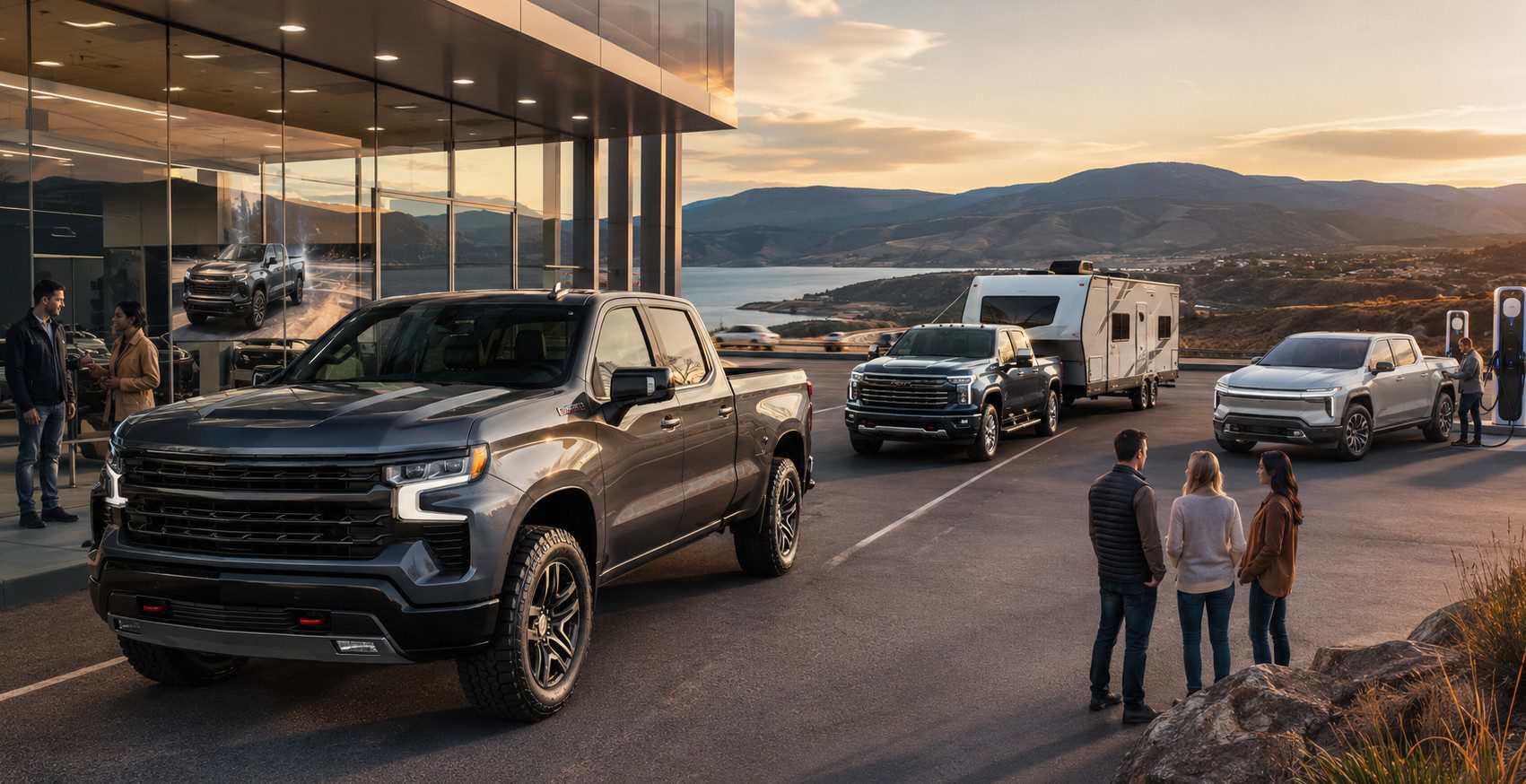
The 2026 Silverado family covers a wide part of the US truck market. At the center is the Silverado 1500, a light-duty full-size pickup built for daily driving, home projects, towing, family use, and worksite duty. Above it sit the Silverado 2500HD and 3500HD, which focus on heavier towing, payload, diesel power, and commercial-style durability. The Silverado EV adds a fully electric truck choice for buyers who want high torque, modern charging, and a cleaner future transportation setup.
That wide range is both a strength and a challenge. A shopper who only asks for a Silverado may see a basic work truck, a comfortable family pickup, a luxury High Country, a lifted Trail Boss, a desert-ready ZR2, a diesel HD, or an electric truck. The right answer depends on what you tow, where you drive, how much comfort you want, and what monthly budget you can support.
For most retail buyers, the Silverado 1500 is the natural starting point. It offers useful capability without the size, cost, ride firmness, and fuel use of an HD truck. However, buyers who tow large equipment, big travel trailers, horse trailers, or fifth-wheel campers should compare HD models early. Choosing too little truck can create stress, safety concerns, and expensive upgrades later.
Silverado Family at a Glance
| Model | Best For | Main Buyer Benefit | Watch Before Buying |
|---|---|---|---|
| Silverado 1500 | Families, commuters, light work, weekend towing | Good balance of comfort, size, tech, and capability | Towing varies by engine, cab, bed, axle, and package |
| Silverado 2500HD | Heavy trailers, contractors, farm use, frequent towing | More payload and towing confidence than a half-ton truck | Higher cost, bigger size, firmer ride, and more fuel use |
| Silverado 3500HD | Maximum towing, dually needs, large fifth-wheel trailers | Serious heavy-duty capability | Too much truck for many daily drivers |
| Silverado EV | EV buyers, fleets, home charging, tech-focused truck shoppers | Electric torque, quiet drive, and no gasoline stops | Range while towing, charger access, and purchase price |
Why Silverado Matters in the US Market
Full-size pickups hold a special place in the US. They compete with SUVs and sedans as daily family vehicles, yet they also handle jobs that smaller vehicles cannot. A truck may serve as a commuter car during the week, a work vehicle on Friday, and a road trip machine on Sunday.
The Silverado matters because it sits in one of the most competitive vehicle segments in America. Buyers often compare it against the Ford F-150, Ram 1500, Toyota Tundra, GMC Sierra, and sometimes large SUVs. A good pickup has to do many things well. It needs comfort, power, storage, towing confidence, infotainment, driver assistance, resale value, and reasonable ownership cost.
Chevrolet also has a broad dealer network across the country. That matters for maintenance, warranty work, parts availability, financing, lease offers, and trade-in support. In rural areas, small towns, suburbs, and highway-heavy states, dealer access can matter almost as much as horsepower.
For 2026, the Silverado also sits at an interesting point in truck history. Gas engines still dominate the market. Diesel remains popular for towing and long-distance work. Electric pickups are improving, but they require new buying habits. As a result, shoppers need to think beyond the badge and choose the powertrain that fits real life.
Price, MSRP, and Dealership Shopping
The 2026 Chevrolet Silverado price in USA depends heavily on model, trim, cab, bed, engine, drivetrain, destination fees, dealer pricing, packages, incentives, taxes, title fees, and local demand. A base work-focused Silverado 1500 usually starts far below a luxury or off-road model. HD trucks and EV versions can climb quickly when buyers add diesel power, four-wheel drive, premium interiors, towing equipment, technology packages, or high-range battery options.
MSRP is only the starting point. The final transaction price may include dealer discounts, manufacturer incentives, finance offers, lease programs, accessories, protection plans, and trade-in value. On the other hand, popular trims can carry fewer discounts in some regions. Always compare the out-the-door price, not only the monthly payment.
Destination fees also matter. They can add a meaningful amount to the window sticker. Taxes and registration vary by state. Insurance also changes by ZIP code, driver profile, trim, engine, claim history, and vehicle value. A High Country, ZR2, or EV model may cost more to insure than a basic WT model.
Silverado Shopping Cost Factors
| Cost Factor | Why It Matters | Buyer Tip |
|---|---|---|
| MSRP | Sets the starting point for trim and options | Compare the exact build, not just the trim name |
| Destination fee | Added to the sticker price | Include it when comparing dealer quotes |
| Dealer discount | Can reduce real purchase price | Get written quotes from multiple dealers |
| Financing rate | Changes the long-term cost of the truck | Compare bank, credit union, and dealer finance offers |
| Lease terms | May lower monthly cost but adds mileage limits | Check annual mileage, wear rules, and buyout value |
| Insurance | Varies by trim, driver, and location | Quote insurance before signing |
2026 Silverado 1500 Trims Explained
The 2026 Chevy Silverado 1500 trims explained in simple terms: each trim targets a different type of buyer. Some focus on work value. Others add comfort, infotainment, appearance upgrades, off-road capability, or luxury features. The best Chevrolet Silverado trim for daily driving is not always the most expensive one.
WT is the basic work truck. It works for businesses, budget buyers, and people who care more about durability than leather or big wheels. Custom adds style while keeping cost lower than upper trims. LT is often a strong value point because it brings more comfort and technology without going full luxury.
RST adds a sportier look and works well for urban, suburban, and family buyers who want a modern truck appearance. LTZ brings more premium features, while High Country aims at luxury pickup buyers. Trail Boss trims add factory off-road attitude, and ZR2 goes further with serious off-road hardware.
Silverado 1500 Trim Comparison
| Trim | Best Match | Practical Strength | Possible Drawback |
|---|---|---|---|
| WT | Work fleets and budget buyers | Lower starting cost and simple utility | Fewer comfort and appearance features |
| Custom | Value shoppers who want better style | More visual appeal than WT | May still lack some premium tech |
| LT | Daily drivers and family truck buyers | Strong comfort and feature balance | Options can raise the price quickly |
| RST | Street-style truck shoppers | Sporty look with daily usability | Not the best off-road choice |
| LTZ | Comfort-focused buyers | Premium interior and towing-friendly tech | Costs more than value trims |
| High Country | Luxury pickup shoppers | Top comfort and upscale feel | Higher insurance and depreciation exposure |
| Trail Boss | Weekend trails and rugged styling | Factory lift and off-road personality | Ride and fuel economy may not suit every commuter |
| ZR2 | Serious off-road buyers | Advanced off-road hardware and trail capability | Expensive if you mostly drive on pavement |
Silverado High Country vs LTZ is mostly a comfort and luxury decision. LTZ gives many premium features and may feel like the smarter value. High Country adds a more upscale identity and can make sense for buyers who want their truck to feel closer to a luxury SUV inside.
Silverado RST vs LT Trail Boss is a lifestyle decision. RST fits buyers who like a clean street look, city driving, and highway comfort. LT Trail Boss is better for drivers who want four-wheel-drive personality, rough-road confidence, camping access, or mild off-road fun.
Gas, Diesel, and TurboMax Engine Choices
Silverado diesel vs gas engine decisions should start with how you drive. The 3.0L Duramax diesel can appeal to people who drive long distances, tow regularly, or want strong low-end torque. V8 gas engines appeal to traditional truck buyers who want familiar power, sound, and broad availability. TurboMax gas engines can fit buyers who want useful torque without stepping into a V8.
However, diesel torque and highway efficiency can help certain drivers. If you tow often or cover many highway miles, the diesel may deserve a closer look.
Gas engines usually make sense for drivers with mixed commuting, shorter trips, lighter towing, and simpler ownership needs. Many families, homeowners, and daily drivers do not tow often enough to justify diesel complexity. A gas Silverado can still be very capable when properly equipped.
Gas vs Diesel vs EV Silverado Use Cases
| Powertrain | Best For | Ownership Advantage | Think Twice If |
|---|---|---|---|
| TurboMax gas | Daily use, value shoppers, light towing | Good torque and lower entry cost on many builds | You want traditional V8 character |
| V8 gas | Traditional truck buyers and broader towing needs | Strong power and familiar service network | Fuel economy is your top priority |
| 3.0L Duramax diesel | Highway miles and frequent towing | Strong torque and efficient long-distance cruising | You mostly take short trips or want simple maintenance |
| Silverado EV | Home charging, tech buyers, fleets, local work | Quiet drive, instant torque, and less gasoline dependence | You tow long distances without reliable charging stops |
Chevrolet Silverado Towing Capacity Guide
Chevrolet Silverado towing capacity 2026 numbers vary across the lineup. The Silverado 1500 can tow serious loads when properly equipped, while the Silverado HD lineup reaches much higher capability. The Silverado EV also offers strong available towing for an electric vehicle, but towing range depends on load, speed, weather, terrain, and charging behavior.
Never shop by the biggest advertised tow number alone. The truck on the dealer lot may not match the maximum rating. Cab style, bed length, axle ratio, drivetrain, engine, wheels, trailering package, payload rating, hitch type, and optional equipment can all change the final rating. Payload matters because passengers, cargo, tongue weight, tools, bed accessories, and a family road trip load all count against the truck.
A safe towing decision includes the trailer’s loaded weight, not only its empty weight. A camper gains weight quickly after water, propane, food, gear, bikes, coolers, tools, and personal items. Boat trailers, equipment trailers, and enclosed cargo trailers also vary a lot in real life.
Practical Towing Examples
| Trailer Type | Typical Buyer Need | Suggested Silverado Direction | Important Check |
|---|---|---|---|
| Small utility trailer | Home projects and yard work | Silverado 1500 | Payload, hitch rating, and trailer brakes |
| Fishing boat | Weekend lake trips | Silverado 1500 with suitable package | Launch ramp traction and loaded trailer weight |
| Medium travel trailer | Family camping and road trips | Properly equipped 1500 or 2500HD | Tongue weight, payload, passengers, and wind resistance |
| Large travel trailer | Frequent long-distance camping | 2500HD | Stability, braking, payload, and fuel range |
| Fifth-wheel camper | Heavy recreational towing | 2500HD or 3500HD | Pin weight and bed configuration |
| Large equipment trailer | Contractor or farm work | HD gas or Duramax diesel | Commercial use, insurance, and payload rating |
Trailering packages can add useful features. Depending on configuration, buyers may find integrated trailer brake controls, trailer camera views, hitch guidance, trailer tire pressure monitoring, and towing drive modes. These features do not replace safe loading, but they can reduce stress for newer truck owners.
Chevrolet Silverado EV Buyer Guide
The Chevrolet Silverado EV Buyer Guide starts with one question: can your lifestyle support an electric truck? For many drivers, home charging changes everything. If you can charge overnight, daily commuting and local work may become simple. You start many mornings with useful range, and you avoid routine gas station stops.
Chevy Silverado EV range and towing capacity depend on trim, battery, configuration, driving style, temperature, trailer size, and charging conditions. Chevrolet lists strong available range and towing capability on certain Silverado EV models, but real-world towing can reduce range sharply. This is true for all electric pickups, not just the Silverado EV.
The EV version can make sense for contractors who drive predictable routes, fleets with depot charging, homeowners with Level 2 charging, and tech-focused families who want a quiet truck. It may be less convenient for buyers who tow heavy trailers across rural areas with limited fast charging.
Silverado EV Buyer Considerations
| Question | Why It Matters | Best Buyer Move |
|---|---|---|
| Can you charge at home? | Home charging makes EV ownership easier and cheaper | Price a Level 2 charger before buying |
| Do you tow long distances? | Towing reduces EV range and may require more stops | Map chargers along real routes |
| Do you qualify for incentives? | Federal, state, or local rules may change | Check current eligibility before signing |
| Is it a work truck? | Predictable routes favor EV fleets | Compare charging downtime with fuel savings |
| Will you keep it long term? | Depreciation and battery confidence affect value | Review warranty and resale trends |
EV pickup competitors include the Ford F-150 Lightning, Rivian R1T, Tesla Cybertruck, and GMC Sierra EV. Each truck has a different personality. The Silverado EV stands out for buyers who want a Chevrolet truck identity with electric torque, useful work features, and modern cabin technology.
Silverado Trail Boss vs ZR2
Silverado Trail Boss vs ZR2 is one of the most common off-road trim questions. The Trail Boss is the easier answer for many buyers. It gives a rugged look, factory lift, off-road attitude, and daily usability. It works well for dirt roads, campsites, snow days, mild trails, and people who simply like the stance.
The ZR2 goes further. It targets serious off-road buyers who want advanced suspension hardware, better trail control, underbody protection, and more capability in rough terrain. It feels more specialized. That makes it exciting, but it also means some buyers may pay for capability they rarely use.
For daily driving, the Trail Boss often feels like the more balanced choice. For real trail use, rough camping routes, rocky terrain, and adventure weekends, the ZR2 earns its place. If your truck will spend most of its time on highways and suburban roads, test-drive both before paying the premium.
Trail Boss vs ZR2 Buyer Comparison
| Category | Trail Boss | ZR2 |
|---|---|---|
| Daily driving | Better balance for many shoppers | Still usable, but more specialized |
| Off-road ability | Good for mild to moderate use | Better for serious trails |
| Camping | Great for weekend campsites | Better for rougher routes |
| Towing | Check configuration and packages | Off-road hardware may not maximize towing value |
| Cost | Usually easier to justify | Higher price for focused capability |
Chevrolet Silverado vs Ford F-150
Chevrolet Silverado vs Ford F-150 is one of the biggest comparisons in the US truck market. Both trucks offer many trims, engine choices, towing packages, technology features, work configurations, and family-friendly cabins. The better truck depends on your priorities.
The Silverado often appeals to buyers who like Chevrolet’s design, available diesel option, truck feel, towing confidence, and dealer familiarity. The F-150 appeals to buyers who like Ford’s engine variety, aluminum body strategy, hybrid option, broad trim range, and long-standing sales reputation. Both can be excellent if configured correctly.
Silverado vs F-150 Practical Comparison
| Buyer Priority | Silverado Advantage | F-150 Advantage | Best Advice |
|---|---|---|---|
| Daily family use | Spacious cabins and familiar controls | Broad trim and powertrain choices | Test rear seats, visibility, and ride quality |
| Towing | Strong available capability across 1500 and HD lines | Strong ratings with the right package | Compare exact door-jamb and tow-guide numbers |
| Fuel economy | Diesel can appeal to highway drivers | Hybrid option may interest some shoppers | Match powertrain to your route and mileage |
| Work use | Strong HD lineup and dealer support | Strong fleet presence and upfit ecosystem | Calculate payload, downtime, and service access |
| Technology | Modern screens and available towing views | Strong tech packages on many trims | Use both systems before choosing |
Chevy Silverado 1500 vs 2500HD
Chevy Silverado 1500 vs 2500HD is a key decision for buyers who tow. The 1500 is easier to live with every day. It usually rides better, parks easier, costs less, and uses less fuel. It is the smarter choice for many families, commuters, and homeowners.
The 2500HD makes sense when towing and payload demands rise. It offers heavier-duty components, stronger available towing confidence, and better suitability for large trailers. However, it can feel bigger and firmer in daily life. Fuel, tires, insurance, and maintenance may also cost more.
Do not buy an HD truck only because it looks powerful. Also, do not buy a 1500 if you already know your trailer pushes its comfortable limits. The right truck should leave a safety margin for passengers, cargo, hills, heat, wind, and future needs.
Silverado 1500 vs 2500HD Decision Table
| Need | Choose Silverado 1500 If | Choose Silverado 2500HD If |
|---|---|---|
| Daily commuting | You want comfort and easier parking | You accept a larger truck for work needs |
| Family road trips | You tow light to moderate trailers | You tow a large camper often |
| Work payload | Your tools and cargo stay moderate | You carry heavy loads often |
| Long-term cost | You want lower running costs | You need durability more than savings |
| Resale | You want broad retail appeal | You serve a strong towing or commercial market |
Insurance, Fuel, Maintenance, and Ownership Cost
Chevrolet Silverado insurance cost in USA depends on the driver, location, trim, usage, credit-based insurance score where allowed, claims history, coverage level, deductible, and annual mileage. A base work truck may cost less to insure than a luxury trim or high-output EV. A teenage driver, dense city ZIP code, or long commute can raise premiums.
Fuel economy also changes the ownership equation. Gas trucks cost more when fuel prices rise. Diesel may improve highway range for some drivers, but diesel fuel and service costs vary. The Silverado EV can reduce gasoline spending, but electricity rates, charger installation, public fast charging prices, and range while towing all matter.
Maintenance cost includes oil changes, filters, tires, brakes, fluid services, alignment, batteries, wipers, and repairs outside warranty. Off-road trims may wear tires faster. HD trucks can need more expensive tires and service. EV models may reduce some engine-related maintenance, but tires, brakes, suspension, software, charging equipment, and insurance still matter.
Ownership Cost Factors by Silverado Type
| Silverado Type | Main Cost Drivers | Smart Budget Move |
|---|---|---|
| 1500 gas | Fuel, tires, insurance, routine service | Compare fuel economy and tire size before buying |
| 1500 diesel | Diesel fuel, emissions systems, maintenance | Use it for enough highway miles to justify the choice |
| Trail Boss or ZR2 | All-terrain tires, off-road wear, higher trim cost | Budget for tires and alignment checks |
| 2500HD or 3500HD | Fuel, tires, brakes, heavy-duty service | Buy only if you need the capability |
| Silverado EV | Charger setup, electricity, insurance, tires | Calculate home charging cost and public charging needs |
Depreciation matters too. Trucks often hold value well when they have desirable configurations, clean history, low mileage, and good maintenance records. However, expensive trims can lose more dollars even if their percentage depreciation looks normal. A value trim with smart options may be easier to justify than a fully loaded truck if budget matters.
Used Chevrolet Silverado Buying Guide
A used Chevrolet Silverado buying guide should start with condition, history, and use. A clean-looking truck may have towed heavy loads, plowed snow, worked on job sites, or spent years in rust-prone climates. Another truck with higher mileage may be a better buy if it has complete service records and mostly highway use.
Check for rust underneath, especially in northern states and coastal regions. Look at frame rails, brake lines, rocker panels, cab corners, bed supports, suspension parts, and hitch areas. Rust repairs can become expensive fast.
Review transmission behavior during a test drive. Shifts should feel smooth and predictable. Also check engine idle, fluid leaks, warning lights, four-wheel-drive engagement, trailer wiring, brake feel, tire wear, and infotainment operation. For diesel models, ask for service records and understand emissions-system maintenance.
Used truck shoppers should avoid rushing. Compare the price with mileage, trim, accident history, title status, number of owners, tire condition, brake condition, and warranty options. A cheaper truck can become expensive if it needs tires, brakes, suspension parts, or major repairs soon after purchase.
Used Silverado Inspection Checklist
| Area | What to Check | Why It Matters |
|---|---|---|
| Frame and body | Rust, accident repairs, uneven gaps | Structural issues can be costly |
| Engine | Leaks, noises, service records, warning lights | Repairs can erase any purchase savings |
| Transmission | Shift quality, delay, vibration, fluid history | Truck transmissions work hard when towing |
| Suspension | Uneven tire wear, clunks, lift-kit quality | Bad parts affect safety and tire life |
| Towing equipment | Hitch, brake controller, wiring, bed wear | Heavy towing can reveal hard use |
| Interior and tech | Screens, cameras, seats, climate controls | Modern repairs can be expensive |
Safety, Technology, and Family Usability
Modern Silverado shoppers often want more than towing. They want a truck that works as a family vehicle. That means child-seat access, rear-seat space, storage, cupholders, phone charging, infotainment, driver assistance, and highway comfort matter a lot.
Available safety and driver assistance features may include systems such as forward collision alerts, automatic emergency braking, lane assistance, blind-zone features, parking help, camera views, and adaptive cruise features depending on trim and options. Buyers should verify the exact equipment on the window sticker because features can vary.
Technology also matters for towing. Camera views, hitch guidance, trailer profiles, trailer brake controls, and digital displays can help reduce stress. However, technology does not make an overloaded trailer safe. Good towing still requires proper loading, tire pressure, trailer brakes, mirrors, speed control, and driver judgment.
As a family vehicle, a crew cab Silverado can feel roomy and useful. The bed also adds flexibility for sports gear, home improvement supplies, camping equipment, and road trip cargo. Still, parking size matters. Buyers moving from a sedan, compact SUV, or hybrid vehicle should test parking lots, garage space, and city streets before committing.
Practical Expert Insight
The smartest Silverado purchase is usually not the most powerful one. It is the truck that matches your real weekly use. A buyer who tows a camper twice a year may not need a heavy-duty diesel. A contractor who hauls heavy material every week should not rely on a lightly equipped half-ton just to save money at purchase.
Start with payload, not horsepower. Many truck buyers focus on tow ratings and forget that tongue weight, passengers, cargo, tools, and accessories reduce payload. A comfortable safety margin matters more than winning a spec-sheet argument.
Next, test the truck the way you will use it. Drive it on rough pavement, tight streets, highway ramps, and parking lots. Bring your family if it will serve as a family vehicle. Open the rear doors, check the bed height, test visibility, pair your phone, and sit in the exact seats you will use every day.
Finally, price the full ownership picture. Include fuel, electricity if EV, charger installation, insurance, tires, maintenance, financing interest, depreciation, and registration. A lower monthly payment can hide a longer loan, higher interest, or a truck that does not fit your needs.
Common Buying Mistakes to Avoid
The first mistake is buying too much truck. A 3500HD dually looks impressive, but it may feel unnecessary if you mostly commute and visit home improvement stores. Bigger trucks cost more to buy, fuel, park, insure, and maintain.
The second mistake is buying too little truck. If your trailer is near the limit, every trip can become stressful. Wind, hills, passengers, water tanks, tools, and cargo all add load. A safer margin makes towing more relaxed.
The third mistake is ignoring insurance. Get quotes before you buy. A sporty, luxury, off-road, diesel, or EV truck may cost more than expected. Insurance can change the true monthly ownership budget.
The fourth mistake is focusing only on the discount. A big discount on the wrong trim is not a good deal. A better-equipped truck that fits your life may save money over time by avoiding upgrades, dissatisfaction, or an early trade-in.
The fifth mistake is ignoring charging needs on the Silverado EV. Public fast charging can work, but home charging is usually the foundation of a smooth EV truck experience. If you cannot charge at home, plan carefully before switching from gas or diesel.
Future Trends for Silverado Buyers
The Silverado lineup reflects where the truck market is heading. Gas engines will remain important because they fit many buyers and work across the entire country. Diesel will still matter for towing and heavy-duty use. EV trucks will continue to improve as charging networks grow, battery technology changes, and buyers learn how electric pickups fit real life.
Software and driver assistance will also play a larger role. Trucks are becoming more connected, more camera-heavy, and more advanced in towing support. Buyers should expect future updates around infotainment, trailering tools, over-the-air features, and energy management.
Ownership decisions will become more personal. One buyer may want a simple gas work truck. Another may want a luxury truck that replaces a family SUV. Another may want an electric pickup for local business use. The best future-ready choice is the one that matches your routes, charging access, towing needs, and long-term budget.
Frequently Asked Questions
What is the best 2026 Chevrolet Silverado trim for daily driving?
For many US buyers, the LT or RST trim may be the best daily driving choice because both can offer a good mix of comfort, technology, style, and value. LT is often the practical pick if you want useful features without paying for a luxury trim. RST works well if you prefer a sportier look for suburban roads, commuting, and family use. Trail Boss is attractive if you want rugged styling, but it may not be necessary if you rarely leave pavement. Always compare seats, screens, ride quality, insurance quotes, and real out-the-door pricing before choosing.
Is the Silverado diesel better than gas?
The Silverado diesel can be better for drivers who tow often, drive long highway distances, or value strong low-end torque. However, diesel is not the best choice for everyone. Diesel fuel prices, maintenance needs, emissions equipment, and short-trip driving patterns can affect long-term cost. Gas engines often make more sense for mixed commuting, lighter towing, and simpler ownership. Before choosing diesel, calculate your annual mileage, towing frequency, fuel prices, and maintenance expectations. A diesel may be smart for one buyer and unnecessary for another.
Should I buy a Silverado 1500 or 2500HD?
Buy the Silverado 1500 if you need a truck for daily driving, family use, home projects, and light to moderate towing. It is easier to park, usually more comfortable, and often cheaper to own. Choose the 2500HD if you tow heavy trailers often, carry heavy payloads, or need stronger work capability. Do not decide by appearance alone. Compare your loaded trailer weight, tongue weight, passenger weight, bed cargo, and safety margin. If your trailer pushes the limits of a 1500, the 2500HD may be the safer and more confident option.
Is the Silverado EV good for towing?
The Silverado EV can offer strong available towing capability, but towing with any electric truck requires planning. Heavy trailers, high speeds, cold weather, hills, and wind can reduce range. That means long-distance towing may require more charging stops than daily commuting. The Silverado EV makes the most sense when you can charge at home, drive predictable routes, or tow within a planned area. Before buying, map your real trips, check charger locations, compare public charging costs, and understand how trailer size affects range.
How much does Silverado insurance cost?
Silverado insurance cost varies by state, ZIP code, driver age, driving history, credit-based insurance score where allowed, annual mileage, trim, engine, and coverage level. A basic work truck may cost less to insure than a luxury High Country, ZR2, diesel HD, or EV model. The only reliable way to know your cost is to request quotes before buying. Ask insurers to quote the exact VIN or a very similar build. Also compare deductibles, coverage limits, roadside assistance, rental reimbursement, and whether business use changes the policy.
What should I check before buying a used Chevrolet Silverado?
Before buying a used Silverado, check the frame for rust, review service records, scan for warning lights, test the transmission, inspect tires and brakes, and look for signs of heavy towing. Check the hitch area, trailer wiring, bed condition, suspension parts, and underbody. A pre-purchase inspection from a trusted mechanic is wise, especially for diesel, lifted, high-mileage, or work-used trucks. Also review title history, accident records, mileage consistency, ownership history, and whether the price reflects upcoming maintenance needs.
Final Practical Checklist
- Choose the Silverado 1500 if you want the best mix of daily comfort, towing, and family usability.
- Choose the Silverado 2500HD or 3500HD only when your towing or payload needs truly require heavy-duty capability.
- Compare WT, Custom, LT, RST, LTZ, High Country, Trail Boss, and ZR2 by real use case, not only appearance.
- Check the exact towing and payload rating for the truck you plan to buy.
- Use loaded trailer weight, not empty trailer weight, when planning towing.
- Get insurance quotes before signing the purchase or lease paperwork.
- Compare gas, diesel, and EV ownership based on your mileage, towing, fuel prices, and charging access.
- Test-drive the truck on highways, rough roads, parking lots, and tight turns.
- For Silverado EV, confirm home charging, public charging routes, and towing range expectations.
- For used Silverado models, pay for a pre-purchase inspection and check rust carefully.
- Compare out-the-door prices from multiple dealerships.
- Do not accept a longer loan term just to make the payment look smaller.
- Keep maintenance records to protect resale value.
Conclusion
The 2026 Chevrolet Silverado remains one of the most important full-size trucks for US buyers because it can serve so many roles. It can be a work truck, family vehicle, towing machine, off-road toy, luxury pickup, diesel hauler, or electric vehicle. That flexibility is the reason the lineup is popular, but it also means buyers need a clear plan.
Start with your real life. Think about your commute, family needs, parking space, trailer weight, fuel budget, charging access, insurance cost, and long-term plans. Then choose the Silverado model and trim that fits those needs without overbuying or underbuying.
For many shoppers, a well-equipped Silverado 1500 LT, RST, or LT Trail Boss will deliver the best balance. Heavy towing buyers should compare HD trucks early. Off-road buyers should decide whether Trail Boss is enough or ZR2 is worth the extra cost. EV shoppers should confirm charging access and real towing expectations before making the switch.
The next smart step is simple: build your preferred configuration, compare local dealership quotes, check insurance, test-drive at least two trims, and review the exact towing and payload labels before you sign. A careful buying process can turn the Silverado from a good-looking truck into the right long-term ownership decision.