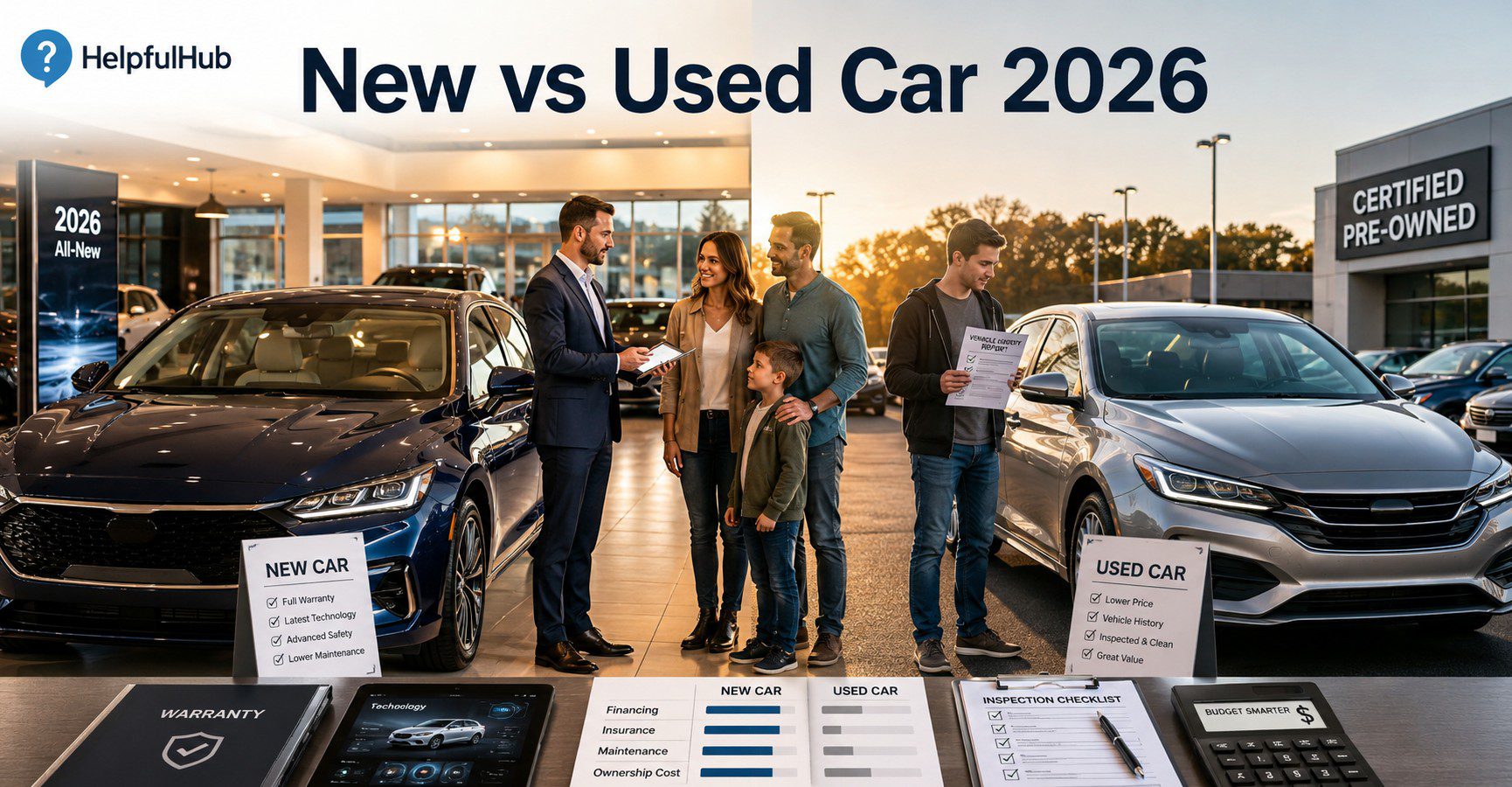
Benefits of Buying New vs Used Car 2026: Which Option Makes More Sense?
A new car may offer confidence and the latest features. A used car may deliver better value and a lower purchase price. The smartest move is to compare monthly payment, warranty, maintenance, depreciation, technology, safety, and long-term cost before signing anything.
Quick Answer
Choose a new car if you want a full manufacturer warranty, the latest safety features, newest technology, clean ownership history, easier financing or lease options, and long-term peace of mind. Choose a used car if you want a lower purchase price, slower depreciation, better value, and more car for the money. The best choice depends on your budget, credit score, insurance quote, driving needs, maintenance comfort, and how long you plan to keep the vehicle. In many cases, a certified pre-owned car can also be a smart middle option because it may combine used-car savings with added warranty coverage.
Quick Comparison
| Factor | New Car | Used Car |
|---|---|---|
| Best for | Warranty, latest tech, clean history | Lower cost and better value |
| Purchase price | Usually higher | Usually lower |
| Depreciation | Faster early value loss | Often slower after first owner |
| Warranty | Full manufacturer warranty | Varies by age, mileage, and CPO status |
| Financing | May have promotional loans or leases | Rates vary by credit and vehicle age |
| Insurance | May cost more due to higher replacement value | May be lower, depending on vehicle |
| Maintenance | Usually lower early repair risk | Needs inspection and records |
| Technology | Newest screens and driver assistance | Depends on model year and trim |
| Safety features | Latest available systems | Good on many newer used models |
| Best buyer type | Long-term owner, lease shopper, peace-of-mind buyer | Student, first-time buyer, value shopper |
Benefits of Buying a New Car in 2026
The main benefits of buying a new car include full warranty coverage, a clean history, and access to the newest technology. You do not have to worry about a previous accident, poor maintenance, hidden mileage issues, or unknown ownership habits.
New cars are also attractive for buyers who want the latest infotainment, driver assistance, fuel-saving systems, hybrid options, or EV features. In addition, new-car shoppers can usually choose the exact trim, color, package, and interior they want. For more detail, see this complete new car buying guide 2026 USA.
New cars can also work well for long-term owners. If you plan to keep the vehicle for many years, the higher upfront cost may feel easier to justify because you get the full life of the car from day one. Also, lease deals and promotional financing may be easier to find on new vehicles, although actual offers depend on credit, location, lender approval, and dealer inventory.
Benefits of Buying a Used Car in 2026
The benefits of buying a used car usually start with price. A used car often costs less upfront, which can make the monthly payment easier to manage. This can be helpful for students, first-time buyers, families on a tight budget, and shoppers who want more vehicle for the money.
A used SUV, sedan, truck, hybrid, or EV may also have already passed through the fastest part of depreciation. That can make resale value more stable, especially if the vehicle has a clean history and strong maintenance records. For a broader comparison, read this new car vs used car guide.
Certified pre-owned vehicles can be a useful middle ground. A certified pre-owned car may include inspection standards and added warranty coverage from the brand or dealer program. However, buyers should still check the vehicle history report, mileage, tires, brakes, battery health, ownership records, and maintenance history before buying.
Cost, Financing, and Depreciation
Cost is one of the biggest parts of any new vs used car comparison. New cars usually cost more upfront. Used cars may offer lower monthly payments, but the final deal still depends on down payment, credit score, lender terms, taxes, title fees, registration, and dealer fees.
The benefits of buying new vs used car 2026 are not only about sticker price. A new car may qualify for promotional financing or lease options. On the other hand, used car financing can vary based on the vehicle age, mileage, credit history, and lender rules.
| Cost Factor | What to Compare |
|---|---|
| Out-the-door price | Vehicle price plus taxes, fees, registration, and add-ons |
| Monthly payment | Loan term, down payment, credit score, and interest cost |
| Depreciation | How much value may drop before you sell or trade |
| Fuel or charging | Gas, hybrid efficiency, home charging, and public charging access |
| Long-term ownership | Insurance, maintenance, warranty, repairs, and resale value |
Insurance, Maintenance, and Warranty
Insurance can change the real cost of ownership. A new car may cost more to insure because replacement value and repair technology can be higher. A used car may be cheaper to insure, but that is not guaranteed. Always compare real quotes before buying. You can also review the best car insurance options in the USA 2026.
Warranty also matters. New cars include manufacturer warranty protection, which can reduce early repair worries. Used cars need more careful inspection, especially if the factory warranty has expired. With hybrids and EVs, check battery condition, charging equipment, warranty coverage, and service records before making a decision.
Best Choice by Buyer Type
First-time buyers may prefer a reliable used car or a simple affordable new car, depending on budget and insurance cost. Students often benefit from a used car with low ownership cost and strong reliability.
Families may choose new if they want the latest safety features and warranty. However, a newer used SUV or minivan can also offer strong value. Daily commuters should compare fuel economy, comfort, reliability, and maintenance cost.
Long-distance drivers may prefer a new car for warranty and comfort. EV buyers should compare range, home charging, public charging, and battery warranty. Hybrid buyers should check fuel savings, battery coverage, and repair history. Truck and SUV buyers should compare towing, payload, tires, brakes, and ownership cost. For a wider shopping plan, read how to choose the right car in 2026.
Common Mistakes to Avoid
- Shopping by monthly payment only
- Ignoring insurance quotes
- Ignoring taxes and registration
- Skipping used car inspection
- Ignoring warranty coverage
- Overpaying for dealer add-ons
- Not comparing loan rates
- Forgetting fuel, charging, and maintenance costs
- Buying more car than the budget allows
- Not test driving both new and used options
Practical Expert Insight
The smartest choice is not always new or used. The smartest choice is the vehicle with the best total value for your real life. When comparing the benefits of buying new vs used car 2026, look beyond the price tag and compare the full ownership picture.
Check the out-the-door price, financing rate, insurance quote, warranty, expected maintenance, fuel economy, EV charging access, resale value, and driving needs. A cheaper car is not always cheaper to own. Also, a new car is not always the better financial choice if the payment stretches your budget too far.
Final Recommendation
The best next step is simple. Compare one new car and one used car in the same class. Then check insurance, financing, warranty, maintenance, fuel or charging cost, and real ownership cost before you buy.
FAQs
Is it better to buy a new or used car in 2026?
It depends on your budget and ownership goals. A new car is better if you want warranty coverage, the latest safety features, clean history, and long-term confidence. A used car is better if you want a lower purchase price and more value for the money. The best choice comes from comparing total ownership cost, not only the monthly payment.
What are the main benefits of buying a new car?
The main benefits of buying a new car are full warranty coverage, the newest technology, updated safety systems, clean ownership history, and easier access to current trims and colors. New cars can also be attractive for buyers who plan to keep the vehicle for many years. However, buyers should still compare insurance, taxes, financing, and depreciation.
What are the main benefits of buying a used car?
The main benefits of buying a used car include lower upfront cost, less early depreciation risk, and more car for the money. A used car can be a smart option for students, first-time buyers, and budget-focused families. However, it is important to check mileage, history, title status, maintenance records, tires, brakes, and inspection results before buying.
Is a certified pre-owned car better than a new car?
A certified pre-owned car can be better for value shoppers, but it depends on the vehicle and program. CPO cars may include inspections and added warranty coverage, which can reduce some used-car risk. A new car still offers the cleanest history and full warranty from the start. Compare the price gap, warranty details, mileage, and financing before choosing.
Which is cheaper to insure, new or used car?
A used car is often cheaper to insure, but not always. Insurance cost depends on the vehicle, driver profile, state, coverage level, repair cost, safety features, theft risk, and lender requirements. New cars may cost more because replacement value and repair technology can be higher. Always get real insurance quotes for both vehicles before buying.
Should first-time buyers buy new or used?
First-time buyers should compare both options. A reliable used car may offer lower payments and better value. An affordable new car may offer warranty coverage and fewer repair worries. The right choice depends on budget, credit score, insurance quote, driving needs, and comfort with maintenance. The benefits of buying new vs used car 2026 are strongest when the buyer compares real total cost.