2026 Honda Pilot: Features, Trims, Price, AWD, Towing, and Buyer Guide
For many families, the Pilot is not just another Honda model. It is the vehicle that has to handle car seats, sports bags, grandparents, groceries, highway miles, snow days, and summer trips without feeling too hard to park or too expensive to own. That is why trim choice matters so much.
Quick Answer
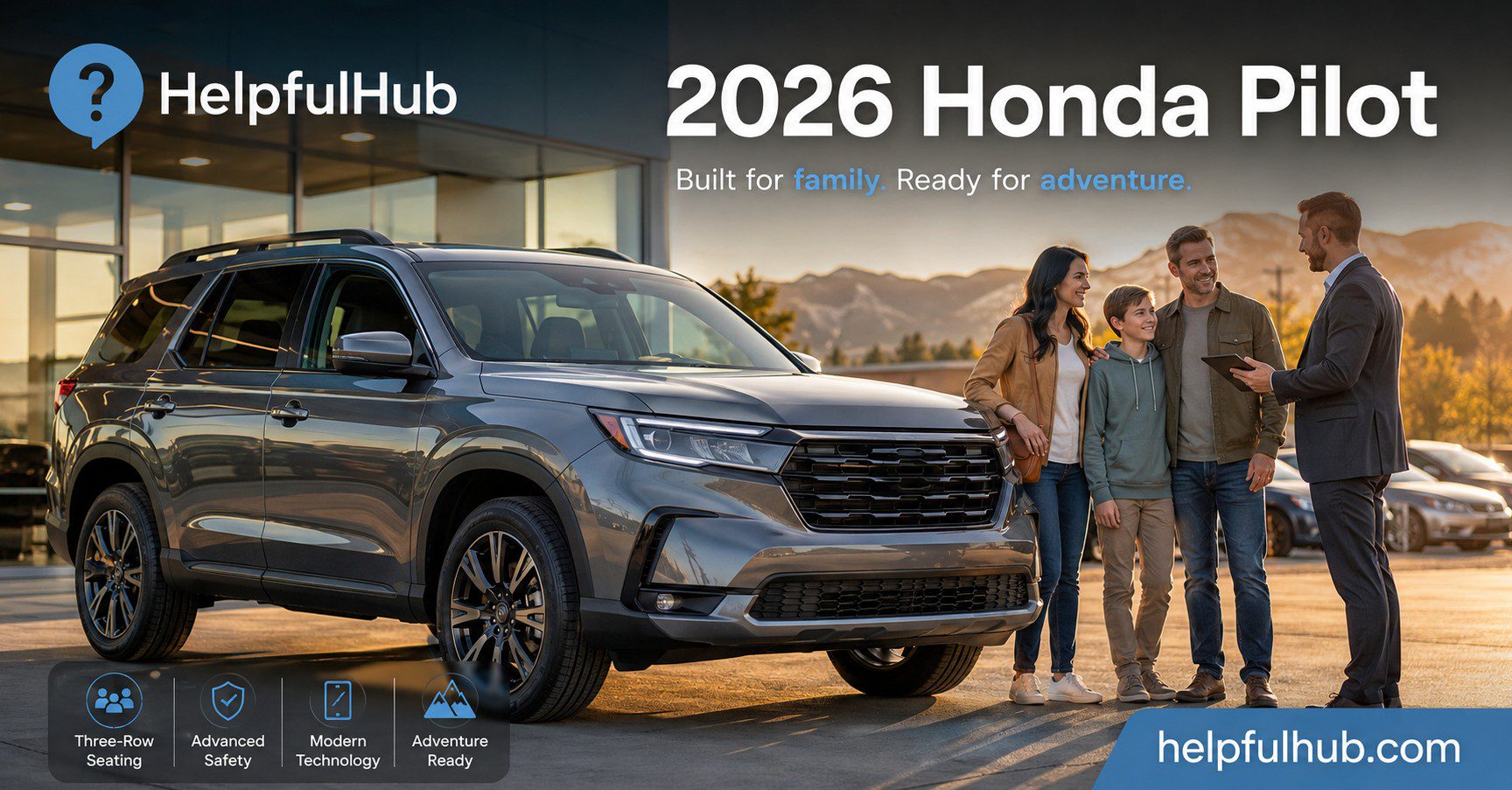
The 2026 Honda Pilot is a practical three-row SUV for families, road trips, and buyers who need more space than a compact SUV. US shoppers should compare Sport, EX-L, Touring, Touring Blackout, TrailSport, Elite, and Black Edition based on seating, cargo flexibility, technology, AWD needs, towing plans, insurance, financing, and long-term ownership costs. TrailSport may make sense for outdoor-focused buyers who want a more rugged setup, while other trims may fit family comfort, premium features, and daily driving better. Before buying, verify current pricing, availability, destination charge, dealer fees, trim equipment, and incentives with Honda or local dealers for daily driving, school runs, and weekend trips.
2026 Honda Pilot: What US Buyers Should Know
The 2026 Honda Pilot sits in the busy midsize three-row SUV segment, where shoppers often compare space, comfort, safety features, technology, and total ownership cost before choosing. It is aimed at buyers who need real family practicality without jumping into a truck-based SUV.
Honda lists the 2026 Pilot as a three-row SUV with seating for up to eight passengers, depending on trim and second-row configuration. Some versions offer a removable or stowable second-row center seat, while TrailSport is positioned with second-row captain’s chairs and seven-passenger seating.
That flexibility is important because three-row SUV buyers do not all use their vehicles the same way. A family with three children may care most about car seat access and second-row width. A road-trip couple may care more about quiet cruising, cargo space, and technology. An outdoor buyer may focus on AWD, ground clearance, tires, and towing.
HelpfulHub readers comparing Honda models can also review the 2026 Honda models USA guide to see where the Pilot fits inside the broader Honda lineup. However, this article stays focused on the Pilot as a family SUV and buyer decision.
2026 Honda Pilot Key Buyer Details at a Glance
| Buyer Detail | What to Know | Why It Matters |
|---|---|---|
| Vehicle type | Midsize three-row SUV | Fits families needing more room than a compact crossover. |
| Seating | Up to eight passengers depending on trim | Important for families, carpools, and road trips. |
| Second row | Available removable or stowable center seat; TrailSport uses captain’s chairs | Affects car seat setup, third-row access, and daily flexibility. |
| Engine | V6 engine with 10-speed automatic transmission | Simple, familiar gas powertrain for buyers not ready for an EV. |
| AWD | Available i-VTM4 AWD on some trims; standard on several higher trims | Useful for snowbelt states, wet roads, gravel, and weekend travel. |
| Towing | Up to 5,000 pounds when properly equipped with AWD | Relevant for small campers, utility trailers, and weekend gear. |
| Technology | 12.3-inch touchscreen and Google built-in availability by trim | Can make commuting and road trips easier. |
| Pricing | Honda lists trim starting MSRPs, but final prices vary | Destination charge, dealer fees, tax, accessories, and incentives can change the real cost. |
Is the 2026 Honda Pilot Redesigned, Refreshed, or Updated?
The 2026 Pilot should be viewed as an updated or refreshed model, not a completely new vehicle from the ground up. That distinction matters because buyers should not expect an all-new platform unless Honda clearly confirms that language.
The 2026 model adds meaningful updates in areas that families notice every day, including technology, cabin usability, display size, appearance, and trim packaging. However, this guide is not only about refresh changes. For a deeper change-focused breakdown, see the 2026 Honda Pilot refresh article.
For most shoppers, the bigger question is simple: does the updated Pilot fit your family, driving habits, budget, and ownership plan better than a rival SUV or a used Pilot? That requires looking beyond headlines and checking trim-by-trim value.
If you are coming from an older Pilot, the 2026 version may feel more modern because of its larger screen, updated cabin technology, and available family-focused features. If you are cross-shopping against newer three-row SUVs, the Pilot must prove itself through space, comfort, feature content, and total cost.
Quick Comparison: Family Trims, TrailSport, AWD, and Seating
The Pilot lineup gives buyers several personalities from one basic SUV. Sport and EX-L can make sense for shoppers who want the core Pilot experience without paying for every premium feature. Touring, Touring Blackout, Elite, and Black Edition add more comfort, convenience, appearance, or technology. TrailSport is the more outdoor-focused choice.
The right trim depends less on badge status and more on how you use the SUV. A family that needs eight seats may not want the TrailSport if seven-passenger captain’s chair seating limits flexibility. On the other hand, a weekend traveler who drives dirt roads or snowy routes may value TrailSport equipment more than extra luxury details.
Family, Road-Trip, and Outdoor Use Case Table
| Buyer Type | Best Pilot Focus | What to Test Before Buying |
|---|---|---|
| Large family | Eight-seat flexibility and easy third-row access | Second-row setup, car seat access, and cargo with all seats up. |
| Daily commuter | Comfort, visibility, parking ease, and fuel cost | City driving, driveway fit, garage height, and insurance quote. |
| Road-trip family | Cabin comfort, storage, charging ports, infotainment, and cargo | Seat comfort, noise level, luggage space, and passenger room. |
| Outdoor buyer | AWD, TrailSport equipment, tires, clearance, and towing | Whether rugged features are worth the cost for your actual use. |
| Budget-focused shopper | Monthly payment, insurance, and long-term maintenance | Total out-the-door price, loan term, and used Pilot alternatives. |
Exterior Design and Three-Row SUV Practicality
The 2026 Pilot has a rugged family SUV look rather than a soft minivan-like shape. That design helps it appeal to buyers who want a practical vehicle but still prefer an SUV stance. The boxier profile also supports the Pilot’s mission as a people-and-cargo hauler.
For US buyers, exterior design should be judged by more than photos. Check how easy it is to park at school, fit inside your garage, load bikes or sports gear, and open the rear hatch in a tight driveway. A three-row SUV can look perfect online but feel too large in daily use if you do not test it in real conditions.
Wheel size and tire choice can also affect ride feel, replacement cost, and winter driving. TrailSport uses a more adventure-focused setup, while other trims may lean more toward comfort or appearance. If you live in a pothole-heavy city or a snowy area, ask about tire replacement costs before choosing a trim based only on wheel design.
Buyers who like Honda SUVs but do not need three rows should also compare the 2026 Honda Passport or the 2026 Honda CR-V TrailSport Hybrid. The Pilot makes the most sense when the third row and extra cargo flexibility are real needs.
Interior Technology, Touchscreen, and Google Built-In
Interior technology is one of the most important 2026 Pilot updates for many shoppers. Honda lists a 12.3-inch color touchscreen, and Google built-in is listed as part of the technology story on trims where equipped. For families, this matters because maps, music, voice control, and phone integration are used every day.
Do not judge infotainment only by screen size. Sit in the vehicle and test common actions before you buy. Pair your phone, check how the map looks in daylight, test audio controls, try voice commands, and see whether the front passenger can use the system easily.
Also look at the digital instrument cluster, USB access, wireless phone features, Wi-Fi capability where equipped, and available audio upgrades. These features may not matter much during a short test drive, but they can make a huge difference during a six-hour highway trip with kids, luggage, and multiple devices.
If you are considering future-focused Honda options, compare the Pilot’s gas SUV technology with the Honda Prologue EV guide. The Prologue serves a different buyer, but it is useful context for shoppers deciding between traditional family SUV ownership and electric mobility.
Engine, Transmission, AWD, and Towing Basics
The 2026 Honda Pilot uses a V6 engine paired with a 10-speed automatic transmission. Honda lists the V6 at 285 horsepower and 262 lb-ft of torque. This is a familiar setup for shoppers who want gas-engine confidence and do not want to manage charging, range, or plug-in routines.
AWD is one of the biggest decisions in the Pilot buying process. Honda offers its i-VTM4 AWD system on the Pilot, with availability depending on trim. AWD can be valuable in snowbelt states, rural areas, mountain regions, wet climates, and places where unpaved roads are part of normal life.
However, AWD is not free. It can increase purchase price, vehicle weight, and long-term tire-related costs. If you live in a mild climate and mostly drive on paved city roads, front-wheel drive may be enough if available on the trim you want. If you tow, travel in winter, or drive mixed surfaces, AWD deserves serious consideration.
For towing, Honda lists up to 5,000 pounds when properly equipped with AWD. Two-wheel-drive versions are listed lower. Always confirm the exact towing rating for the trim, drivetrain, hitch equipment, passengers, cargo, and accessories before towing. Payload, tongue weight, braking, and trailer setup matter just as much as the headline number.
Engine, AWD, and Towing Decision Table
| Decision Area | Buyer Guidance | What to Confirm |
|---|---|---|
| V6 engine | Good fit for buyers wanting familiar gas SUV performance | Fuel economy, maintenance schedule, and real-world driving feel. |
| 10-speed automatic | Designed to balance daily driving and highway cruising | Smoothness during stop-and-go traffic and highway merging. |
| FWD vs AWD | Choose based on climate, roads, towing, and budget | Trim availability, added cost, and tire replacement expectations. |
| Towing | AWD models may tow up to 5,000 pounds when properly equipped | Hitch, wiring, payload, tongue weight, and trailer brakes. |
| Drive modes | Useful for snow, tow, trail, or sand modes where equipped | Which modes are included on the exact trim you test drive. |
Trim Overview: Sport, EX-L, Touring, Touring Blackout, TrailSport, Elite, and Black Edition
The 2026 Pilot trim lineup gives shoppers several clear lanes. Sport is the starting point. EX-L adds comfort and family-friendly upgrades. TrailSport focuses on outdoor usability. Touring adds more road-trip convenience. Touring Blackout adds a darker design theme. Elite and Black Edition bring the most premium feel in the lineup.
Honda lists starting MSRPs by trim, but those numbers can change and do not include every real-world cost. Dealer accessories, destination charge, taxes, registration, finance rate, and local availability can all affect what you actually pay.
2026 Honda Pilot Trim Buyer Guide
| Trim | Buyer Role | Why It May Make Sense | What to Watch |
|---|---|---|---|
| Sport | Core Pilot value | Best for buyers who want three-row space without chasing every premium feature. | Confirm which comfort and seating features are included. |
| EX-L | Family comfort step-up | Good for households that want more comfort and easier daily usability. | Compare payment difference against Sport and Touring. |
| Touring | Road-trip convenience | Appealing for families who want more tech, comfort, and convenience features. | Check whether the added equipment is worth the price increase. |
| Touring Blackout | Style-focused Touring | Fits buyers who like the Touring feature set with a darker appearance theme. | Do not choose it only for looks if another trim fits better. |
| TrailSport | Outdoor-focused Pilot | Useful for buyers who want AWD confidence, rugged tires, and adventure-oriented details. | Seven-passenger seating may not fit every family. |
| Elite | Premium family SUV | Best for buyers who value comfort, technology, and high-end convenience. | Insurance and monthly payment may be higher. |
| Black Edition | Top appearance and premium package | Appeals to shoppers who want the most distinctive Pilot look and upper trim content. | Compare against Elite to see if the style premium is worth it. |
When comparing trims, create a must-have list before visiting the dealership. Include seating needs, AWD, towing, leather seating, camera systems, audio, second-row layout, and monthly payment. This prevents you from being pulled toward a higher trim just because it looks better on the lot.
Seating Capacity, Second-Row Choices, and Family Comfort
Seating is one of the biggest reasons to buy a Pilot. Honda lists seating for up to eight passengers with an available removable or stowable second-row center seat, depending on trim. TrailSport uses second-row captain’s chairs and seats seven.
The difference between seven and eight seats is more important than it sounds. Seven-passenger captain’s chairs can make third-row access easier and improve second-row comfort. However, eight-passenger seating gives families more flexibility for carpools, relatives, and occasional extra passengers.
Families using car seats should test the exact trim with their real seats if possible. Check latch access, door opening width, third-row access with a car seat installed, and whether kids can buckle themselves. Also test how easy it is to fold, slide, and remove the second-row center seat if equipped.
Seating and Cargo Decision Table
| Need | What to Look For | Why It Matters |
|---|---|---|
| Maximum passenger flexibility | Eight-passenger configuration where available | Helpful for large families and carpool use. |
| Easy third-row access | Captain’s chairs or one-touch second-row access | Makes daily loading easier for kids and adults. |
| Car seat use | Latch access, door opening, and second-row space | Prevents frustration after purchase. |
| Road-trip comfort | Second-row comfort, vents, charging, and storage | Long drives expose small cabin annoyances quickly. |
| Cargo with passengers | Space behind third row and hidden storage | Important when all seats are used. |
Cargo Space, Storage, and Road-Trip Practicality
Cargo space is another Pilot strength. Honda lists up to 113.7 cubic feet of cargo space depending on configuration. That number is useful, but real cargo usability depends on seat position, passenger count, stroller size, sports equipment, and how often you use the third row.
During a test drive, bring the items that matter. A stroller, cooler, hockey bag, folding wagon, pet crate, or suitcase can reveal more than a brochure. Also check the height of the cargo floor and whether the liftgate opens high enough for taller adults.
Road-trip families should focus on small storage details. Cupholders, door pockets, underfloor storage, charging access, and second-row organization can decide whether the cabin feels calm or cluttered after several hours. Also check visibility out of the rear window when the cargo area is full.
If your household often travels with all seats occupied, measure the cargo area behind the third row carefully. Many three-row SUVs offer large maximum cargo numbers with seats folded, but families need useful space when people are actually sitting in all three rows.
Daily Commuting and City Driving
The Pilot is a family SUV, but many owners use it for solo commuting most of the week. That means city drivability matters. Test the steering feel, braking smoothness, parking visibility, camera quality, and how it handles tight turns in a grocery store lot.
Fuel cost should also be part of the daily commute decision. The Pilot uses a gas V6, so buyers should compare EPA ratings, expected mileage, local fuel prices, and how many miles they drive each month. A lower monthly payment can be offset by fuel and insurance if you drive a lot.
Commuters should also think about cabin noise, seat comfort, phone integration, and driver assistance features. These are the things you notice every morning. A trim that seems expensive at first may feel worth it if it improves your daily commute, but only if the added cost fits your budget.
If you are deciding between a three-row SUV and a smaller vehicle, compare the Pilot against options like the 2026 Honda HR-V or a sedan such as the 2026 Honda Accord. The Pilot is best when you truly need the room.
TrailSport and Outdoor Buyer Considerations
TrailSport is the Pilot trim that speaks most clearly to outdoor buyers. It is designed for shoppers who want a more rugged look and more confidence for camping areas, gravel roads, muddy parking lots, snowy weekends, and family adventure use.
However, TrailSport is not the right answer for every buyer. It seats seven instead of up to eight, and its rugged focus may matter less if your driving is mostly school routes, highways, and suburban errands. That is why it should be compared directly against family-focused trims, not chosen only because it looks tougher.
Outdoor buyers should test how the TrailSport rides on normal pavement. Rugged tires and off-road-oriented details can be helpful, but most owners still spend most miles on highways and local roads. You want a trim that feels confident on weekend routes without feeling like a compromise Monday through Friday.
Also confirm towing equipment, roof accessory needs, cargo loading, and all-weather mats. Outdoor families often add accessories after purchase, and those costs should be included in the real budget.
Safety and Driver Assistance Considerations
The 2026 Pilot includes Honda Sensing safety and driver assistance technology. Honda lists features such as collision mitigation braking, road departure mitigation, forward collision warning, lane keeping assistance, adaptive cruise control, traffic sign recognition, blind spot information, cross traffic monitor, driver attention monitor, auto high-beam headlights, and parking sensors, with availability depending on trim and equipment.
Driver assistance features are helpful, but buyers should test how they feel in real driving. Adaptive cruise control, lane assistance, blind spot information, and parking sensors can reduce stress, but they do not replace attention. Every system has limits in heavy rain, snow, glare, construction zones, and unusual road markings.
Families should also ask about child safety, car seat installation, rear passenger reminders where equipped, and visibility. A vehicle can have a long feature list but still feel wrong if the driver cannot easily see around it or if the second-row setup makes daily family use difficult.
Before buying, check current safety ratings from recognized testing organizations if ratings are available for the model year. Do not assume past ratings automatically apply to every newer model or trim.
Ownership Cost, Insurance, and Maintenance
The purchase price is only one part of owning a 2026 Honda Pilot. US buyers should also estimate insurance, fuel, maintenance, tires, registration, loan interest, accessories, and possible repair costs after the warranty period. Three-row SUVs can cost more to insure and maintain than smaller crossovers because they are larger, heavier, and often equipped with more technology.
Insurance can vary widely by state, driver age, ZIP code, driving history, credit-based insurance factors where allowed, coverage limits, and trim. Higher trims may cost more to insure because of added equipment, larger wheels, cameras, sensors, and premium interior parts.
Maintenance expectations should include oil changes, filters, brake service, tire rotations, tire replacement, battery replacement, and scheduled inspections. AWD models may have extra drivetrain service needs compared with front-wheel-drive versions. Ask the dealer for the maintenance schedule and compare costs at local shops before buying.
Ownership Cost Checklist
| Cost Area | What to Estimate | Buyer Tip |
|---|---|---|
| Insurance | Full coverage quote for your exact trim | Get quotes before signing, not after. |
| Fuel | Monthly miles multiplied by expected MPG and local gas prices | Compare city and highway driving separately. |
| Maintenance | Scheduled service, fluids, brakes, filters, and inspections | Ask for a printed maintenance schedule. |
| Tires | Replacement cost for the exact wheel and tire size | Large wheels and rugged tires may cost more. |
| Accessories | Hitch, mats, crossbars, cargo organizer, and protection packages | Do not roll unnecessary accessories into a long loan. |
| Financing | APR, loan term, down payment, and total interest | Focus on total cost, not only monthly payment. |
For broader cost planning, the new vs used vehicle cost guide can help you think through depreciation, maintenance, financing, and long-term ownership before deciding on a new Pilot.
Financing, Leasing, and Trade-In Tips
Financing a Pilot can make sense if you plan to keep it for many years and want to build equity. Leasing may make sense if you prefer lower commitment, want newer technology every few years, and drive within mileage limits. However, lease terms, money factor, residual value, fees, and mileage rules must be reviewed carefully.
Before visiting a dealer, get preapproved by your bank or credit union. Then compare that offer with Honda or dealer financing. A lower monthly payment is not automatically better if the loan term is longer or the interest cost is higher.
Your trade-in also matters. Clean the vehicle, gather service records, check online valuation ranges, and get more than one offer. A strong trade-in can lower your financed amount, but do not let the trade-in hide the real price of the new SUV.
Use the HelpfulHub car payment calculator to estimate monthly payment before you negotiate. Try different down payments, loan terms, APRs, and trim prices so you know what is comfortable before emotions enter the deal.
New 2026 Pilot vs Used Pilot: What Buyers Should Consider
A new 2026 Pilot gives buyers the latest update, current trim equipment, full new-vehicle warranty coverage, and the ability to choose the exact color and configuration if inventory allows. It may also qualify for current lease or finance offers, depending on timing and location.
A used or certified pre-owned Pilot may cost less upfront and may have already absorbed some depreciation. However, used SUVs require careful inspection. Mileage, service history, tire condition, accident history, warranty status, and previous ownership matter more than the badge on the grille.
The smartest approach is to compare real out-the-door costs. A lightly used Pilot may look cheaper until you factor in interest rate, warranty coverage, maintenance needs, tire replacement, and technology differences. A new Pilot may look expensive until you account for incentives, trade-in value, and lower near-term maintenance risk.
New 2026 Pilot vs Used Pilot Considerations
| Shopping Path | Advantages | Possible Trade-Offs |
|---|---|---|
| New 2026 Pilot | Latest updates, full new-vehicle coverage, current features, chosen trim | Higher price, possible dealer markups, faster early depreciation. |
| Certified pre-owned Pilot | Potential warranty support and lower price than new | Availability, mileage, and trim choice may be limited. |
| Used Pilot | Lower purchase price and more budget flexibility | Inspection, maintenance history, repairs, and older technology matter. |
| Lease return Pilot | May have lower mileage and service records | Check wear, tires, brakes, and remaining coverage. |
For a deeper buying framework, read the buying new vs used car guide. It can help you decide whether a new Pilot or used Pilot is better for your budget and ownership timeline.
Three-Row SUV Competitor Shopping Context
The 2026 Honda Pilot competes in a strong three-row SUV field. Many buyers also look at the Toyota Highlander, Toyota Grand Highlander, Kia Telluride, Hyundai Palisade, Subaru Ascent, Chevrolet Traverse, Mazda CX-90, and similar family SUVs.
Do not rely only on online rankings. Competitors can feel very different in person. Some may offer more cargo room, different powertrains, different tech layouts, different warranty coverage, or a more premium interior feel. Others may have better local inventory or stronger dealer discounts in your area.
The Pilot’s strongest argument is practical balance. It offers three-row space, family-friendly seating options, a V6 engine, available AWD, useful towing capability, and Honda’s mainstream ownership appeal. However, every buyer should compare out-the-door price, insurance, fuel cost, driving feel, and dealer experience.
If brand history matters to you, the Honda in USA guide explains Honda’s long presence in the American market. That background can be useful, but your final decision should still come down to the exact vehicle and deal in front of you.
Common Buyer Mistakes to Avoid
The first mistake is choosing a trim only because of appearance. Black wheels, rugged tires, or premium badges can be appealing, but they do not automatically make a trim better for your family. Start with seating, cargo, AWD, towing, payment, and insurance.
The second mistake is ignoring the third row during the test drive. Adults may not use it often, but children, relatives, and guests might. Climb into the third row yourself, fold the seats, and check cargo space with the row raised.
The third mistake is focusing only on monthly payment. A lower payment can hide a longer loan, higher interest, dealer add-ons, or a larger total cost. Always ask for the out-the-door price and total finance cost.
The fourth mistake is assuming AWD is automatically necessary or automatically unnecessary. It depends on where you live, how you drive, and whether you tow. Snowbelt states, rural roads, and mountain trips make AWD more useful. Mild-weather city driving may not.
The fifth mistake is skipping insurance quotes. A top trim may cost more to insure than expected. Get quotes for the exact trim and VIN when possible before you sign paperwork.
Practical Expert Insight
The best way to evaluate the 2026 Honda Pilot is to treat it like a daily tool, not a showroom object. Start with the second row. If your family needs eight-passenger flexibility, focus on trims with the removable or stowable center seat. If you value easier third-row access and more second-row comfort, captain’s chairs may feel better, but they reduce maximum seating.
Next, test the cargo area with your real life in mind. A stroller, baseball bag, cooler, or luggage set will tell you more than a spec sheet. Then decide whether AWD is a practical need or an emotional upgrade. Buyers in snowbelt states or rural areas may value it every winter, while mild-climate shoppers may prefer lower cost where front-wheel drive is available.
Finally, compare trim value with the full ownership picture. The cheapest trim is not always the best value if you miss important comfort features. The most expensive trim is not always the smartest choice if insurance, tires, and payment stretch your budget. A good Pilot deal is the one that fits your seating needs, driving routine, road-trip habits, towing plans, and monthly cost without forcing compromises you will regret later.
FAQ
What is new in the 2026 Honda Pilot?
The 2026 Honda Pilot receives updates that make it feel more modern for family SUV shoppers, especially in technology and trim presentation. Honda lists a 12.3-inch color touchscreen, Google built-in availability by trim, updated trim choices, and family-focused features such as seating flexibility and cargo usability. The model also continues to offer a V6 engine, 10-speed automatic transmission, available i-VTM4 AWD, and towing capability when properly equipped. Buyers should still confirm exact trim equipment, pricing, color availability, destination charge, and dealer inventory because features and offers can vary by location and timing.
Is the 2026 Honda Pilot redesigned?
The 2026 Honda Pilot is best described as an updated or refreshed model rather than a completely redesigned SUV. That means buyers should expect meaningful updates, but not necessarily an all-new vehicle from the ground up. This matters because some shoppers hear the word new and assume a totally different platform, engine, or body size. The smarter approach is to compare the exact 2026 trim you are considering against the 2025 Pilot, used Pilot options, and competing three-row SUVs. Focus on technology, seating, cargo, AWD, towing, pricing, and ownership costs.
Is the 2026 Honda Pilot good for families?
Yes, the 2026 Honda Pilot can be a strong family SUV because it offers three rows, seating for up to eight passengers depending on trim, useful cargo space, and available second-row flexibility. It is especially practical for families that need school-run space, road-trip comfort, third-row access, and room for gear. However, families should test the exact trim with real car seats, passengers, and cargo before buying. A Pilot that looks perfect online may feel different once you check door openings, third-row access, stroller space, and how kids move through the cabin.
Which 2026 Honda Pilot trim should buyers consider?
The best trim depends on your priorities. Sport may work for buyers who want the core Pilot experience with a lower starting point. EX-L can appeal to families wanting more comfort. Touring and Touring Blackout may fit road-trip shoppers who want more convenience and technology. TrailSport is better for outdoor-focused buyers who value rugged details and AWD confidence. Elite and Black Edition are aimed at shoppers who want a more premium Pilot. Compare features, seating configuration, AWD, towing needs, monthly payment, insurance, and long-term cost before choosing.
Is the 2026 Honda Pilot TrailSport worth it?
TrailSport can be worth considering if you regularly drive in snow, on gravel roads, to campsites, or through outdoor areas where extra ruggedness and AWD confidence matter. It also has a stronger adventure-focused personality than the family comfort trims. However, it may not be the best fit for every household because it uses second-row captain’s chairs and seats seven. If you need maximum eight-passenger flexibility, another trim may be better. Test drive TrailSport and a family-focused trim back to back before deciding whether the rugged equipment is worth the price.
Does the 2026 Honda Pilot have AWD?
Yes, the 2026 Honda Pilot offers i-VTM4 AWD, with availability depending on trim. Some trims may offer front-wheel drive with available AWD, while several higher or more specialized trims include AWD as part of the package. AWD can be useful for snowbelt states, wet climates, rural roads, gravel routes, and towing. However, it can also add cost and may affect fuel economy and tire expenses. Buyers should confirm drivetrain availability on the exact trim they want and decide based on climate, road conditions, towing needs, and budget.
What should buyers check before buying a 2026 Honda Pilot?
Before buying, verify current trim pricing, destination charge, dealer fees, available incentives, finance or lease offers, and local inventory. Then test the exact trim you plan to buy. Check second-row comfort, third-row access, cargo space behind the third row, car seat installation, infotainment usability, visibility, parking cameras, and highway comfort. Also confirm AWD availability, towing rating, tire replacement cost, insurance quote, maintenance schedule, and accessory pricing. Do not rely only on online photos or monthly payment. The best Pilot is the one that fits your real routine.
Should buyers compare a new 2026 Pilot with a used Pilot?
Yes, many shoppers should compare a new 2026 Pilot with a used or certified pre-owned Pilot. A new Pilot offers the latest updates, full new-vehicle coverage, and the ability to choose the right trim if inventory allows. A used Pilot may save money upfront, but condition, mileage, accident history, service records, tire wear, and warranty status matter. Compare total cost, not only sale price. Include interest rate, insurance, maintenance, technology differences, expected repairs, and resale value. For some families, new is better. For others, used is smarter.
Final 2026 Honda Pilot Buyer Checklist
- Verify current trim pricing and availability with Honda or local dealers.
- Compare Sport, EX-L, Touring, Touring Blackout, TrailSport, Elite, and Black Edition features.
- Decide whether TrailSport capability, family comfort, or premium technology matters most.
- Test drive the exact trim you plan to buy.
- Check second-row and third-row comfort with real passengers.
- Check car seat access if buying for family use.
- Measure cargo needs for road trips, school gear, sports bags, and everyday family items.
- Compare AWD needs based on your state, climate, road conditions, and driving routine.
- Confirm towing needs before choosing trim, drivetrain, hitch, or accessories.
- Estimate insurance before buying.
- Compare financing and lease offers.
- Calculate monthly payment before visiting the dealership.
- Compare a new 2026 Pilot with a certified pre-owned or used Pilot.
- Review maintenance expectations and tire replacement costs.
- Avoid choosing a trim only because of appearance.
- Use the HelpfulHub car payment calculator when planning affordability.
Final Buyer Decision Table
| If You Need | Focus On | Best Next Step |
|---|---|---|
| Maximum family flexibility | Eight-passenger seating and cargo with all rows in use | Test second-row setup and third-row access. |
| Outdoor capability | TrailSport, AWD, tires, clearance, and accessories | Compare TrailSport against Touring or Elite for comfort trade-offs. |
| Best payment | Sport or EX-L, trade-in, APR, and loan term | Calculate total cost before negotiating. |
| Premium comfort | Elite or Black Edition features | Get insurance quotes and compare with Touring. |
| Long-term ownership | Maintenance, tires, fuel, insurance, and resale outlook | Compare new, certified pre-owned, and used Pilot options. |
Conclusion
The 2026 Honda Pilot is a serious choice for US buyers who need a practical midsize three-row SUV with family seating, useful cargo space, available AWD, towing capability, modern technology, and several trim personalities. It is not the cheapest vehicle to own, and it is not the smallest SUV to drive every day, but it can be a strong fit when your household needs space and flexibility.
The smartest Pilot buyer will compare trims carefully instead of rushing toward the nicest-looking model. Sport and EX-L may satisfy value-focused families. Touring and Touring Blackout may fit road-trip comfort needs. TrailSport may appeal to outdoor buyers. Elite and Black Edition may work for shoppers who want a more premium experience.
Before choosing the 2026 Honda Pilot, compare seating, cargo space, AWD, towing, technology, insurance, maintenance, financing, and long-term usability. Then test drive the trim that matches your real life, not just the one that looks best in photos. That approach will help you decide whether this three-row Honda SUV is the right family vehicle for your budget and daily routine.