2026 Toyota vs 2026 Honda in US: Which Brand Is Better for American Buyers?
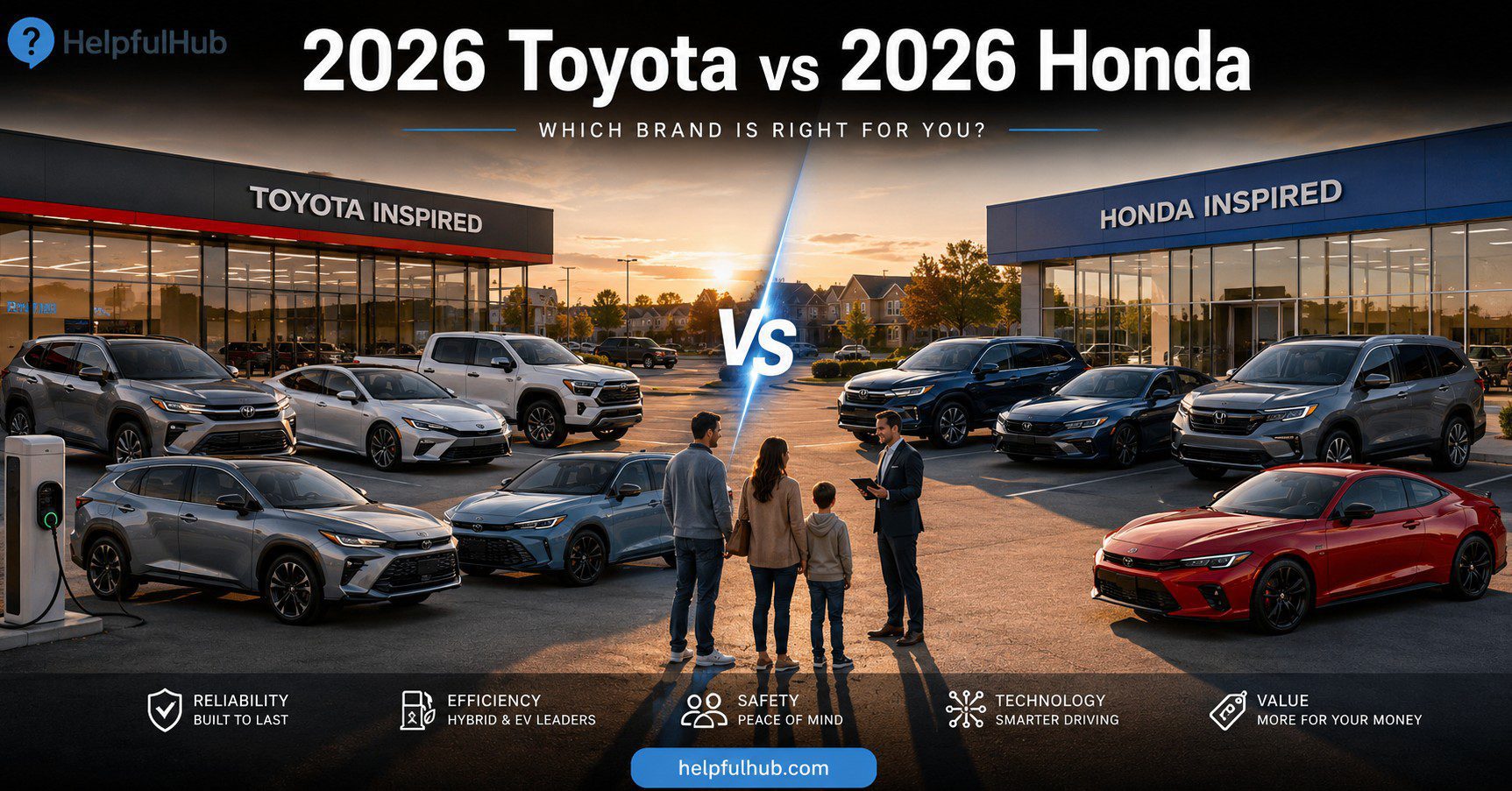
Both brands offer practical vehicles, strong reliability reputations, and wide dealer networks. However, they do not serve every buyer the same way. Toyota usually feels stronger if you want more hybrid variety, trucks, and rugged SUVs. Honda often stands out for smooth daily driving, smart interiors, compact SUVs, and simple ownership.
Quick answer: Choose Toyota if you want a wider hybrid lineup, strong resale value, practical SUVs, fuel-efficient sedans, trucks, and more electrified choices across different vehicle classes. Choose Honda if you want refined daily driving, strong compact SUVs, comfortable family vehicles, sporty options, and simple long-term ownership. The better choice depends on the exact model, trim, monthly payment, dealer availability, insurance quote, and your driving lifestyle. A commuter may prefer a Civic, Accord, Corolla, or Camry. A family may compare RAV4, Highlander, CR-V, Pilot, or Passport. An EV shopper should compare local inventory, charging access, and state incentives before choosing.
Quick Comparison
| Category | Toyota | Honda |
|---|---|---|
| Best overall strength | Hybrid variety, SUVs, trucks, resale reputation | Daily driving feel, smart interiors, compact SUVs |
| Best buyer type | Hybrid shoppers, truck buyers, rugged SUV buyers | Commuters, small families, comfort-focused drivers |
| Hybrid strategy | Broad hybrid coverage across many models | Smooth two-motor hybrid feel in key models |
| EV direction | Expanding battery-electric and plug-in choices | Prologue now, more future EV plans expected |
| SUV choices | RAV4, Highlander, 4Runner, bZ models | CR-V, Pilot, Passport, Prologue |
| Sedan choices | Camry and Corolla remain strong mainstream picks | Accord and Civic remain very competitive |
| Truck availability | Tacoma gives Toyota a clear midsize truck edge | Ridgeline is more lifestyle-focused |
| Family practicality | Strong across SUVs, minivan, trucks, and hybrids | Excellent comfort, packaging, and easy driving |
| Long-term ownership | Strong resale and wide parts support | Simple ownership and dependable reputation |
| Best shopping advice | Compare trim, hybrid availability, and dealer fees | Compare comfort, insurance, and monthly payment |
Toyota Strengths in 2026
Toyota’s biggest 2026 strength is variety. The brand gives US shoppers many choices across sedans, compact SUVs, three-row family vehicles, trucks, hybrids, plug-in hybrids, and EVs. That makes Toyota easier to shop if you are comparing more than one body style.
For a deeper Toyota lineup overview, see the 2026 Toyota models USA guide. Toyota’s key buyer strengths include the Camry, Corolla, RAV4, Highlander family, 4Runner, Tacoma, and expanding electric SUV direction. The Tacoma is especially important because Honda does not offer a traditional midsize pickup in the same way.
Toyota is also strong for buyers who want a practical long-term vehicle. Many US shoppers choose Toyota because they want predictable maintenance, strong resale value, and broad dealer support. Still, the best deal always depends on the exact trim, mileage needs, insurance quote, and dealer pricing.
Honda Strengths in 2026
Honda’s 2026 strength is refinement. The brand is especially good at making vehicles feel easy to drive every day. The Civic, Accord, CR-V, Pilot, Passport, Prologue, Ridgeline, and returning Prelude Hybrid give Honda a strong mix of commuter, family, EV, and sporty choices.
For a full brand lineup view, read the 2026 Honda models USA guide. Honda vehicles often appeal to buyers who want a comfortable cabin, clean controls, good road manners, and low-stress ownership. The Civic and Accord remain strong for commuters, while the CR-V and Pilot are practical for families.
In the 2026 Toyota vs 2026 Honda in US comparison, Honda may be the better fit if you care more about driving feel than maximum lineup variety. It may also suit shoppers who want a compact SUV or sedan that feels polished in traffic, on highways, and during school runs.
Hybrid and EV Comparison
Toyota has the broader hybrid reputation. The brand has spent decades building hybrid systems across mainstream models, so buyers can often find a Toyota hybrid in more vehicle classes. That matters if you want fuel savings but are not ready for a fully electric vehicle.
Honda’s hybrid approach feels different. Honda hybrids are often smooth, quiet, and easy to drive in city traffic. The CR-V Hybrid, Accord Hybrid, and Civic Hybrid are strong choices for buyers who want efficiency without changing daily habits.
EV shoppers should compare availability carefully. Toyota is expanding with electric models such as the bZ family and rugged EV direction. Honda has the Prologue as its main electric SUV option, while future EV plans may vary by timing and market. Before buying, check charging access, home charging cost, dealer inventory, and state incentives.
SUVs, Sedans, and Family Use
For compact SUV buyers, the Toyota RAV4 and Honda CR-V are the key matchup. Toyota offers strong hybrid and plug-in appeal, while Honda focuses on comfort, cargo space, and an easy daily driving feel. You can compare Toyota’s electrified SUV side through the Toyota RAV4 Hybrid and Plug-in Hybrid guide.
Honda’s CR-V is also important for hybrid shoppers, especially with adventure-focused trims. If you are comparing compact SUVs for commuting, weekend trips, and light outdoor use, the 2026 Honda CR-V TrailSport Hybrid guide is a useful next read.
For sedans, Toyota Camry and Corolla compete directly with Honda Accord and Civic. Toyota may attract buyers who want simple efficiency and strong resale. Honda may attract drivers who want a slightly more engaging feel and a clean cabin layout. For trucks, Toyota has the clear advantage with Tacoma. Honda’s Ridgeline is practical, but it is more of a lifestyle pickup than a rugged truck choice.
Ownership Cost, Insurance, and Resale
Ownership cost is where buyers should slow down. Do not choose only by badge. Maintenance, fuel cost, charging cost, tires, insurance, loan rate, lease terms, dealer fees, and resale value can change the real monthly cost.
Toyota often has a strong resale reputation in the US, especially on popular SUVs, trucks, and hybrids. Honda also has a loyal ownership base and a strong reputation for long-term dependability. However, insurance can vary by state, driver profile, trim, safety features, repair cost, and financing situation.
Before signing, get insurance quotes for both vehicles. Also compare the out-the-door price, not just MSRP. Ask dealers about incentives, markups, accessories, lease terms, finance rates, and delivery timing. A better deal on one brand can easily beat a stronger reputation on paper.
Practical Expert Insight
Brand loyalty is useful, but it should not make the decision for you. The smart move is to compare the exact Toyota and Honda model in the same class. Look at the trim, monthly payment, insurance quote, fuel or charging cost, warranty coverage, dealer fees, availability, and your real driving needs.
If you drive mostly in the city, a hybrid sedan or compact SUV may make more sense than a larger vehicle. If you carry kids, luggage, sports gear, or pets, cargo space and rear-seat comfort matter more. If you take long highway trips, test-drive noise, seat comfort, driver-assist features, and fuel stops before deciding.
Which Brand Should You Choose?
In the 2026 Toyota vs 2026 Honda in US comparison, Toyota is best for hybrid variety, strong resale value, truck buyers, and shoppers who want many SUV choices. Honda is best for smooth daily driving feel, comfortable compact SUVs, practical sedans, and simple long-term ownership.
Best for hybrid variety: Toyota. Best for smooth daily driving feel: Honda. Best for truck buyers: Toyota. Best for compact SUV shoppers: compare Toyota RAV4 and Honda CR-V. Best for sedan buyers: compare Toyota Camry and Corolla against Honda Accord and Civic. Best for EV-curious buyers: compare Toyota and Honda EV availability in your state. The best next step is simple: test drive one Toyota and one Honda in the same vehicle class and compare the real monthly ownership cost.
FAQs
Is Toyota better than Honda in 2026?
Toyota may be better if you want more hybrid options, a traditional midsize truck, rugged SUV choices, and strong resale value. It is especially strong for shoppers comparing RAV4, Camry, Corolla, Tacoma, and 4Runner. However, better does not mean better for every buyer. Honda may feel smoother and more comfortable in daily driving. The best choice depends on the model class, trim, price, insurance quote, and local dealer inventory.
Is Honda more reliable than Toyota?
Honda and Toyota both have strong reliability reputations in the US. Many buyers trust both brands for long-term ownership, parts availability, and practical maintenance. Toyota often gets extra attention for hybrid durability and resale value, while Honda is known for simple, refined daily drivers. Reliability can still vary by model, engine, trim, maintenance history, and driving habits. Always check current owner feedback, warranty coverage, and service records if buying used.
Which brand has better hybrids in 2026?
Toyota has the broader hybrid lineup, so it is usually easier to find a Toyota hybrid across multiple body styles. That helps buyers who want a sedan, compact SUV, family SUV, or truck-related option with electrified efficiency. Honda hybrids are also very strong, especially for smooth city driving and quiet daily use. If you want maximum hybrid variety, Toyota has the edge. If you want refined hybrid feel, test-drive Honda too.
Which is better for families, Toyota or Honda?
Both brands are good for families. Toyota offers practical SUVs, hybrid options, minivan strength, and rugged choices for road trips or outdoor use. Honda offers the CR-V, Pilot, Passport, and Odyssey for families that want comfort, smart space, and easy driving. For school runs and daily errands, Honda may feel more relaxed. For hybrid choice, towing needs, or rugged SUV use, Toyota may fit better.
Which brand is better for resale value?
Toyota often has a strong resale reputation, especially with popular SUVs, trucks, and hybrids. Honda also performs well because many used-car buyers trust the brand. Resale value depends on demand, mileage, condition, maintenance, accident history, trim, fuel prices, and local market trends. A clean Honda with good service records can beat a poorly maintained Toyota. Compare estimated resale and total ownership cost before buying.
Should I buy Toyota or Honda as a first new car in the US?
As a first new car, both brands are smart choices. Toyota may be better if you want simple efficiency, hybrid options, and resale confidence. Honda may be better if you want a comfortable drive, easy controls, and a refined compact sedan or SUV. First-time buyers should compare insurance quotes before choosing. Also check monthly payment, down payment, warranty coverage, maintenance needs, and dealer fees.